
Defending Cocaine Charges: Legal Overview & Defense Strategies
California strictly regulates the possession, manufacture, and sale of controlled substances.
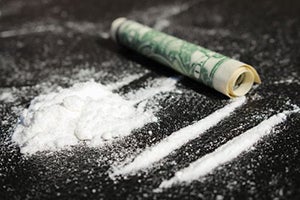
Under state and federal laws, cocaine is classified as a highly addictive substance, carrying severe penalties for convictions.
In California, possessing, selling, or manufacturing cocaine—also known as “crack” and “coke”—is illegal. Cocaine is classified as a Schedule II narcotic drug under the Controlled Substances Act.
However, individuals facing these charges have access to distinct legal defenses and rehabilitation-focused diversion programs.
The most effective way to secure a positive outcome is by consulting an experienced criminal defense attorney at Esfandi Law Group in California. Schedule your free consultation at (310) 274-6529 or use the contact form here.
California Cocaine Statutes & Penalties
Drug offenses in California are prosecuted based on the intent of possession and the form of the substance involved.
1. Simple Possession (Health and Safety Code 11350)
-
Definition: Possession of cocaine for personal use.
-
Classification: Can be charged as a misdemeanor or a felony depending on prior criminal history and specific case factors.
-
Alternative Sentencing: Convictions under HS 11350 may qualify for drug diversion programs that substitute jail time with rehabilitation.
2. Possession for Sales, Transportation, or Distribution
-
Health and Safety Code 11351: Possession of cocaine with the explicit intent to sell.
-
Health and Safety Code 11352: Transporting, selling, or importing cocaine into California.
-
Penalties: Sentences vary widely based on aggravating circumstances, ranging from misdemeanors at the lowest level up to 9 years of imprisonment in state prison, with potential enhancements for large quantities.
California Health and Safety Code 11355 prohibits offering, arranging, or agreeing to sell, furnish, transport, administer, or give a controlled substance, especially when delivering a counterfeit drug or fake version.
3. Driving Under the Influence (Vehicle Code 23152(f))
-
Operating a motor vehicle while under the influence of cocaine or other controlled substances constitutes a criminal offense under California's VC laws, called DUI of drugs.
Drug Classification: Cocaine vs. Cocaine Base
Both state and federal jurisdictions utilize the Controlled Substances Act schedules to categorize drugs based on medical utility and abuse risk.
|
Drug Form |
Classification |
Legal Definition / Characteristics |
|
Cocaine (Powder) |
Schedule II |
High potential for abuse, severely restricted medical utility, and high risk of psychic or physical dependence. |
|
Cocaine Base (Crack) |
Schedule I |
Chemically defined as a cocaine form not neutralized by an acid. Its cooked form allows rapid uptake via smoking, making it highly addictive. |
Federal Penalties (21 U.S.C. § 841)
Federal statutes impose severe mandatory minimum sentences for offenses involving cocaine base. Under 21 U.S.C. 841, possessing even small amounts of cocaine base can trigger sentences ranging from 10 years to life imprisonment.
While the federal Fair Sentencing Act of 2010 raised the baseline quantities that trigger these harsh statutory enhancements to mitigate sentencing disparities, severe mandatory penalties remain in effect.
Court-Approved Drug Diversion Programs
In California, the most commonly used drug diversion programs are Penal Code 1000 (PC 1000) and Proposition 36 (Prop 36).
For qualifying non-violent offenders charged with simple possession (HS 11350), California law prioritizes rehabilitation over incarceration. Completing a diversion program allows defendants to have their criminal charges formally dismissed.
-
Proposition 36: Confers court-ordered drug treatment in lieu of jail time for eligible first- and second-time possession offenders.
-
Deferred Entry of Judgment (Penal Code 1000 PC): Allows a defendant to enter a guilty plea, stay the sentencing during rehabilitation, and dismiss the case entirely upon successful program completion.
-
California Drug Courts: Specialized judicial tracks combining close judicial monitoring, mandatory drug testing, and intensive substance abuse treatment.
Frequently Asked Questions (FAQs)
What is the difference between simple possession and possession with intent to sell?
The primary differentiator is intent and quantity.
-
Simple Possession (HS 11350): Means possessing a small amount of cocaine purely for personal consumption. It is frequently charged as a misdemeanor, and eligible individuals can bypass jail time via rehabilitation programs.
-
Possession for Sale (HS 11351): Is an automatic felony. Prosecutors establish intent to sell based on factors like possessing high volumes of cocaine, digital scales, large amounts of cash, or individual packaging. This charge is strictly ineligible for drug diversion.
Can I get my cocaine charges dismissed through a drug diversion program?
Yes, if you meet the eligibility criteria under California Penal Code 1000 PC or Proposition 36. To qualify for pretrial diversion under PC 1000, you must meet the following guidelines:
-
The charge must be exclusively for non-violent personal use or possession (e.g., HS 11350).
-
You have no prior felony convictions within the past 5 years.
-
You have no convictions for ineligible drug offenses within the past 5 years.
-
Your case involved no acts or threats of violence.
Upon successful completion of the court-approved treatment plan and clean drug screenings, the criminal charges against you are formally dismissed, and your arrest record can be sealed.
Why are penalties so much harsher for crack cocaine than powder cocaine under federal law?
Historically, federal statutes treated cocaine base (crack) with extreme severity. The Anti-Drug Abuse Act of 1986 implemented a "100-to-1" drug quantity ratio, meaning it took 100 times more powder cocaine than crack to trigger identical mandatory minimum sentences.
While the Fair Sentencing Act of 2010 closed this gap significantly by adjusting the ratio to 18-to-1, severe mandatory minimum enhancements still exist.
Under 21 U.S.C. 841, possessing small threshold quantities of cocaine base can trigger a mandatory minimum of 10 years to life in federal prison.
How can a lawyer challenge the drug chemistry or weight in court?
Drug charges heavily rely on forensic metrics, which are prone to human and technical errors. An experienced criminal defense attorney can demand independent laboratory analysis to dispute the state's or federal government's claims.
Key defensive measures include:
-
Challenging Purity Levels: Proving that the substance does not legally meet the chemical criteria required for mandatory sentence enhancements.
-
Disputing Aggregate Weight: Demonstrating that the net weight of the actual controlled substance was inflated by cutting agents or inaccurate lab scales.
-
Exposing Chain of Custody Failures: Documenting gaps or logging errors by police technicians, which can make the chemical test results legally inadmissible.
Proven Defense Strategies for Narcotic Charges
Experienced California criminal defense attorneys utilize several procedural, constitutional, and evidentiary strategies to fight state and federal cocaine charges:
Constitutional Violations
-
Illegal Search and Seizure: Moving to suppress physical evidence if law enforcement violated Fourth Amendment protections during a vehicle, home, or personal search.
-
Unlawful Confessions: Seeking suppression of statements obtained through coercive tactics or in violation of Miranda rights.
-
Entrapment: Demonstrating that law enforcement induced an otherwise law-abiding individual to commit a drug crime they would not have otherwise attempted.
Evidentiary & Chain of Custody Challenges
-
Chain of Custody Gaps: Identifying missing links or documentation errors in how the seized narcotics were stored, transferred, or tracked.
-
Testing Irregularities: Challenging laboratory forensic methods used to test and weigh the substance.
-
Chemical/Weight Thresholds: Arguing that the exact chemical composition or net weight fails to meet the legal criteria required for mandatory federal sentencing enhancements.
Official Misconduct
-
Evidence Manipulation: Presenting proof of law enforcement fabricating, altering, or planting drug evidence.
-
Brady Violations: Demonstrating that the prosecution or police actively concealed exculpatory evidence that favors the defense.
Speak to a Drug Crime Defense Lawyer
A cocaine conviction can have life-altering consequences, affecting your freedom, employment opportunities, and clean record.
If you or a loved one is facing state or federal drug charges in California, navigating the legal system alone can be overwhelming.
Early legal intervention by a skilled advocate at Esfandi Law Group can mean the difference between jail time and a dismissed case.
California Health & Safety Code 11365 HS declares that it is a misdemeanor to knowingly be present at the scene where certain controlled substances are unlawfully used if you also aid, assist, or encourage that drug activity.
Why Immediate Representation Matters
-
Pre-Filing Intervention: An attorney can negotiate with prosecutors before charges are formally filed, potentially preventing a criminal case from proceeding.
-
Securing Diversion: A lawyer can evaluate your eligibility for programs like Proposition 36, PC 1000, or Drug Court to keep you out of custody.
-
Protecting Your Rights: A defense team will immediately scrutinize the evidence for constitutional violations, such as illegal searches or police misconduct, to build a powerful defense.
Take Action Now: Contact our office today at (310) 274-6529 to schedule an initial consultation with an experienced California criminal defense attorney. The Esfandi Law Group can help you.