
California Vehicle Code 20001 – Felony Hit and Run Causing Injury
California Vehicle Code 20001 makes it a serious crime to leave the scene of an accident when another person is injured or killed.
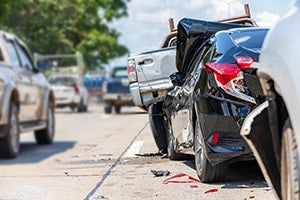
Unlike a misdemeanor hit-and-run, this offense carries the potential for felony charges, state prison time, and long-term consequences that can affect your freedom, record, and future.
One of the most important aspects of this law is that fault does not matter. Even if you did not cause the accident, you are still legally required to stop, provide identifying information, and render reasonable assistance to anyone injured.
Failure to take these steps can result in severe criminal penalties.
Your best chance for a positive outcome is to work with an experienced California criminal defense attorney at Esfandi Law Group. To set up a free consultation, feel free to call us at (310) 274-6529 or reach out to us here.
What Is Felony Hit and Run Under VC 20001?
California Vehicle Code 20001 defines felony hit and run as leaving the scene of a vehicle accident that results in injury or death without stopping to fulfill your legal duties.
This is a serious criminal offense that can be charged as either a misdemeanor or a felony, depending on the circumstances.
The statutory language provides that a driver involved in an accident resulting in injury or death to another person must immediately stop at the scene and comply with specific legal requirements.
In practical terms, this law focuses on what happens after the accident—not who caused it. Even if you were not at fault, you can still be charged if you leave the scene without stopping, identifying yourself, and assisting anyone who may be injured.
To comply with VC 20001, a driver must:
- Immediately stop at the scene of the accident
- Provide their name, address, and vehicle registration
- Present a valid driver's license upon request
- Provide reasonable assistance to injured persons
- This may include calling 911 or arranging transportation for medical care
“Reasonable assistance” is a critical component of this law and may include contacting emergency services if someone appears injured.
A key element prosecutors must prove is knowledge. You must have known, or reasonably should have known, that someone was injured. However, the law does not require proof that you intended to cause harm or violate the law—only that you knowingly failed to stop and comply.
In short, a felony hit-and-run under Vehicle Code 20001 occurs when a driver involved in an injury-related accident willfully leaves the scene without stopping, providing required information, or offering aid as required by law.
In California, hitting a parked car can occur in just seconds, but your immediate response can decide if it stays a minor issue or turns into a criminal matter.
Legal Duties After an Injury Accident
Under California Vehicle Code 20001, any driver involved in an accident that results in injury or death has immediate and mandatory legal responsibilities. These duties are strictly enforced and apply regardless of who caused the accident.
Failure to follow these requirements is what creates criminal liability—not the accident itself.
Immediate Duty to Stop
You must immediately stop your vehicle at the scene of the accident. This means stopping as close as safely possible without obstructing traffic or creating additional خطر.
Leaving the scene, even briefly, can result in hit and run charges.
Duty to Provide Identifying Information
After stopping, you are required to provide accurate identifying information to the other parties involved or responding authorities.
This includes:
- Your name and current address
- Vehicle registration information
- Your driver's license upon request
If you were driving someone else's vehicle, you must also provide the registered owner's information.
Duty to Render Reasonable Assistance
One of the most important legal obligations is to help anyone who is injured.
This includes:
- Calling 911 or emergency services
- Arranging or providing transportation for medical care if necessary
- Taking reasonable steps to ensure the injured person receives help
The law does not require medical expertise, but it does require reasonable action under the circumstances.
Duty to Remain at the Scene
You must remain at the scene until you have fulfilled all legal obligations, including providing information and ensuring injured parties receive assistance.
Leaving before completing these duties can lead to criminal charges.
Duty Applies Regardless of Fault
A critical point under California law is that fault does not matter. Even if another driver caused the accident, you are still legally required to stop, identify yourself, and assist.
Key Takeaway
After an accident involving injury or death, California law requires immediate action: stop, identify yourself, and help.
Failing to meet any of these obligations can elevate the situation into a serious criminal case with potential misdemeanor or felony consequences.
Elements of a VC 20001 Charge
To convict someone of felony hit and run, the prosecutor must prove:
- You were involved in a vehicle accident
- The accident caused injury or death to another person
- You knew or reasonably should have known that someone was injured
- You willfully failed to stop, provide information, or render aid
The term “willfully” means the act was done on purpose, even if there was no intent to break the law.
Penalties for Felony Hit and Run (VC 20001)
| Charge Level | Custody Exposure | Fines | Probation Type | Additional Consequences |
|---|---|---|---|---|
|
Misdemeanor |
Up to 1 year in county jail |
Up to $1,000 |
Informal probation |
Restitution, DMV points, increased insurance rates |
|
Felony |
16 months, 2, or up to 4 years in prison |
Up to $10,000 |
Formal probation |
Restitution, felony record, possible strike implications |
Key Notes
- The offense is a “wobbler,” meaning it can be filed as either a misdemeanor or felony depending on the facts of the case
- Restitution to injured victims is mandatory in most cases
- Additional penalties may apply if there are aggravating factors, such as prior convictions or severe injuries
Practical Impact
A felony hit and run conviction can carry long-term consequences beyond jail or prison, including difficulty finding employment, loss of professional licenses, and lasting damage to your criminal record.
Examples of Felony Hit and Run Cases
Understanding how California Vehicle Code 20001 is applied in real-life situations can help clarify when conduct rises to the level of a felony hit and run. The key issue in each case is not just the accident itself, but whether the driver failed to stop, identify themselves, and assist after an injury occurred.
Example 1: Pedestrian Strike in a Crosswalk
A driver hits a pedestrian in a marked crosswalk at night. Instead of stopping to check on the victim or call for help, the driver panics and leaves the scene. Even if the driver was not entirely at fault, failing to stop and render aid can lead to felony hit-and-run charges.
Example 2: Multi-Car Accident with Injuries
A driver rear-ends another vehicle on the freeway, causing a chain reaction crash that results in injuries to multiple people. The driver exits the freeway to avoid involvement and does not return. Leaving under these circumstances may result in VC 20001 charges.
Example 3: Cyclist Collision
A motorist collides with a cyclist, who falls and appears injured. The driver briefly slows down but ultimately drives away without providing information or calling emergency services. This conduct may be charged as felony hit and run.
Example 4: Passenger Injury After Minor Crash
A driver is involved in what appears to be a minor collision, but later it is discovered that a passenger in the other vehicle suffered a neck injury. If the driver left the scene without stopping or exchanging information, prosecutors may still pursue felony charges for the injuries.
Example 5: Driver Claims No Knowledge of Injury
A driver hits an object or a person, claims they did not realize anyone was hurt, and leaves the scene. Whether this becomes a felony case often depends on whether a reasonable person would have known that an injury was likely to occur.
Example 6: Driver Returns Later
A driver initially leaves the scene out of panic but returns later or contacts the police. While this does not automatically eliminate liability, it may help reduce the severity of charges or support a defense strategy.
Key Takeaway
Felony hit-and-run cases often depend on what the driver knew and how they responded after the accident. Even a brief failure to stop, identify yourself, or assist an injured person can result in serious criminal charges.
Common Legal Defenses to Felony Hit and Run Charges (VC 20001)
Defending a felony hit and run case under California Vehicle Code 20001 requires a focused analysis of what you knew, what actions you took after the accident, and whether the prosecution can prove every element beyond a reasonable doubt. In many cases, strategic defenses can lead to reduced charges, a misdemeanor filing, or even dismissal.
Lack of Knowledge of Injury
A central element of VC 20001 is that you knew, or reasonably should have known, that someone was injured.
If the evidence shows:
- The impact was minor
- No visible injuries were apparent
- You had no reasonable way to know someone was hurt
then the prosecution may not be able to prove this required element. This can result in reduced charges or dismissal.
You Stopped and Attempted to Comply
If you made a good faith effort to stop, check on others, or exchange information, this may serve as a defense or significantly weaken the case.
Even partial compliance—such as stopping briefly or attempting to contact the other party—can be used to argue you did not willfully flee the scene.
You Were Not the Driver
The prosecution must prove you were the person driving the vehicle at the time of the accident.
If:
- Multiple people had access to the vehicle
- There is no clear identification
- You did not admit to driving
then identity may be challenged as a key issue in the case.
Emergency or Necessity
Leaving the scene may be legally justified if you were facing an emergency, such as:
- Seeking urgent medical attention
- Avoiding immediate danger or harm
However, you are generally expected to report the incident as soon as reasonably possible afterward.
No Willful Failure to Stop
The law requires that the failure to stop be willful, meaning intentional.
If circumstances show:
- Confusion at the scene
- Lack of awareness of the collision
- Inability to safely stop immediately
this may negate the intent element required for conviction.
Insufficient Evidence
Many hit and run cases rely on circumstantial evidence, such as:
- Vehicle descriptions
- Partial license plates
- Witness statements
If the evidence is inconsistent, unreliable, or incomplete, your attorney can argue that the prosecution has failed to meet its burden of proof.
Mistaken Identity
It is not uncommon for law enforcement to rely on incomplete or inaccurate identification.
If there is doubt about whether you or your vehicle were actually involved, mistaken identity can be a strong defense.
Illegal Search or Investigation
If law enforcement violated your constitutional rights—such as conducting an unlawful search or obtaining statements improperly—key evidence may be excluded from trial.
This can significantly weaken or eliminate the prosecution's case.
Key Takeaway
Felony hit and run cases often hinge on knowledge, intent, and identity. A strong defense strategy focuses on whether you knowingly failed to stop and whether the prosecution can prove that beyond a reasonable doubt.
Early legal intervention is critical. An experienced defense attorney can challenge the evidence, negotiate reduced charges, and work toward the best possible outcome in your case.
Related California Offenses
Felony hit and run under Vehicle Code 20001 is often charged alongside other serious driving and criminal offenses. Depending on the facts of the case, prosecutors may file additional or alternative charges that can significantly increase penalties and legal exposure.
Vehicle Code 20002 – Misdemeanor Hit and Run
A VC 20002 offense applies when an accident results only in property damage and no injuries. While less severe than VC 20001, it still carries criminal penalties and is often charged as a fallback or reduced charge in injury-related cases.
Vehicle Code 23152 – Driving Under the Influence
If alcohol or drugs are suspected to have contributed to the accident, DUI charges may be filed in addition to hit and run. A DUI conviction can lead to license suspension, fines, and jail time, and it can significantly complicate the defense.
Vehicle Code 23153 – DUI Causing Injury
Under VC 23153, when impaired driving results in injury, this offense may be charged alongside or instead of felony hit and run. It is typically a felony and carries enhanced penalties, including prison time and restitution to victims.
Penal Code 192(c) – Vehicular Manslaughter
PC 192(c) arises from negligent or unlawful driving; prosecutors may file vehicular manslaughter charges. These cases often overlap with hit-and-run when a driver leaves the scene after a fatal accident.
Penal Code 191.5 – Vehicular Manslaughter While Intoxicated
PC 191.5(a) applies when a DUI-related accident results in death. It carries severe penalties, including lengthy prison sentences, and is frequently charged in combination with or instead of VC 20001 in fatal cases.
Vehicle Code 14601 – Driving on a Suspended License
If your license was suspended or revoked at the time of the accident, you may face additional misdemeanor charges. This can increase overall penalties and negatively impact plea negotiations.
Vehicle Code 12500(a) – Driving Without a License
Driving without a valid license is commonly charged alongside hit and run offenses. While typically less serious, it can still add fines and probation conditions to your case.
Key Takeaway
Related charges can dramatically increase the consequences of a felony hit and run case. What begins as a single offense can quickly escalate into multiple charges involving DUI, license violations, or even homicide-related crimes.
A comprehensive legal strategy should address all potential charges together, with the goal of reducing exposure, negotiating favorable outcomes, and protecting your future.
Why Early Legal Intervention Matters
Felony hit and run cases are often investigated before charges are filed. Early involvement of a criminal defense attorney can:
- Prevent felony charges from being filed
- Negotiate the case as a misdemeanor
- Present mitigating evidence to prosecutors
- Arrange early restitution to improve outcomes
As noted, prosecutors have discretion in how these cases are charged, and early advocacy can make a critical difference.
Frequently Asked Questions
Can I be charged if the accident was not my fault?
Yes. Liability for the accident is separate from the duty to stop. You must still comply with the law.
Is VC 20001 always a felony?
No. It is a wobbler and may be charged as a misdemeanor or felony depending on the facts.
What if I panicked and left the scene?
Panic is common, but it is not a legal defense. However, your attorney may use this fact to negotiate reduced charges.
Will I go to prison?
Not always. Many cases are resolved with reduced charges, probation, or alternative sentencing depending on the circumstances.
Can the charges be reduced or dismissed?
Yes. With strong legal representation, it may be possible to reduce the charge, negotiate a plea, or obtain a dismissal in certain cases.
Speak With a California Hit and Run Defense Lawyer
If you are facing felony hit and run charges under Vehicle Code 20001, the stakes are extremely high. A conviction can result in prison time, significant fines, and a permanent criminal record.
An experienced California criminal defense attorney can evaluate your case, protect your rights, and develop a strategy to achieve the best possible outcome. Contact a qualified lawyer today for a confidential consultation.
Esfandi Law Group is available to assist you. Please schedule your complimentary consultation by contacting us at (310) 274-6529 or by utilizing the contact form provided here.