
California Penal Code 29825 PC – Possession of a Firearm in Violation of a Court Order
California Penal Code 29825 PC makes it illegal for certain individuals to possess, own, purchase, or receive firearms or ammunition while subject to qualifying court orders.
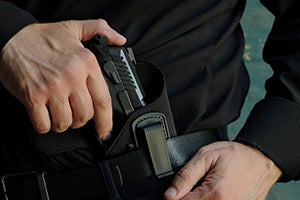
These allegations commonly arise in domestic violence cases involving restraining orders, protective orders, probation conditions, or pending criminal proceedings.
Violating California firearm restrictions connected to domestic violence allegations can lead to serious criminal penalties, including felony charges, jail or prison exposure, probation violations, firearm bans, and permanent criminal records.
In some situations, prosecutors may also pursue additional charges involving assault with a firearm, brandishing a weapon, or domestic violence sentencing enhancements.
California courts take domestic violence allegations seriously. A domestic violence restraining order may be issued even if there are no criminal charges or physical injuries.
This guide explains California Penal Code 29825 PC, firearm restrictions connected to domestic violence cases, related California laws, penalties, legal defenses, examples, and frequently asked questions.
What Is California Penal Code 29825 PC?
California Penal Code 29825 PC prohibits individuals subject to certain court orders that legally restrict firearm rights from possessing firearms.
The statute commonly applies in cases involving:
- Domestic violence restraining orders
- Criminal protective orders
- Civil harassment restraining orders
- Emergency protective orders
- Workplace violence restraining orders
- School violence restraining orders
- Elder abuse protective orders
Individuals subject to qualifying court orders are generally prohibited from:
- Possessing firearms
- Purchasing firearms
- Receiving firearms
- Owning firearms
- Possessing ammunition
Violations may result in misdemeanor or felony criminal charges, depending on the facts of the case.
Why Firearm Restrictions Apply in Domestic Violence Cases
California lawmakers impose firearm restrictions in domestic violence cases because allegations involving weapons are considered high-risk situations involving potential violence and public safety concerns.
Firearm prohibitions may apply even before a criminal conviction occurs.
Under both California and federal law, individuals accused or convicted of domestic violence offenses may lose firearm rights for extended periods or permanently.
Domestic Violence and Firearm Allegations
Domestic violence incidents involving firearms often lead to additional criminal charges and sentencing enhancements.
Assault With a Firearm – Penal Code 245(a)(2) PC
California Penal Code 245(a)(2) PC prohibits assault with a firearm.
A person may face felony charges for:
- Pointing a firearm during a domestic dispute
- Threatening an intimate partner with a gun
- Using a firearm during an altercation
The firearm need not be discharged for prosecutors to file charges.
Potential penalties may include:
- State prison
- Strike offense consequences
- Domestic violence probation terms
- Firearm prohibitions
Assault With a Deadly Weapon – Penal Code 245(a)(1) PC
California Penal Code 245(a)(1) PC criminalizes assault using deadly weapons.
In domestic violence cases, prosecutors may allege:
- Use of knives
- Use of blunt objects
- Use of firearms
- Threats involving deadly weapons
Some felony convictions may count as strikes under California's Three Strikes Law.
Brandishing a Firearm – Penal Code 417 PC
California Penal Code 417 PC prohibits displaying or drawing a firearm in a threatening or angry manner.
In domestic disputes, brandishing allegations may arise when:
- A firearm is displayed during an argument
- A loaded or unloaded firearm is pointed at another person
- Threatening conduct occurs involving a weapon
Brandishing is commonly charged as a wobbler offense that may be prosecuted as either a misdemeanor or a felony.
California Domestic Violence Probation Requirements
Individuals convicted of domestic violence offenses involving firearms are often placed on DV probation with mandatory conditions under California Penal Code 1203.097 PC.
Mandatory probation terms may include:
- Domestic violence restraining orders
- No-contact orders
- 52-week batterer's intervention programs
- Counseling
- Community service
- Fines
- Jail time
- Firearm surrender requirements
Judges may impose additional restrictions depending on the circumstances of the case.
Lifetime Firearm Bans and Domestic Violence Convictions
Certain domestic violence convictions may result in lifetime firearm prohibitions under California and federal law.
California Penal Code 29805 PC
California Penal Code 29805 PC restricts firearm possession for individuals convicted of certain misdemeanor offenses, including domestic violence crimes.
Federal Firearm Restrictions
Federal law also prohibits firearm possession following qualifying domestic violence convictions, including some misdemeanor offenses.
These restrictions may apply even when the domestic violence conviction did not involve physical injury.
Court Orders That Trigger Firearm Restrictions
California Penal Code 136.2 PC authorizes courts to issue criminal protective orders, known as CPOs, in cases involving domestic violence, threats, harassment, stalking, sexual assault, child abuse, and related offenses.
Several California court orders may prohibit firearm possession while they remain in effect.
Domestic Violence Restraining Orders
Domestic violence restraining orders may prohibit firearm ownership or possession after a court hearing.
Emergency Protective Orders
Emergency protective orders issued after domestic violence or stalking allegations may immediately restrict firearm access.
Civil Harassment Restraining Orders
Civil harassment restraining orders may prohibit firearms in cases involving threats, stalking, or harassment.
Workplace Violence Restraining Orders
Employers may seek workplace violence restraining orders protecting employees from threats or violence.
School Violence Restraining Orders
California courts may issue school-related protective orders to address threats against students or school staff.
Elder Abuse Protective Orders
Protective orders involving elderly or dependent adults may also trigger firearm prohibitions.
Firearm Relinquishment Requirements
Individuals served with qualifying domestic violence restraining orders generally must relinquish firearms within strict deadlines.
Firearms may be surrendered by:
- Turning them over to law enforcement
- Selling them to a licensed gun dealer
- Transferring them lawfully where permitted
Proof of relinquishment generally must be filed with the court and law enforcement agency.
Failure to comply may result in additional criminal charges or probation violations.
Law Enforcement Firearm Seizures in Domestic Violence Cases
California law permits officers responding to domestic violence incidents to confiscate firearms discovered at the scene under certain circumstances.
Police officers may seize firearms when:
- Weapons are in plain view
- Threats or assaults are alleged
- Firearms are discovered during lawful searches
- Protective orders are involved
Confiscated firearms may be retained as evidence or subject to background check procedures before return.
Penalties for Violating California Penal Code 29825 PC
| Violation Type | Possible Penalties | Additional Consequences |
|---|---|---|
|
Misdemeanor Violation |
Up to 1 year in county jail |
Probation, fines, criminal record |
|
Felony Violation |
State prison or county jail sentence |
Felony conviction, firearm prohibition |
|
Possession of a Firearm While Under a Restraining Order |
Criminal prosecution and weapon confiscation |
Protective order violations |
|
Ammunition Possession Violation |
Additional criminal charges |
Firearm and ammunition restrictions |
|
Revocation of probation and jail exposure |
Stricter probation conditions |
|
|
Domestic Violence Related Violation |
Mandatory counseling and restraining orders |
52-week batterer intervention program |
|
Multiple Firearm Violations |
Enhanced sentencing exposure |
Increased fines and prison time |
|
Firearm Confiscation |
Seizure of firearms by law enforcement |
Delayed or denied firearm return |
|
Immigration Consequences |
Possible deportation or inadmissibility |
Visa and naturalization complications |
|
Permanent Criminal Record |
Lasting criminal history consequences |
Employment and housing difficulties |
|
Loss of Firearm Rights |
Temporary or lifetime firearm prohibition |
Restrictions under California and federal law |
Penalties may increase when allegations involve:
- Domestic violence convictions
- Prior firearm offenses
- Gang allegations
- Assault allegations
- Multiple firearms
Common Defenses to Firearm Possession Allegations
A criminal defense attorney may challenge Penal Code 29825 PC allegations using several defense strategies.
Lack of Knowledge
The defense may argue that the defendant did not know the firearm was present or accessible.
Invalid or Expired Court Order
The defense may challenge whether the restraining or protective order was legally valid or still in effect at the time of the alleged offense.
Illegal Search and Seizure
Evidence obtained through unconstitutional searches may be excluded from court.
Lack of Possession or Control
The prosecution generally must prove the defendant knowingly possessed or controlled the firearm.
False Allegations
Domestic disputes sometimes involve exaggerated or false allegations involving firearm possession.
Examples of Penal Code 29825 PC Violations
Example 1: Domestic Violence Restraining Order
A person subject to a domestic violence restraining order allegedly keeps a handgun inside their home.
Example 2: Vehicle Firearm Discovery
Police allegedly discovered a firearm during a traffic stop while the driver was subject to an active protective order.
Example 3: Probation Search
Probation officers allegedly recovered firearms during a search connected to domestic violence probation conditions.
Example 4: Ammunition Possession
A defendant allegedly purchased ammunition while prohibited from firearm possession under a court order.
Frequently Asked Questions
Can I own a firearm while subject to a restraining order in California?
Generally, no. Many restraining orders prohibit the possession of firearms while the order remains in effect.
Can police confiscate firearms during domestic violence investigations?
Yes. Officers may temporarily seize firearms during qualifying domestic violence investigations.
Is violating Penal Code 29825 PC a felony?
Violations may be charged as misdemeanors or felonies depending on the circumstances.
Do I have to surrender firearms after a domestic violence restraining order?
Yes. California law generally requires relinquishment of firearms after qualifying restraining orders are issued.
Can firearm restrictions apply before conviction?
Yes. Certain restraining orders and pending domestic violence cases may trigger temporary firearm prohibitions.
Can firearm convictions affect immigration status?
Yes. Firearm-related convictions may result in immigration consequences for non-citizens.
Speak With a California Criminal Defense Lawyer
If you were arrested or investigated for possessing a firearm in violation of a court order in California, obtaining legal representation promptly is critical.
Firearm-related allegations connected to domestic violence cases may carry severe consequences, including jail exposure, felony convictions, restraining orders, firearm bans, immigration consequences, and permanent criminal records.
An experienced criminal defense attorney in California can assess your case, clarify your legal rights, contest illegal police actions, verify the validity of court orders, and craft a strategic defense based on your specific situation.
Early legal intervention may improve opportunities to suppress evidence, reduce charges, or pursue dismissal.
The Esfandi Law Group is available to assist you. Call (310) 274-6529 for a free consultation or fill out the contact form here.