
California Vehicle Code 23103 VC – Reckless Driving
California Vehicle Code 23103 VC defines reckless driving as operating a motor vehicle with willful or wanton disregard for the safety of persons or property.
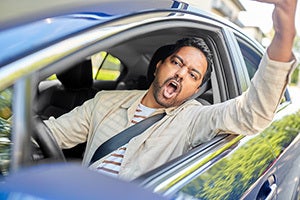
It is a criminal offense that can lead to jail time, fines, points on your driving record, and long-term consequences for your license and insurance.
Reckless driving is more serious than a traffic infraction because it involves dangerous conduct that puts others at risk. However, it is often charged alongside or reduced from more serious offenses such as DUI.
Your best chance for a positive outcome lies with an experienced California criminal defense attorney at Esfandi Law Group.
We're here to help—please feel free to call us at (310) 274-6529 or contact us through our website for a free consultation.
Legal Definition of Reckless Driving
California Vehicle Code 23103 defines reckless driving as operating a motor vehicle with willful or wanton disregard for the safety of persons or property. This is a criminal standard that requires more than ordinary negligence or careless driving.
To prove reckless driving, the prosecution must establish:
- The defendant drove a motor vehicle
- The driving occurred on a highway or in an off-street parking facility open to the public
- The conduct demonstrated willful or wanton disregard for safety
“Willful or wanton disregard” means the driver was aware, or should have been aware, that their actions created a substantial and unjustifiable risk of harm, and consciously ignored that risk.
This standard can be proven in two primary ways:
- Direct evidence of dangerous driving behavior
Examples include excessive speeding, aggressive maneuvering, or running traffic controls - Circumstantial evidence through repeated violations
Courts may infer recklessness when a driver commits multiple traffic violations in a short period that collectively demonstrate disregard for safety
Importantly, reckless driving does not require that anyone was actually injured. The focus is on the level of risk created by the driver's conduct, not the outcome.
However, if serious injury does occur, the charge may be elevated under Vehicle Code 23105, which carries enhanced penalties.
Key Distinction
- Negligence involves a failure to use reasonable care
- Recklessness involves conscious disregard of a known risk
This distinction is critical because it often determines whether a case is charged as a criminal offense or a lesser traffic violation.
California open-container laws regulate the possession and consumption of alcohol and cannabis in vehicles. These laws are intended to reduce impaired driving, protect public safety, and prevent distractions while driving.
California law recognizes two main types of misdemeanor DUI offenses under this statute: driving while impaired and driving with a blood alcohol concentration at or above the legal limit.
What Does “Willful or Wanton Disregard” Mean?
This standard goes beyond simple negligence or careless driving. It means:
- You were aware your driving created a risk, and
- You intentionally ignored that risk
Courts may also infer recklessness if:
- You commit multiple traffic violations in a short period
- You drive in a manner that creates obvious danger
Common Examples of Reckless Driving
Reckless driving under California Vehicle Code 23103 is defined by conduct that shows a conscious disregard for safety. While every case depends on specific facts, certain driving behaviors are commonly cited by prosecutors as evidence of recklessness.
Excessive Speeding in Dangerous Conditions
Driving far above the speed limit, especially in traffic, residential areas, or poor weather.
Example: Traveling 100+ mph on a crowded freeway or speeding through a school zone.
Why it matters: High speed increases the likelihood and severity of harm, supporting a finding of willful disregard.
In California, hitting a parked car can occur in just seconds, but your immediate response can decide if it stays a minor issue or turns into a criminal matter.
Street Racing and Speed Contests
Engaging in races with other vehicles or timing speed runs on public roads.
Example: Two drivers accelerating side-by-side through city streets to outpace each other.
Why it matters: Racing inherently creates extreme risk to drivers, passengers, and bystanders.
Aggressive Lane Changes and Weaving Through Traffic
Rapidly switching lanes without regard for surrounding vehicles.
Example: Cutting across multiple lanes at high speed to bypass traffic congestion.
Why it matters: Sudden, unpredictable movements increase the risk of collisions.
Running Multiple Traffic Signals or Stop Signs
Ignoring traffic controls in a way that endangers others.
Example: Driving through several red lights in succession to avoid stopping.
Why it matters: Repeated violations demonstrate a pattern of disregard rather than a single mistake.
Tailgating at High Speeds
Following another vehicle too closely, especially at freeway speeds.
Example: Driving within a few feet of another car at 70 mph.
Why it matters: Reduces reaction time and increases the likelihood of rear-end collisions.
Road Rage or Retaliatory Driving
Using a vehicle aggressively in response to another driver.
Example: Intentionally cutting off another driver or attempting to force them off the road.
Why it matters: Intentional aggressive conduct strongly supports reckless intent.
Driving on Sidewalks, Shoulders, or Against Traffic
Operating a vehicle outside normal traffic lanes in dangerous ways.
Example: Using a sidewalk to bypass traffic or driving the wrong way on a one-way street.
Why it matters: These actions create obvious and substantial risks to pedestrians and drivers.
Evading Law Enforcement (Non-Felony Context)
Failing to stop or driving dangerously to avoid a traffic stop (short of felony evasion).
Example: Accelerating and weaving through traffic after being signaled to pull over.
Why it matters: Flight combined with dangerous driving behavior can establish recklessness.
Exhibition of Speed or Power
Unsafe acceleration intended to show off a vehicle's speed or performance.
Example: Rapid acceleration causing tires to screech in a crowded area.
Why it matters: Demonstrates intentional disregard for surrounding safety conditions.
Key Takeaway
Reckless driving is not defined by a single act but by the level of danger created. Courts look at the totality of circumstances—speed, location, traffic, and driver intent.
When conduct shows a conscious disregard for safety rather than a momentary lapse in judgment, it may rise to the level of criminal reckless driving.
Penalties for Vehicle Code 23103 (Reckless Driving)
| Penalty Type | Description | Typical Range | When It Applies | Key Considerations |
|---|---|---|---|---|
|
Jail Time |
County jail sentence for misdemeanor reckless driving |
5 to 90 days |
Standard reckless driving conviction |
First-time offenders may avoid jail with probation |
|
Fines |
Base fine plus penalty assessments |
$145 to $1,000 (can exceed $2,000 with assessments) |
All convictions |
Amount varies based on facts and prior record |
|
Probation |
Court supervision instead of jail or in addition to it |
1 to 3 years (informal probation) |
Common in first-time or less severe cases |
Must comply with conditions such as obeying laws |
|
DMV Points |
Points added to driving record |
2 points |
Upon conviction |
Can lead to license suspension if points accumulate |
|
License Consequences |
Possible suspension or restriction |
Varies by driving history |
Repeat offenders or excessive points |
DMV may take separate action from court |
|
Insurance Impact |
Increase in auto insurance premiums |
Significant rate increase |
After conviction is reported |
May affect rates for several years |
|
Priorable Offense |
Counts as a prior for future reckless or DUI-related offenses |
N/A |
If reoffending occurs |
Can increase penalties in future cases |
|
Wet Reckless (VC 23103.5) |
Reduced DUI charge involving alcohol |
Lesser penalties than DUI |
Negotiated plea in DUI cases |
Still counts as prior DUI-related offense |
|
Restitution |
Payment for property damage (if applicable) |
Based on actual losses |
When damage occurs |
Separate from fines and penalties |
|
Aggravated Sentencing |
Increased penalties based on circumstances |
Up to maximum penalties |
Prior offenses, excessive speed, dangerous conduct |
May influence jail time and probation terms |
Penalties for reckless driving under Vehicle Code 23103 can extend beyond fines and jail time to include long-term consequences such as license points, increased insurance costs, and enhanced penalties for future offenses. Strategic legal defense can often reduce or mitigate these outcomes.
The implied consent legal doctrine means that by driving on California public roads, you agree to chemical testing if lawfully arrested for a DUI.
California Vehicle Code 22651 details the circumstances under which law enforcement officers and authorized personnel are permitted to tow and impound a vehicle.
In California, a DUI conviction doesn't always lead to jail. The court often approves a “DUI alternative sentence" that replaces incarceration with programs focused on education, rehabilitation, and accountability.
Reckless Driving and DUI Plea Bargains (“Wet Reckless”)
In many DUI cases, prosecutors may offer a plea to reckless driving under Vehicle Code 23103.5, commonly called a “wet reckless.”
Key differences:
- Lower penalties than a DUI conviction
- Shorter DUI education programs
- Less impact on driving privileges
However, a wet reckless still counts as a prior offense if you are later charged with DUI.
Aggravating Factors That Increase Penalties
Certain circumstances can lead to harsher sentencing:
- Prior reckless driving or DUI convictions
- Excessive speed or dangerous conditions
- Presence of passengers (especially minors)
- Property damage or near collisions
If injuries occur, prosecutors may file charges under Vehicle Code 23105 instead.
License and DMV Consequences
A reckless driving conviction results in:
- 2 points on your driving record
- Potential license suspension if you accumulate too many points
- Increased insurance rates
The DMV treats reckless driving as a serious violation.
Common Defenses to Reckless Driving Charges
Lack of willful disregard
If the conduct was negligent but not intentional, the charge may be reduced.
No actual danger created
If no person or property was placed at risk, prosecutors may struggle to prove the case.
Emergency or necessity
Driving behavior may be justified if done to avoid immediate harm.
Insufficient evidence
Weak or conflicting evidence can create reasonable doubt.
Mistaken identity
The prosecution must prove you were the driver.
Related California Offenses
Reckless driving under Vehicle Code 23103 is often charged alongside, reduced from, or compared to other driving-related offenses. Understanding these related laws helps clarify potential exposure, defenses, and plea negotiation strategies.
DUI – Vehicle Code 23152
Driving under the influence of alcohol or drugs.
How it relates:
- Many DUI cases are negotiated down to reckless driving (wet reckless)
- DUI requires proof of impairment, while reckless driving focuses on dangerous conduct
Key distinction: DUI involves intoxication; reckless driving does not.
Under Business and Professions Code 25661, it is illegal for anyone under 21 to possess or use false ID, including using someone else's valid ID or carrying a fake document to buy alcohol.
You can expunge a DUI conviction if you've completed probation, met all court requirements, and were not sentenced to state prison. Typically, this process is requested under California Penal Code Section 1203.4.
According to California Vehicle Code 23152e VC, taxi, limousine, and ride-sharing drivers are prohibited from operating a vehicle with a blood alcohol concentration (BAC) of 0.04 percent or higher when a paying passenger is present.
Reckless Driving Causing Injury – Vehicle Code 23104
Reckless driving that results in bodily injury.
How it relates:
- Elevates a standard reckless driving case when injury occurs
- Carries enhanced penalties and greater exposure
Key distinction: Requires proof of serious injury in addition to reckless conduct.
Speed Contest / Street Racing – Vehicle Code 23109
Engaging in racing or speed competitions on public roads.
How it relates:
- Often charged together with reckless driving
- Involves inherently dangerous behavior that supports recklessness
Key distinction: Focuses specifically on racing or timed speed activity.
Exhibition of Speed – Vehicle Code 23109(c)
Unsafe acceleration to demonstrate speed or power.
How it relates:
- Frequently charged as a lesser offense than reckless driving
- May be used in plea negotiations
Key distinction: Focuses on showing off speed rather than overall reckless conduct.
Hit and Run – Vehicle Code 20001 / 20002
Hit and run means leaving the scene of an accident involving damage or injury.
How it relates:
- May be charged in addition to reckless driving if an accident occurs
- Adds separate criminal liability regardless of fault for the accident
Key distinction: Focuses on failure to stop and provide information.
Vehicular Manslaughter – Penal Code 192(c)
Causing death through negligent or unlawful driving.
How it relates:
- Represents a more serious outcome when reckless or negligent driving results in death
- May arise from the same incident as reckless driving
Key distinction: Requires a fatality and proof of negligence or unlawful conduct.
A "Watson Murder" is a legal term in California for cases in which someone drives under the influence, causes a fatal crash, and faces second-degree murder charges under California Penal Code Section 187 (PC 187).
Evading a Peace Officer – Vehicle Code 2800.1
Failing to stop for law enforcement while driving.
How it relates:
- Dangerous evasion behavior often overlaps with reckless driving
- Can escalate to felony charges depending on conduct
Key distinction: Focuses on fleeing law enforcement rather than general driving behavior.
Driving on a Suspended License – Vehicle Code 14601
Operating a vehicle while driving privileges are suspended or revoked.
How it relates:
- Often charged together with reckless driving
- Increases overall penalties and complicates resolution
Key distinction: Focuses on license status rather than driving behavior.
Strategic Takeaway
Reckless driving cases rarely exist in isolation. They are frequently part of a broader set of charges that can increase penalties or create negotiation opportunities.
Identifying how these related offenses interact is essential to building an effective defense strategy and minimizing overall exposure.
How Prosecutors Prove Reckless Driving
Prosecutors typically rely on:
- Police officer observations
- Radar or speed detection evidence
- Dashcam or surveillance footage
- Witness statements
- Driving pattern evidence
Each element must be proven beyond a reasonable doubt.
Why Legal Representation Matters
A reckless driving conviction can affect your criminal record, driving privileges, and insurance for years.
A defense attorney can:
- Challenge whether your conduct was truly reckless
- Identify weaknesses in the prosecution's evidence
- Negotiate reduced charges or alternative outcomes
- Represent you in court and DMV proceedings
Frequently Asked Questions
Is reckless driving a criminal offense in California?
Yes. It is typically charged as a misdemeanor, not just a traffic ticket.
How many points is reckless driving?
It adds 2 points to your DMV record.
Can reckless driving be reduced?
Yes. Charges may be reduced to a lesser offense depending on the evidence and circumstances.
Will I go to jail for reckless driving?
Jail is possible, but many cases result in probation or alternative sentencing, especially for first-time offenders.
What is a wet reckless?
It is a reduced charge from DUI involving alcohol, with lesser penalties but similar long-term consequences.
Can reckless driving affect my insurance?
Yes. Insurance rates typically increase significantly after a conviction.
Speak with a California Criminal Defense Attorney
If you are facing reckless driving charges under Vehicle Code 23103, the outcome of your case can have lasting consequences.
An experienced California criminal defense attorney can evaluate your case, challenge the evidence, and work to reduce or dismiss the charges.
Early legal intervention can help protect your record, your license, and your future.
A DUI conviction under California Vehicle Code Section 23152 involves more than penalties like fines, probation, or jail; it can also jeopardize the careers of many Californians who hold professional licenses regulated by the state.
Esfandi Law Group is excited to assist you! Feel free to schedule your free consultation by calling us at (310) 274-6529 or simply using the contact form here. We're looking forward to hearing from you!