
Health and Safety Code 11379 – Sale or Transportation of Methamphetamine in California
Health and Safety Code 11379 makes it a felony to sell, transport for sale, furnish, administer, or give away methamphetamine in California.
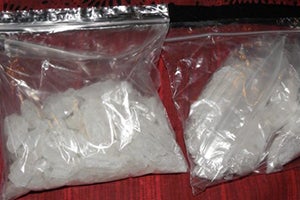
Unlike simple possession or possession for sale, this charge typically involves allegations that the defendant actually distributed methamphetamine or moved it with the intent to distribute.
A conviction under HS 11379 carries mandatory felony penalties, state prison exposure, sentence enhancements, and no eligibility for drug diversion.
If you are under investigation or charged under HS 11379, immediate legal intervention is critical.
Your best hope for a favorable outcome in a drug crime case is with an experienced California criminal defense attorney at Esfandi Law Group. To schedule a free consultation, call (310) 274-6529 or contact us here.
What Is Sale or Transportation of Methamphetamine?
Under California law, HS 11379 criminalizes the following acts involving methamphetamine:
-
Selling methamphetamine
-
Transporting methamphetamine for sale
-
Furnishing or giving away methamphetamine
-
Administering methamphetamine
-
Offering or attempting to commit any of these acts
The law applies even if no money changes hands. Exchanging methamphetamine for services or other items of value is still considered a sale.
It also applies to giving meth away for free.
What Must the Prosecutor Prove?
To secure a conviction under HS 11379, prosecutors must prove beyond a reasonable doubt that:
-
The defendant transported, sold, furnished, administered, or gave away methamphetamine;
-
The defendant knew of its presence;
-
The defendant knew it was a controlled substance;
-
The amount was usable;
-
The transportation was for sale (if charged under transportation theory).
A usable amount is required. Mere residue is not sufficient for conviction under this section.
What Does “Transportation for Sale” Mean?
Transportation requires the movement of the drug from one location to another with the intent to sell it.
Driving even a short distance can qualify if prosecutors prove the purpose was distribution.
Personal-use transportation is not enough. The prosecution must show intent to sell.
Penalties for HS 11379 Selling or Transporting Methamphetamine
HS 11379 is always a felony and cannot be reduced to a misdemeanor.
The base sentence includes:
-
Two, three, or four years in California state prison
-
A fine of up to $10,000
Drug diversion and deferred entry of judgment are not available.
Cross-County Enhancement
If methamphetamine is transported across two or more county lines, the sentence increases to:
-
Three, six, or nine years in state prison
Proximity Enhancement
An additional one-year enhancement applies if the offense occurred within 1,000 yards of:
-
A drug treatment center
-
A detox facility
-
A homeless shelter
Involving a Minor
If a minor is used to assist in the offense, additional penalties of:
-
Three, six, or nine years
May be imposed.
Large Quantity Enhancement
Under California Health and Safety Code 11370.4 HS, prosecutors are authorized to file "drug weight enhancements."
If the offense involves more than one kilogram of methamphetamine, enhancements of up to:
-
Fifteen additional years
May apply.
Large-scale trafficking cases can result in decades of prison exposure.
Related California Drug Crimes to HS 11379
Charges for selling or transporting methamphetamine under Health and Safety Code 11379 are often filed alongside other narcotics offenses, depending on the facts of the case, the quantity involved, and whether distribution activity is alleged.
Health and Safety Code 11378 – Possession of Methamphetamine for Sale
HS 11378 applies when a person possesses methamphetamine with the intent to sell it, even if no completed sale occurred. Prosecutors typically rely on circumstantial evidence such as packaging, scales, large amounts of cash, or text messages to prove intent. Like HS 11379, this is a felony offense and does not qualify for diversion.
Health and Safety Code 11377 – Simple Possession of Methamphetamine
HS 11377 makes it illegal to possess methamphetamine for personal use. Unlike HS 11379, this offense does not involve intent to sell or distribute. Most simple possession cases are misdemeanors and may qualify for drug diversion programs such as Proposition 36 or Deferred Entry of Judgment.
Health and Safety Code 11352 – Sale or Transportation of Other Controlled Substances
HS 11352 is similar to HS 11379 but applies to drugs other than methamphetamine, such as cocaine, heroin, or prescription narcotics, without authorization. This statute criminalizes selling, transporting, importing, furnishing, or giving away controlled substances and is also a felony.
Health and Safety Code 11550 – Under the Influence of Methamphetamine
HS 11550 makes it illegal to be under the influence of a controlled substance, including methamphetamine. This is typically charged as a misdemeanor and focuses on intoxication rather than possession or sales activity.
Health and Safety Code 11379.6 – Manufacturing a Controlled Substance
HS 11379.6 criminalizes the manufacturing or production of methamphetamine, including operating or assisting in a meth lab. This is a serious felony that can carry substantial prison time and may include additional environmental or hazardous waste violations.
California Health and Safety Code 109575 HS makes it a crime to knowingly manufacture, distribute, or possess an imitation controlled substance with the intent to distribute.
Health and Safety Code 11383.5 – Possession of Meth Manufacturing Materials
HS 11383.5 makes it illegal to possess chemicals, ingredients, or equipment with the intent to manufacture methamphetamine. Even if no meth is produced, possessing precursor materials can result in felony prosecution.
Health and Safety Code 11370.6 – Possession of Drug Money
HS 11370.6 applies when a person is found in possession of large amounts of cash believed to be proceeds from drug trafficking. Prosecutors must prove the money is connected to narcotics sales activity.
California Health and Safety Code 11370.9 makes it a crime to knowingly handle drug proceeds with intent to hide their source, ownership, location, or control, known as money laundering involving drug sales.
Penal Code 272 – Contributing to the Delinquency of a Minor
PC 272 may be charged if a minor is involved in a methamphetamine sales activity, such as acting as a lookout or courier. This charge can significantly increase sentencing exposure and often accompanies HS 11379 cases involving juveniles.
Common Defenses to HS 11379 Selling or Transporting Methamphetamine Charges
Because Health and Safety Code 11379 is a serious felony that requires proof of sale or transportation for sale, multiple legal defenses may apply depending on the circumstances of the arrest.
An experienced California criminal defense attorney will analyze both the evidence and the conduct of law enforcement to determine weaknesses in the prosecution's case.
Illegal Search and Seizure
Many HS 11379 cases begin with a traffic stop, vehicle search, probation search, or warrantless encounter.
Under the Fourth Amendment, law enforcement must either obtain a valid search warrant or fall within a recognized exception to the warrant requirement. Common exceptions include:
-
Search incident to arrest
-
Automobile exception
-
Plain view doctrine
-
Consent searches
-
Probation or parole search conditions
If officers lacked probable cause for the stop, extended a detention unlawfully, or searched beyond the permissible scope of an exception, a motion to suppress under Penal Code 1538.5 may result in exclusion of the methamphetamine and related evidence.
If the primary evidence is suppressed, the prosecution may have no case.
Lack of Knowledge
To convict under HS 11379, the prosecution must prove that you:
-
Knew the methamphetamine was present; and
-
Knew it was a controlled substance.
If the drugs were found in a shared vehicle, borrowed car, residence, or common area, it may be possible to argue that you were unaware of their presence.
Without proof of knowledge, the prosecution cannot establish possession or transportation.
No Intent to Sell
Transportation alone is not enough. Prosecutors must prove the methamphetamine was transported for the purpose of sale.
If the drugs were being transported solely for personal use, the proper charge would be simple possession under Health and Safety Code 11377, which is significantly less severe.
The defense may challenge:
-
The quantity of methamphetamine
-
The absence of packaging materials
-
The lack of scales or large sums of cash
-
The absence of sales communications
If the intent to sell cannot be proven beyond a reasonable doubt, the charge may be reduced.
Insufficient Evidence of a Sale
In some cases, prosecutors allege that a sale occurred without direct evidence, such as recorded transactions or marked currency.
If the case relies only on circumstantial evidence or unreliable informants, the defense may argue that the prosecution cannot prove a completed sale.
Witness credibility, lack of corroboration, and inconsistencies in reports can weaken the government's case.
Entrapment
Entrapment occurs when law enforcement officers induce or pressure someone into committing a crime they were not otherwise predisposed to commit.
In undercover operations involving controlled buys, this defense may be viable if officers went beyond merely providing an opportunity and instead coerced or persuaded the defendant into participating.
Entrapment requires a careful factual analysis and may lead to dismissal if proven.
Usable Amount Requirement
A conviction under HS 11379 requires proof of a usable amount of methamphetamine.
If only residue or trace amounts were recovered, the prosecution may fail to meet this essential element.
Laboratory testing and weight measurements are often challenged in these cases.
Challenging Enhancements
Even if the base offense cannot be avoided, sentence enhancements can often be contested.
For example:
-
Was the offense truly within 1,000 yards of a qualifying facility?
-
Did the transportation actually cross multiple county lines?
-
Was a minor genuinely involved in the activity?
-
Was the quantity accurately weighed and properly tested?
Reducing or eliminating enhancements can dramatically lower sentencing exposure.
Why Early Legal Intervention Matters in HS 11379 Cases
HS 11379 is a straight felony. Diversion is typically unavailable, and prison exposure can increase dramatically with enhancements.
Because the stakes are high, early legal intervention allows defense counsel to:
-
Challenge search and seizure issues
-
Investigate weaknesses in intent evidence
-
Negotiate reductions before formal filing
-
Protect against enhancement allegations
In many cases, strategic early action can significantly change the outcome.
Frequently Asked Questions About HS 11379
Is selling meth always a felony in California?
Yes. HS 11379 is a straight felony and cannot be reduced to a misdemeanor.
Can I get diversion for transporting meth?
No. Drug diversion programs are generally not available for sales or transportation offenses.
Does distance matter in transportation cases?
Yes. Crossing multiple county lines significantly increases sentencing exposure.
What if I gave meth away for free?
Giving away methamphetamine still qualifies as furnishing under HS 11379.
How serious are large quantity cases?
Possession or transportation of more than one kilogram can add up to 15 years in prison.
Contact a California Drug Crime Defense Attorney
Sale or transportation of methamphetamine under Health and Safety Code 11379 is one of the most serious narcotics charges under California law.
Because this offense is a straight felony and diversion is unavailable, early legal intervention is critical. Challenging intent, suppressing unlawfully obtained evidence, and negotiating strategic charge reductions can significantly reduce exposure.
If you or a loved one is under investigation or facing HS 11379 charges, contact an experienced California criminal defense attorney immediately to protect your rights and begin building a strong defense.
Prompt action can dramatically change the outcome of your case.
Esfandi Law Group is here to help. Schedule your free consultation at (310) 274-6529 or use the contact form here.