
Assault with a Deadly Weapon – Penal Code 245(a)(1) PC
Assault with a deadly weapon under California Penal Code 245(a)(1) is a serious violent crime that can lead to jail or prison time, strike consequences, and long-term damage to your record.
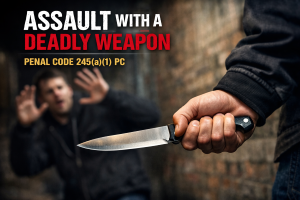
These cases often arise from fast-moving situations—arguments, fights, or misunderstandings—that quickly escalate into felony charges.
Even if no one was actually injured, you can still be charged if prosecutors believe your actions could have caused significant harm.
Understanding how this law works, what prosecutors must prove, and the defenses available is critical if you are under investigation or facing charges.
For the best chance at a positive outcome, consider reaching out to an experienced California criminal defense attorney at Esfandi Law Group. We're here to help—call us for a free consultation at (310) 274-6529 or contact us through our website. We look forward to assisting you!
What Is Assault with a Deadly Weapon Under PC 245(a)(1)?
Penal Code 245(a)(1) makes it a crime to:
-
assault another person with a deadly weapon (other than a firearm), or
-
use force likely to produce great bodily injury
This means you do not need to actually injure someone. The focus is on the nature of the act and the potential for harm.
What Qualifies as a “Deadly Weapon”?
A deadly weapon is any object, instrument, or item that can cause serious injury or death when used in a dangerous manner.
Common examples include:
-
knives or sharp objects
-
baseball bats or blunt instruments
-
broken bottles or glass
-
tools, pipes, or heavy objects
-
vehicles used to strike someone
Even ordinary objects can be considered deadly weapons depending on how they are used.
Key Elements Prosecutors Must Prove
To convict you under Penal Code 245(a)(1), prosecutors must prove beyond a reasonable doubt:
-
you committed an act that would likely result in the application of force
-
you acted willfully
-
you used a deadly weapon or force likely to cause great bodily injury
-
you had the present ability to apply that force
-
you did not act in lawful self-defense or defense of others
If any of these elements are not proven, the charge cannot stand.
Examples of Assault with a Deadly Weapon
-
attempting to stab someone during a fight
-
swinging a bat or heavy object at another person
-
throwing a sharp or dangerous object at someone
-
using a vehicle to try to strike another individual
No physical contact or injury is required—only the attempt or likelihood of force.
Is Penal Code 245(a)(1) a Misdemeanor or a Felony?
| Charge Type | When It Applies | Jail / Prison Exposure | Fines | Probation | Additional Consequences |
|---|---|---|---|---|---|
|
Misdemeanor Assault with a Deadly Weapon |
Less serious conduct, minimal injuries, no significant criminal history |
Up to 1 year in county jail |
Up to $1,000 |
Informal (summary) probation |
Possible anger management, community service, restraining orders |
|
Felony Assault with a Deadly Weapon |
More serious conduct, use of dangerous weapon, prior record, or risk of great bodily injury |
2, 3, or 4 years in state prison |
Up to $10,000 |
Formal probation (in some cases) |
Strike offense, firearm restrictions, long-term criminal record |
|
Felony with Aggravating Factors |
Victim is protected (police/firefighter), serious injuries, prior strikes |
Increased prison exposure beyond standard range |
Higher fines possible |
Formal probation or prison |
Strike consequences, enhanced sentencing, possible sentence enhancements |
Key Takeaways
-
California Penal Code 245(a)(1) is a “wobbler,” meaning it can be charged as either a misdemeanor or felony.
-
Prosecutors consider factors such as the injury, the weapon used, and criminal history when deciding how to file charges.
-
Felony convictions carry significantly more severe penalties and may count as a strike under California law.
-
Early legal intervention can help reduce a felony to a misdemeanor or avoid charges altogether.
Enhanced Penalties
Penalties can increase significantly if:
-
the victim is a police officer or firefighter
-
a firearm is involved
-
you have prior strike convictions
In some cases, assault with a deadly weapon may qualify as a strike under California's Three Strikes law.
Related Assault Charges with Descriptions
Charges under California Penal Code 245(a)(1) are often filed alongside or reduced to other California assault-related offenses, depending on the facts of the case.
Prosecutors frequently “stack” or adjust charges based on the level of force, type of weapon, and extent of injury. Understanding these related offenses is essential for evaluating your exposure and building a strong defense.
California Penal Code 245(a)(2) – Assault with a Firearm
This offense applies when a gun is used during an assault. It is typically charged as a felony and carries harsher penalties than non-firearm cases, including longer prison sentences and potential firearm enhancements.
California Penal Code 245(a)(4) – Assault by Means Likely to Produce Great Bodily Injury
This charge focuses on the level of force used rather than a weapon. Even without a weapon, actions such as repeated punching or kicking can qualify if they are likely to cause significant injury.
California Penal Code 240 – Simple Assault
PC 240 is a lesser included offense of assault with a deadly weapon. It applies when there is no weapon, and the force used is minimal. This is typically a misdemeanor and is often used in plea negotiations to reduce more serious charges.
California Penal Code 242 – Battery
Battery involves actual physical contact or the use of force against another person. Unlike assault, which focuses on attempted harm, battery requires that contact actually occurred.
California Penal Code 243(d) – Battery Causing Serious Bodily Injury
PC 243(d) applies when a battery results in significant physical injury. It is a “wobbler” and can be charged as either a misdemeanor or a felony depending on the severity of harm.
California Penal Code 243(e)(1) – Domestic Battery
Applies when force is used against a spouse, cohabitant, or intimate partner. Even minor contact can result in charges, including protective orders and mandatory counseling.
California Penal Code 29825 PC makes it illegal for certain individuals to possess firearms while subject to court orders.
California Penal Code 273.5 – Corporal Injury to a Spouse or Cohabitant
A more serious domestic violence offense involving a visible injury or “traumatic condition.” This is commonly charged as a felony and carries significant penalties.
California Penal Code 244 – Assault with Caustic Chemicals
Involves throwing or applying harmful substances like acid with the intent to injure or disfigure. This is a serious felony offense.
California Penal Code 417 – Brandishing a Weapon
Occurs when a weapon is displayed in a threatening manner, even if not used. This is often charged as a misdemeanor, but it can escalate depending on the circumstances.
California Penal Code 664/187 – Attempted Murder
PC 664/187 is filed in more severe cases where prosecutors allege intent to kill rather than just injure. This carries significantly higher penalties, including potential life sentences.
Why These Related Charges Matter
In many cases, prosecutors file multiple charges or adjust them as the case develops. For example:
-
a PC 245(a)(1) charge may be reduced to simple assault (PC 240)
-
or increased to attempted murder if intent to kill is alleged
This flexibility makes early legal strategy critical. A strong defense can often reduce charges, avoid strike consequences, or prevent a felony filing altogether.
Common Legal Defenses to Assault with a Deadly Weapon – Penal Code 245(a)(1)
Defending against an assault with a deadly weapon charge requires a detailed analysis of the facts, evidence, and the prosecution's ability to prove each element beyond a reasonable doubt. Many cases are defensible, and the right legal strategy can lead to reduced charges or dismissal.
Self-Defense or Defense of Others
Self-defense is one of the strongest and most commonly used defenses in assault cases.
You may be legally justified in using force if:
- You reasonably believed you or someone else was in imminent danger of harm
- You reasonably believed force was necessary to prevent that harm
- You used no more force than was reasonably necessary under the circumstances
Even if a weapon was used, self-defense can still apply if the response was proportional to the perceived threat.
California law permits you to use a firearm in self-defense—but only under strict legal conditions.
Although California lacks a statute explicitly labeled “Stand Your Ground,” the principle is recognized in case law and jury instructions on self-defense.
Lack of a “Deadly Weapon”
Not every object qualifies as a deadly weapon under California law.
The defense may argue:
- The object used was not inherently dangerous
- It was not used in a manner likely to cause great bodily injury
- The alleged victim was never actually at risk of serious harm
If the object does not legally qualify as a deadly weapon, the charge may be reduced to simple assault.
Lack of Willful Conduct (Accident)
To be convicted, the prosecution must prove that you acted willfully.
This defense applies when:
- The incident was accidental
- There was no intent to apply force
- The act occurred without conscious or deliberate action
Accidental conduct does not meet the legal standard for assault.
Insufficient Evidence
In many cases, the prosecution's evidence is weak or inconsistent.
Common issues include:
- Conflicting witness statements
- Lack of physical evidence
- Unreliable or biased witnesses
- Incomplete or flawed police reports
If the prosecution cannot prove every element beyond a reasonable doubt, the case must be dismissed.
False Accusations
False allegations are more common than many people realize, especially in emotionally charged situations.
These cases often arise from:
- Domestic disputes
- Custody battles
- Road rage incidents
- Personal conflicts
A thorough investigation can uncover motives to fabricate or exaggerate claims.
No Present Ability to Apply Force
California law requires that the defendant had the present ability to carry out the alleged assault.
This defense may apply if:
- The defendant was too far away to cause harm
- The weapon was not functional or usable
- The circumstances made it impossible to carry out the threat
Without present ability, there is no assault under the law.
Violation of Constitutional Rights
Evidence may be excluded if law enforcement violated your constitutional rights.
Examples include:
- Illegal searches or seizures
- Failure to read Miranda rights during custodial interrogation
- Coerced statements or confessions
If key evidence is suppressed, the prosecution's case may collapse.
Key Takeaway
The most effective defense strategy depends on the specific facts of the case. In many Penal Code 245(a)(1) cases, early intervention by an experienced criminal defense attorney can:
- Identify weaknesses in the prosecution's case
- Preserve critical evidence
- Prevent overcharging
- Position the case for dismissal or reduction
Frequently Asked Questions
Do I have to injure someone to be charged?
No. You can be charged even if no injury occurred. The law focuses on the risk of harm.
Is assault with a deadly weapon a strike offense?
It can be. If charged as a felony and involving serious conduct, it may count as a strike under California law.
Can this charge be reduced?
Yes. In some cases, felony charges may be reduced to misdemeanors such as simple assault.
Will I go to prison?
It depends on the facts, your criminal history, and whether the case is filed as a felony.
What should I do if I am charged?
Do not speak with law enforcement. Contact a criminal defense attorney immediately.
Speak With a Los Angeles Criminal Defense Attorney
Assault with a deadly weapon charges carry serious consequences, but being accused does not mean you will be convicted. Early legal intervention can make a critical difference in how your case is charged and resolved.
An experienced defense attorney can:
-
analyze the evidence and identify weaknesses
-
challenge the prosecution's case
-
negotiate reduced charges or dismissal
-
build a strong defense strategy
If you are facing charges under Penal Code 245(a)(1), contact a California criminal defense attorney immediately to protect your rights and your future.
Esfandi Law Group is available to assist you. Please schedule your complimentary consultation by calling (310) 274-6529 or utilizing the contact form provided here.