
What Is Vehicular Manslaughter Under Penal Code 192(c)?
California Penal Code 192(c) makes it a crime to cause the death of another person while driving if the death occurred because the driver acted negligently or committed an unlawful act.
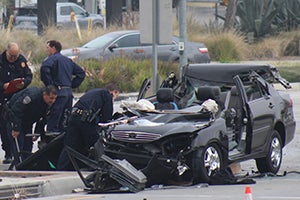
Vehicular manslaughter generally occurs when:
-
A driver violates a traffic law or engages in negligent driving
-
The negligent conduct causes a vehicle accident
-
The accident results in another person's death
The prosecution must prove that the driver's actions were a substantial factor in causing the fatality.
Importantly, this law does not apply to DUI-related vehicular manslaughter, which is charged under a different statute.
If you were charged with vehicular manslaughter, your best hope for a positive outcome is with an experienced California criminal defense attorney at Esfandi Law Group. To schedule a free consultation, call (310) 274-6529 or contact us here.
Types of Vehicular Manslaughter Charges in California
Penal Code 192(c) recognizes several different forms of vehicular manslaughter based on the driver's conduct and the level of negligence involved.
Vehicular Manslaughter During an Unlawful Act
A person may be charged with vehicular manslaughter if they cause a death while committing an unlawful act that is not a felony.
Examples of unlawful acts may include:
-
Speeding
-
Running a red light
-
Illegal lane changes
-
Texting while driving
If the unlawful conduct is accompanied by gross negligence, the offense can be prosecuted as a felony.
Gross negligence refers to an extreme departure from the level of care a reasonable person would exercise under similar circumstances.
California courts often describe gross negligence as:
-
Very serious carelessness
-
A significant departure from normal driving behavior
-
A failure to exercise even minimal caution
Vehicular Manslaughter During a Lawful Act With Negligence
Vehicular manslaughter can also occur when someone performs a lawful act in a negligent manner that causes a fatal accident.
Examples include:
-
Failing to yield the right-of-way
-
Driving too fast for the road conditions
-
Failing to notice pedestrians or cyclists
In these cases, prosecutors must prove the driver acted with either ordinary negligence or gross negligence.
Ordinary negligence means the driver failed to exercise the level of care that a reasonably careful person would have exercised in the same situation.
Examples of Vehicular Manslaughter Cases
Common scenarios that may lead to vehicular manslaughter charges include:
-
A driver texting while driving strikes and kills a pedestrian
-
A driver speeding through an intersection causes a fatal collision
-
A driver runs a stop sign and hits a bicyclist
-
A distracted driver drifts into another lane and causes a deadly crash
Each case depends on the specific facts and whether prosecutors can prove negligence caused the death.
Penalties for Vehicular Manslaughter in California
The penalties for violating Penal Code 192(c) depend on whether the conduct involved ordinary negligence or gross negligence.
Vehicular Manslaughter With Gross Negligence
Vehicular manslaughter involving gross negligence is a wobbler offense, meaning it may be charged as either a felony or a misdemeanor.
Possible penalties include:
Felony penalties:
-
Two, four, or six years in California state prison
-
Fines up to $10,000
-
Formal probation in some cases
Misdemeanor penalties:
-
Up to one year in county jail
-
Misdemeanor probation
-
Fines and court assessments
Vehicular Manslaughter With Ordinary Negligence
If the conduct involved only ordinary negligence, the offense is charged as a misdemeanor.
Possible penalties include:
-
Up to one year in county jail
-
Fines up to $1,000
-
Summary probation
Driver's License Consequences
A conviction for vehicular manslaughter may also result in driver's license suspension.
In some cases involving gross negligence or financial gain, the California DMV may suspend driving privileges for at least three years.
Legal Defenses to Vehicular Manslaughter Charges
A vehicular manslaughter charge does not automatically mean a conviction. Several legal defenses may apply depending on the facts of the case.
Lack of Negligence
The prosecution must prove that the driver acted negligently or with gross negligence.
If the driver acted reasonably under the circumstances, the charge may not apply.
For example, a sudden mechanical failure or an unavoidable road hazard could undermine a negligence claim.
The Driver Did Not Cause the Death
Another defense is that the driver's conduct was not the cause of the fatality.
Fatal accidents may involve multiple contributing factors such as:
-
Actions of another driver
-
Pedestrian negligence
-
Poor road conditions
-
Mechanical defects
If the defendant's actions were not a substantial factor in the death, the charge may be challenged.
Sudden Emergency Doctrine
California law recognizes the sudden emergency doctrine.
Under this principle, a driver confronted with a sudden and unexpected emergency is only required to act as a reasonable person would under the same conditions.
For example, if a driver swerves to avoid hitting a child who ran into the road and an accident occurs, the driver may argue that their actions were reasonable given the emergency.
Related California Crimes
Several other California laws may apply in cases involving fatal traffic accidents.
Penal Code 191.5 – Gross Vehicular Manslaughter While Intoxicated
Penal Code 191.5 applies when a driver causes a fatal accident while driving under the influence of alcohol or drugs with gross negligence. This felony offense carries significantly harsher penalties than standard vehicular manslaughter.
Penal Code 187 – Watson Murder
Watson murder refers to a second-degree murder charge that may be filed when a person causes a death while driving under the influence after previously being warned about the dangers of DUI.
Convictions may result in 15 years to life in prison.
Vehicle Code 23152 – Driving Under the Influence
Vehicle Code 23152 prohibits driving while under the influence of alcohol or drugs or with a blood alcohol concentration of 0.08 percent or higher.
A DUI that leads to a fatal accident may elevate the case to vehicular manslaughter or murder charges.
Vehicle Code 23153 – DUI Causing Injury
Vehicle Code 23153 applies when a person drives under the influence and causes injury to another person.
If the injuries are fatal, prosecutors may pursue more serious homicide-related charges.
Frequently Asked Questions About Vehicular Manslaughter
Is vehicular manslaughter always a felony?
No. Vehicular manslaughter may be charged as either a misdemeanor or a felony, depending on the level of negligence involved.
What is the difference between gross negligence and ordinary negligence?
Ordinary negligence involves careless behavior. Gross negligence is a much more serious departure from reasonable conduct and demonstrates extreme carelessness.
Can I be charged if the death was an accident?
Yes. Even accidental deaths may lead to criminal charges if prosecutors believe negligent driving caused the fatality.
What is the difference between vehicular manslaughter and DUI manslaughter?
Vehicular manslaughter under Penal Code 192(c) generally does not involve intoxication. DUI-related fatalities are typically prosecuted under Penal Code 191.5.
Can vehicular manslaughter charges be reduced or dismissed?
Yes. Depending on the evidence, charges may be reduced, dismissed, or negotiated to lesser offenses.
Speak With a California Vehicular Manslaughter Defense Attorney
Vehicular manslaughter charges carry serious legal consequences, including potential prison time and long-term driver's license suspension.
However, prosecutors must prove negligence and causation beyond a reasonable doubt. In many cases, additional factors such as road conditions, other drivers, or mechanical failures may contribute to the accident.
An experienced California criminal defense attorney can review the evidence, challenge the prosecution's claims, and develop a strategy to protect your rights.
Esfandi Law Group represents clients throughout Southern California, including Los Angeles County. If you or a loved one is facing vehicular manslaughter charges, contact our office to discuss your case and possible defense options.