
Possession of an Assault Weapon in California – Penal Code 30605 PC
California has some of the strictest firearm laws in the country, including a ban on many assault weapons. Under California Penal Code 30605 PC, it is a crime to possess an assault weapon, even if you do not own it.
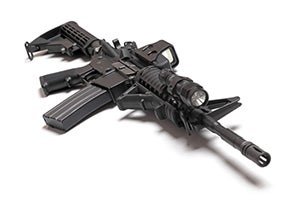
Simply having control over or access to a prohibited firearm can result in criminal charges.
These cases are often complex because many firearms become illegal based on specific features or modifications. As a result, individuals are frequently charged without realizing that their weapon falls under California's definition of an assault weapon.
If you are facing allegations under Penal Code 30605, understanding how the law works—and how to challenge it—is essential to protecting your rights.
For the best chance at a positive outcome for a weapons offense, consider reaching out to our experienced California criminal defense attorney at Esfandi Law Group.
We're here to help—simply call us at (310) 274-6529 or contact us here for your free consultation.
What Is Possession of an Assault Weapon?
Possession of an assault weapon under California Penal Code 30605 means having control over, access to, or custody of a firearm that meets the state's legal definition of an assault weapon.
This offense does not require ownership, use, or intent to use the firearm—mere possession is enough to trigger criminal liability.
The law is designed to regulate access to certain firearms deemed highly restricted due to their features.
As a result, many cases arise from situations where individuals did not realize their firearm qualified as an assault weapon under California's technical definitions.
Conduct That Can Lead to Charges
Under Penal Code 30605, you can be charged if you:
- Possess or control a prohibited firearm
- Have access to the weapon, even if it belongs to someone else
- Store or transport the weapon in a place you control
- Exercise custody over the firearm, even temporarily
Types of Possession Recognized by Law
California law recognizes multiple forms of possession, all of which can support a criminal charge:
- Actual possession
- The firearm is on your person or within immediate reach
- Example: A weapon in your bag or waistband
- Constructive possession
- The firearm is located in a place you control or can access
- Example: A weapon stored in your home, vehicle, or storage unit
- Joint possession
- Multiple individuals share access or control over the same firearm
- Example: A weapon found in a shared residence
What the Prosecution Must Prove
To convict you, prosecutors must establish:
- You knowingly possessed or controlled the firearm
- The firearm qualifies as an assault weapon under California law
- You had the ability to access or exercise control over it
If any of these elements cannot be proven beyond a reasonable doubt, the charges may be challenged or dismissed.
Why This Definition Matters
Because California's assault weapon laws are highly technical and feature-based, many individuals are charged without realizing that their firearm is prohibited. Small modifications, attachments, or configurations can change a legal weapon into an illegal one.
For this reason, possession cases often focus on:
- Whether you actually had control over the firearm
- Whether you knew it was present
- Whether the weapon truly meets the legal definition
These details are critical in determining whether a charge under Penal Code 30605 can be sustained or successfully defended.
Types of Possession Under California Law
California recognizes different forms of possession, all of which can lead to charges under Penal Code 30605.
Actual Possession
Actual possession means the firearm is physically on your person.
Examples include:
- Carrying the weapon in your hands
- Having it in a backpack or bag
- Keeping it within immediate reach
Constructive Possession
Constructive possession applies when the firearm is not on your person but is in a location you control.
Examples include:
- A weapon stored in your home
- A firearm located in your vehicle
- Access to a weapon in a shared space
Even if the weapon belongs to someone else, you can still be charged if you had access or control.
What Is Considered an Assault Weapon in California?
California defines “assault weapon” using detailed, technical criteria found primarily in Penal Code sections 30510 and 30515.
Unlike common usage of the term, the legal definition does not depend on how a firearm looks—it depends on specific features, configurations, and whether the firearm appears on a banned list.
Because the law is highly technical, many firearms that appear legal can qualify as assault weapons based on small modifications or design features.
Firearms Specifically Listed by Law
California maintains a list of specific makes and models that are automatically classified as assault weapons. If a firearm appears on this list, it is illegal regardless of its current configuration.
This includes certain:
- AR-15 style rifles identified by manufacturer and model
- AK-series rifles and similar variants
- Other specifically named firearms prohibited by statute
Feature-Based Definitions (Penal Code 30515)
Even if a firearm is not on the banned list, it may still qualify as an assault weapon based on its features.
Semiautomatic Centerfire Rifles
A semiautomatic centerfire rifle may be considered an assault weapon if it:
- Does not have a fixed magazine and includes one or more prohibited features, or
- Has a fixed magazine capable of holding more than 10 rounds, or
- Has an overall length of less than 30 inches
Common Prohibited Features
A rifle with a detachable magazine may be classified as an assault weapon if it includes features such as:
- A pistol grip or forward grip
- A thumbhole stock
- A folding or telescoping stock
- A flash suppressor
- A grenade or flare launcher attachment
Semiautomatic Pistols and Shotguns
Certain semiautomatic pistols and shotguns may also qualify as assault weapons if they have specific features, including:
- Detachable magazines combined with prohibited design elements
- Threaded barrels or forward grips (for pistols)
- Folding stocks or revolving cylinders (for shotguns)
Why Modifications Matter
Many assault weapon charges arise from aftermarket modifications. A firearm that was originally legal can become illegal if it is altered to include restricted features or configurations.
Examples of changes that may trigger classification include:
- Adding a detachable magazine system
- Installing a prohibited grip or stock
- Modifying barrel components or attachments
Key Legal Considerations
When determining whether a firearm qualifies as an assault weapon, courts and prosecutors evaluate:
- The firearm's specific make and model
- Its configuration at the time it was discovered
- Whether it includes prohibited features
- Whether it complies with California's fixed magazine requirements
Why This Definition Is Important
California's assault weapon laws are among the most complex in the country. Many individuals are charged under Penal Code 30605 because they were unaware that their firearm met the legal definition.
These cases often hinge on technical analysis of the firearm itself. A detailed review by a qualified expert can determine whether the weapon truly qualifies as an assault weapon under California law, which can be a critical factor in defending against charges.
Legal Elements Prosecutors Must Prove
To convict you under Penal Code 30605, the prosecution must prove:
- You knowingly possessed the weapon
- The firearm meets the legal definition of an assault weapon
- You had control over or access to the firearm
If any of these elements cannot be proven beyond a reasonable doubt, the charges may not stand.
Penalties for Possession of an Assault Weapon
Penal Code 30605 is a “wobbler,” meaning it can be charged as either a misdemeanor or a felony.
| Charge Type | Classification | Jail / Prison Exposure | Maximum Fine | Key Notes |
|---|---|---|---|---|
|
Misdemeanor |
Misdemeanor |
Up to 1 year in county jail |
Up to $1,000 |
Less severe cases |
|
Felony |
Felony |
16 months, 2 years, or 3 years in county jail |
Up to $10,000 |
More serious cases |
Possible Reduction to Infraction
In limited situations, the charge may be reduced to an infraction with a fine of up to $500 if strict criteria are met, including lawful prior possession and timely relinquishment.
Real-World Examples
Possession of an assault weapon charges often arise from misunderstandings about California's firearm laws.
Examples include:
- A legally purchased rifle becomes illegal after adding a prohibited feature
- A firearm stored in a shared home leads to multiple people being charged
- A weapon found in a vehicle results in constructive possession allegations
- A person temporarily holding a firearm is accused of unlawful possession
Common Defense Strategies
These cases often involve technical legal issues and strong defenses may be available.
Lack of Knowledge
You must knowingly possess the weapon. If you were unaware of its presence or classification, this may be a defense.
No Possession or Control
You must have control over the firearm. Mere proximity is not enough.
Weapon Does Not Qualify as an Assault Weapon
Not all firearms meet the legal definition. A detailed analysis of the weapon's features may show it is lawful.
Illegal Search and Seizure
If law enforcement violated your rights when discovering the firearm, the evidence may be suppressed.
Legal Authorization or Compliance
Some individuals may lawfully possess certain weapons under permits or prior registration rules.
Eligibility for Infraction Reduction
If specific statutory criteria are met, the charge may be reduced to a non-criminal infraction.
Related California Crimes to Possession of an Assault Weapon
Charges under California Penal Code 30605 are often accompanied by additional firearm or weapons-related offenses. Prosecutors frequently file multiple charges arising from the same incident to increase potential penalties and strengthen their case.
Understanding how these related crimes overlap is critical, as many rely on similar elements such as possession, control, knowledge, and the nature of the firearm involved.
Manufacture, Sale, or Distribution of an Assault Weapon – Penal Code 30600
Penal Code 30600 addresses conduct involving the creation, sale, or transfer of assault weapons. This offense is more serious than simple possession and applies when a person manufactures, distributes, transports, imports, sells, or lends a prohibited firearm. It is typically charged as a felony and carries significantly higher penalties.
Carrying a Concealed Firearm – Penal Code 25400
PC 25400 involves carrying a concealed firearm on your person or inside a vehicle. It focuses on how the firearm is carried rather than whether it is prohibited. When a concealed weapon also qualifies as an assault weapon, prosecutors may file both charges together.
Carrying a Loaded Firearm in Public – Penal Code 25850
Penal Code 25850 prohibits carrying a loaded firearm in public or in a vehicle. This charge often accompanies possession allegations when a firearm is found loaded and accessible. The presence of ammunition can increase the seriousness of the case.
Possession of a Destructive Device – Penal Code 18710
This offense involves possession of explosive or destructive devices such as bombs, grenades, or similar weapons. While distinct from assault weapon laws, it may be charged in cases involving highly restricted or modified weapons that fall into multiple prohibited categories.
Possession of Materials to Make a Destructive Device – Penal Code 18720
Penal Code 18720 applies when a person possesses components intended to create explosive devices. Even if no device has been assembled, the intent to manufacture such a device can result in serious felony charges.
Large-Capacity Magazine Restrictions – Penal Code 32310
California law restricts possession of large-capacity magazines, generally defined as those capable of holding more than 10 rounds. These charges are often filed alongside assault weapon allegations because many prohibited firearms are associated with high-capacity magazines.
Ammunition Possession by a Prohibited Person – Penal Code 30305
This statute makes it illegal for certain individuals, including convicted felons, to possess ammunition. It is commonly charged together with firearm offenses when ammunition is discovered during a search.
Why These Related Charges Matter
Prosecutors often combine multiple charges to increase exposure and create leverage during plea negotiations. A single incident involving a firearm can quickly expand into several overlapping allegations.
Because these offenses frequently depend on similar legal elements—such as whether you possessed the weapon, whether you knew it was present, and whether law enforcement conducted a lawful search—a focused defense strategy can address multiple charges at once.
Successfully challenging possession, knowledge, or the legality of the search can simultaneously weaken or eliminate several allegations and significantly improve the case's outcome.
Frequently Asked Questions
Do I have to own the assault weapon to be charged?
No. Ownership is not required. You can be charged if you had control over or access to the weapon.
What if I didn't know my firearm was illegal?
Lack of knowledge may be a defense, especially in cases involving complex firearm classifications or modifications.
Can the charges be reduced?
Yes. Depending on the facts, charges may be reduced to a misdemeanor or even an infraction.
Can I go to jail for this offense?
Yes. A conviction can result in up to one year in jail for a misdemeanor or up to three years for a felony.
Can the case be dismissed?
Yes. Cases may be dismissed if the prosecution cannot prove possession, knowledge, or that the weapon qualifies as an assault weapon.
Do I need a lawyer for this charge?
Yes. These cases involve technical firearm laws and serious penalties. Legal representation is critical to achieving the best outcome.
Take Action: Protect Your Rights Early
Facing a charge for possession of an assault weapon can have serious consequences, but early action can make a significant difference. A strong legal strategy can challenge the evidence, reduce charges, or prevent the case from moving forward.
If you are under investigation or charged under California Penal Code 30605 PC, consulting with an experienced criminal defense attorney can help you understand your options and build the most effective defense.
Esfandi Law Group is committed to assisting you. Please schedule your complimentary consultation by calling (310) 274-6529 or utilizing the contact form provided herein.