
Fourth Amendment Violations Explained: Illegal Searches, Seizures, and Your Rights
What Is a Fourth Amendment Violation?
The Fourth Amendment to the United States Constitution protects individuals from unreasonable searches and seizures by the government.
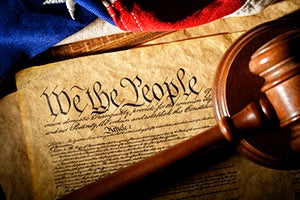
It ensures that law enforcement cannot intrude on your privacy or take your property without proper legal justification.
A Fourth Amendment violation happens when government officials conduct searches or seizures that aren't reasonable, or if they act without a proper warrant based on probable cause.
Such illegal searches infringe on a person's "reasonable expectation of privacy," such as in their home, personal belongings, or phone. Usually, any evidence gathered unlawfully is not allowed to be used in court.
In California, stop-and-frisk encounters—often called Terry stops—are governed by the Fourth Amendment to the U.S. Constitution, which protects individuals against unreasonable searches and seizures.
Esfandi Law Group is available to assist you. Please schedule your complimentary consultation by calling (310) 274-6529 or by utilizing the contact form provided here.
Key Protections Under the Fourth Amendment
The Fourth Amendment establishes core privacy rights that limit how and when the government can search, seize, or surveil individuals.
These protections apply to everyday encounters with law enforcement as well as complex criminal investigations involving homes, vehicles, and digital data.
Core Constitutional Safeguards
The Fourth Amendment protects:
- Your person, meaning your body and immediate physical control
- Your home, which receives the highest level of privacy protection
- Your papers and effects, including personal belongings, vehicles, and electronic devices
- Your digital data, such as emails, text messages, and stored files
These protections are designed to prevent arbitrary government intrusion.
Related Legal Topics
- Miranda rights are essential within the criminal justice system, both in California and nationwide. They safeguard individuals from self-incrimination during police interrogations and guarantee the right to legal counsel.
- In California, the difference between detention and arrest is one of the most crucial in criminal law. While both involve police interaction, they differ significantly in terms of authority, legal basis, and outcomes.
- Courts have recognized several exceptions to the warrant requirement, with exigent circumstances among the most commonly disputed.
- In California, police can search a car without a warrant, but only under specific legal exceptions. If those exceptions are violated, the evidence may be excluded, and your case could be reduced or dismissed.
Warrant Requirements
In most situations, law enforcement must obtain a warrant before conducting a search or seizure.
A valid search warrant must:
- Be issued by a neutral judge or magistrate
- Be supported by probable cause
- Be based on sworn statements or affidavits
- Specifically describe the place to be searched
- Clearly identify the items or evidence to be seized
General or overly broad warrants are not permitted.
Probable Cause Standard
Probable cause is a key requirement for obtaining a warrant or making certain arrests.
- It requires a reasonable belief that a crime has been committed
- There must be a factual basis linking the place or person to criminal activity
- Mere suspicion or speculation is not enough
Without probable cause, most searches and seizures are unlawful.
Protection Against Unreasonable Searches and Seizures
The Fourth Amendment does not ban all searches—only those that are unreasonable.
Courts evaluate reasonableness based on:
- The level of intrusion into personal privacy
- The justification for the search or seizure
- Whether proper legal procedures were followed
If a search is deemed unreasonable, it may violate constitutional rights.
Application to Modern Technology
Fourth Amendment protections extend to digital privacy.
- Law enforcement generally needs a warrant to search cell phones
- Accessing emails, cloud storage, and electronic records often requires judicial approval
- Surveillance technologies, such as GPS tracking, may also require warrants
As technology evolves, courts continue to apply Fourth Amendment principles to new forms of data and communication.
Key Takeaway
The Fourth Amendment provides strong protections against government overreach by requiring warrants, probable cause, and reasonable searches and seizures. These safeguards are essential to preserving privacy and ensuring that law enforcement operates within constitutional limits.
What Makes a Search or Seizure “Unreasonable”?
Not all searches are illegal. The Fourth Amendment only prohibits those considered unreasonable under the law.
A search or seizure may be considered unreasonable when:
- It is conducted without a warrant, and no exception applies
- There is no probable cause or reasonable suspicion
- Law enforcement exceeds the legal scope of a warrant
- Consent is obtained through coercion or deception
Courts evaluate reasonableness based on the facts and circumstances of each case.
Common Examples of Fourth Amendment Violations
Warrantless Searches Without Legal Justification
One of the most common violations occurs when officers search a home, vehicle, or person without a warrant, consent, or valid exception.
Example: Police search your car during a traffic stop without probable cause or permission.
Invalid or Overbroad Warrants
Even when a warrant exists, it must meet strict legal standards.
Violations may occur when:
- The warrant lacks probable cause
- The warrant is overly broad or vague
- The warrant is based on false or misleading information
Evidence obtained under an invalid warrant may be excluded in court.
Exceeding the Scope of a Search
Law enforcement must stay within the limits of a warrant.
Example: A warrant allows a search for stolen electronics, but officers search unrelated documents or files.
Illegal Seizure of Property
Taking property without legal authority can violate the Fourth Amendment.
Example: Confiscating personal belongings without a warrant or lawful justification.
Unlawful Surveillance
Modern surveillance methods often require a warrant.
Violations may include:
- Wiretapping without court authorization
- Tracking devices placed without judicial approval
- Accessing phone or digital data without a warrant
Pretextual Stops
A pretextual stop occurs when police use a minor violation as a pretext to investigate unrelated suspected criminal activity.
If the stop lacks proper legal justification, resulting searches may be challenged.
Unlawful Arrest Leading to Search
Searches conducted after an unlawful arrest may also be invalid.
If the arrest lacks probable cause, any evidence obtained afterward may be suppressed.
Coerced Consent Searches
Consent must be voluntary.
Example: An officer pressures or intimidates someone into agreeing to a search. This may invalidate the consent and lead to a constitutional violation.
Examples of Fourth Amendment Violations in Real Situations
Example 1: Traffic Stop Search
An officer pulls over a driver for a minor violation and searches the vehicle without consent or probable cause. This may be an unlawful search.
Example 2: Home Entry Without a Warrant
Police enter a home without a warrant or emergency justification. Evidence found inside may be inadmissible.
Example 3: Phone Data Access
Law enforcement accesses a suspect's phone data without a warrant. This can violate digital privacy protections.
How Fourth Amendment Violations Affect Criminal Cases
| Legal Concept | Description | How It Impacts the Case | Potential Outcome |
|---|---|---|---|
|
Exclusionary Rule |
Prevents illegally obtained evidence from being used in court |
Weakens the prosecution's case by removing key evidence |
Charges may be reduced or dismissed |
|
Motion to Suppress Evidence |
Defense files a motion to exclude evidence obtained through unlawful search or seizure |
Forces the court to review police conduct and legality of evidence |
Evidence may be ruled inadmissible |
|
Fruit of the Poisonous Tree Doctrine |
Extends exclusion to evidence derived from illegal conduct |
Secondary evidence obtained from illegal search is also excluded |
Significant portions of the case may be eliminated |
|
Case Dismissal |
Occurs when suppressed evidence leaves insufficient proof |
Prosecutor cannot proceed without key evidence |
Charges dropped or case dismissed |
|
Plea Negotiation Leverage |
Defense uses constitutional violations to negotiate |
Prosecutor may offer reduced charges or favorable plea deal |
Reduced penalties or alternative sentencing |
|
Credibility Challenges |
Defense attacks law enforcement conduct and reliability |
Jury may question integrity of investigation |
Increased chance of acquittal |
|
Civil Rights Claims |
Defendant may pursue legal action for rights violations |
Separate from criminal case but impacts accountability |
Potential financial damages or settlements |
|
Appellate Review |
Higher courts review whether rights were violated |
Errors at trial may be corrected on appeal |
Conviction overturned or new trial ordered |
Key Takeaways
- Fourth Amendment violations can dramatically weaken or eliminate a criminal case
- Suppressed evidence often determines whether a case proceeds or is dismissed
- Constitutional violations can also create leverage for defense strategies
- Legal remedies may extend beyond the criminal case to civil claims
Frequently Asked Questions (FAQs)
What is an illegal search under the Fourth Amendment?
An illegal search occurs when law enforcement searches your person, home, or property without a warrant, probable cause, or a valid legal exception.
Can police search my car without a warrant?
In some cases, yes. However, they must have probable cause or a valid exception. Otherwise, the search may be unlawful.
What happens if my rights are violated?
Evidence obtained illegally may be excluded from court, which can weaken or dismiss the case against you.
Can I refuse a search?
Yes. You generally have the right to refuse consent to a search unless officers have a warrant or legal justification.
Does the Fourth Amendment apply to phones and computers?
Yes. Courts recognize digital privacy rights, and law enforcement typically needs a warrant to access electronic data.
Can charges be dismissed بسبب a Fourth Amendment violation?
Yes. If critical evidence is suppressed, the prosecution may lack sufficient evidence to continue the case.
Key Takeaway
The Fourth Amendment provides essential protections against unlawful searches and seizures. When law enforcement violates these rights, it can significantly impact a criminal case by excluding evidence and potentially leading to dismissal.
Speak with a Criminal Defense Attorney
If you believe your Fourth Amendment rights were violated, it is critical to seek legal representation immediately.
A criminal defense attorney can:
- Analyze whether a search or seizure was lawful
- File motions to suppress illegally obtained evidence
- Challenge warrants and police conduct
- Work to reduce or dismiss charges
Early legal action can greatly enhance your chances of protecting your rights and strengthening your case.
The most effective approach is to work with an experienced California criminal defense attorney at Esfandi Law Group. To arrange a free consultation, reach out to us here.