
California Vehicle Code 20002 – Misdemeanor Hit and Run
California Vehicle Code 2002 makes it a crime to leave the scene of an accident that results only in property damage without stopping and providing the required information.
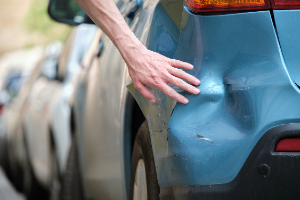
This is commonly referred to as a misdemeanor hit-and-run and is one of the most frequently charged traffic-related crimes in California.
A key point many drivers misunderstand is that fault does not matter. Even if you did not cause the accident, you are still legally required to stop, identify yourself, and comply with reporting obligations.
Failing to do so can lead to criminal charges, fines, jail time, and long-term consequences on your driving record.
If you are accused of leaving the scene of an accident, early legal guidance can help you understand your rights, potential defenses, and options to reduce or dismiss the charges.
Your best chance for a positive outcome is with a skilled California criminal defense attorney at Esfandi Law Group. To arrange a free consultation, feel free to call us at (310) 274-6529 or reach out to us here.
What Is Misdemeanor Hit and Run Under VC 2002?
California Vehicle Code 2002 defines misdemeanor hit and run as leaving the scene of an accident that causes property damage without stopping and providing the required identifying information.
This offense applies only when no one is injured. If an accident results in injury or death, the case may be charged under a more serious felony statute.
To comply with the law, a driver involved in a property-damage accident must:
- Immediately stop at a safe location near the scene
- Provide their name and address to the other party
- Show a driver's license and vehicle registration upon request
If the accident involves a parked vehicle or unattended property and the owner cannot be located, the driver must leave a written note with their contact information and notify local law enforcement.
A key point is that fault does not matter. Even if you did not cause the accident, you can still be charged if you leave without fulfilling these legal duties.
In simple terms, a misdemeanor hit and run is not about causing the accident. It is about what you do afterward. Failure to stop, identify yourself, and report the incident is what creates criminal liability under VC 2002.
Related Legal Topics
- In California, hitting a parked car can occur in just seconds, but your immediate response can decide if it stays a minor issue or turns into a criminal matter.
- The criminal statute of limitations defines the maximum period within which the government can bring charges following an alleged offense. If prosecutors initiate a case after this deadline has passed, it can be dismissed.
- Failure to appear in California occurs when someone legally required to attend a court hearing intentionally skips it. Known as “FTA,” this can lead to additional charges, fines, and a bench warrant for arrest.
- A preliminary hearing in California, often called a “prelim,” is a critical stage in felony criminal cases where a judge determines whether there is sufficient evidence to proceed to trial.
Legal Duties After a Property Damage Accident
Under California Vehicle Code 2002, any driver involved in an accident that results in property damage has immediate legal obligations. These duties apply regardless of who caused the accident and must be followed to avoid criminal liability.
At its core, the law requires drivers to stop, identify themselves, and take reasonable steps to notify the property owner.
Immediate Duty to Stop
You must immediately stop your vehicle at the nearest safe location. This means stopping close enough to the scene without blocking traffic or creating a hazard for others.
Failing to stop, even after a minor collision, is what triggers a hit and run violation.
Duty to Provide Identifying Information
After stopping, you are required to provide identifying information to the other party involved in the accident. This includes:
- Your name and current address
- The name and address of the vehicle's registered owner (if different)
- Your driver's license and vehicle registration upon request
While insurance information is commonly exchanged, it is governed under a separate section of California law.
Accidents Involving Parked Vehicles or Unattended Property
If the accident involves a parked car or property and the owner cannot be located, the law imposes additional responsibilities.
You must:
- Leave a written note in a visible place
- Include your name and address
- Provide a brief explanation of what happened
- Notify the local police department or law enforcement agency
Simply leaving the scene without taking these steps may result in misdemeanor charges.
Duty to Report the Incident
When the property owner cannot be found, notifying law enforcement is mandatory. This step helps document the incident and demonstrates compliance with the law.
Key Takeaway
California law is clear: after any accident involving property damage, you must stop and take reasonable steps to identify yourself and notify the affected party.
Even in minor accidents, failing to follow these duties can quickly turn a simple incident into a criminal case.
Accidents Involving Parked Vehicles or Property
If you cannot locate the owner of the damaged property, you must:
- Leave a written note in a visible location
- Include your name, address, and details of the accident
- Notify the local police department
Failing to complete these steps may result in criminal liability.
Elements of a VC 2002 Charge
To secure a conviction, prosecutors must prove all of the following:
- You were involved in a vehicle accident
- The accident caused damage to someone else's property
- You knew, or reasonably should have known, that damage occurred
- You willfully failed to stop or provide the required information
Each element must be proven beyond a reasonable doubt.
Penalties for Misdemeanor Hit and Run (VC 2002)
| Penalty Type | Description |
|---|---|
|
Criminal Charge |
Misdemeanor offense |
|
Jail Time |
Up to 6 months in county jail |
|
Fines |
Up to $1,000 |
|
Probation |
Informal probation, typically up to 3 years |
|
Community Service |
Often required as part of probation terms |
|
Restitution |
Mandatory payment for property damage caused to the victim |
|
DMV Points |
2 points added to your California driving record |
|
Insurance Impact |
Increased premiums and possible policy consequences |
|
Civil Compromise Option |
Possible dismissal if victim is fully compensated (case-dependent) |
Key Insights
Although VC 2002 is a misdemeanor, the consequences can extend beyond court penalties. A conviction can affect your driving record, insurance rates, and future background checks, making early legal intervention especially important.
A misdemeanor conviction may show up on a background check, particularly if it is recent or if you are still on probation.
In California, a DUI conviction doesn't always lead to jail. The court often approves a “DUI alternative sentence" that replaces incarceration with programs focused on education, rehabilitation, and accountability.
Civil Compromise Option
In some first-time cases, California law allows a resolution known as a civil compromise.
This means:
- You fully compensate the victim for damages
- The victim agrees to resolve the matter
- The court may dismiss the criminal charges
This option is not available in all cases but can be a powerful tool when applicable.
Examples of Misdemeanor Hit and Run Cases
Example 1
A driver lightly rear-ends another car in traffic and leaves without exchanging information. Even if the damage is minor, this may result in VC 2002 charges.
Example 2
A driver hits a parked car in a parking lot and drives away without leaving a note. This is a classic hit and run scenario under the statute.
Example 3
A vehicle strikes a residential fence and leaves the scene without notifying the homeowner or police. This may lead to criminal charges.
Example 4
A driver causes minor damage but properly leaves a note and reports the incident. In this case, there is no violation because legal duties were fulfilled.
Common Legal Defenses to VC 2002 Charges
Defending a misdemeanor hit and run case under California Vehicle Code 2002 often comes down to challenging what you knew, what you did after the accident, and whether the prosecution can prove each required element beyond a reasonable doubt.
A strategic defense can lead to reduced charges, dismissal, or an acquittal.
Lack of Knowledge of the Accident or Damage
One of the most effective defenses is that you did not know an accident occurred or that property damage resulted. The law requires proof that you knew, or reasonably should have known, that damage occurred.
For example, in low-impact situations or when driving a larger vehicle, it is possible not to feel or notice minor contact. If the evidence supports that the incident was not reasonably detectable, this can create reasonable doubt.
You Were Not the Driver
The prosecution must prove that you were the person driving the vehicle at the time of the incident. Being the registered owner alone is not enough.
If someone else had access to your vehicle or was driving it, and there is no clear identification or admission, this defense may apply.
No Property Damage Occurred
Vehicle Code 2002 only applies when there is damage to another person's property. If the evidence shows that only your vehicle was damaged, or no damage occurred at all, there is no violation of this statute.
You Complied With Legal Duties
If you stopped, attempted to locate the property owner, left a note, or contacted law enforcement, you may have fulfilled your legal obligations.
Even partial compliance or a reasonable attempt to comply can be used to challenge the allegation that you willfully fled the scene.
Insufficient Evidence
The prosecution must prove every element of the offense beyond a reasonable doubt. If the case relies on weak circumstantial evidence, unreliable witnesses, or unclear surveillance footage, your attorney can argue that the burden of proof has not been met.
Mistaken Identity
In some cases, law enforcement relies on vehicle descriptions, partial license plates, or eyewitness accounts that may be inaccurate.
If there is doubt about whether you or your vehicle were actually involved, mistaken identity can be a strong defense.
Emergency or Necessity
If you left the scene due to an emergency, such as seeking immediate medical attention or avoiding a dangerous situation, this may justify your actions.
However, you are still generally expected to report the incident as soon as reasonably possible.
Key Takeaway
VC 2002 cases often hinge on intent and knowledge rather than the accident itself. A strong defense focuses on whether you knowingly failed to stop and provide information, and whether the prosecution can prove that beyond a reasonable doubt.
Early legal intervention can make a significant difference by helping you negotiate reduced charges, secure a dismissal, or protect your record.
Related California Offenses
Misdemeanor hit-and-run under Vehicle Code 2002 is often charged alongside, or compared to, other California traffic and criminal offenses. Understanding these related laws can help clarify the seriousness of your situation and how prosecutors may build a case.
Vehicle Code 20001 – Felony Hit and Run
VC 20001 applies when an accident results in injury or death. Unlike VC 2002, which involves only property damage, VC 20001 carries significantly harsher penalties, including potential state prison time and felony consequences. The key difference is the presence of bodily harm.
Vehicle Code 23152 – Driving Under the Influence
If alcohol or drugs are suspected to have played a role in the incident, prosecutors may file DUI charges in addition to hit and run. Even if no injuries occurred, leaving the scene combined with DUI can substantially increase penalties and complicate your defense.
Vehicle Code 23153 – DUI Causing Injury
Under VC 23153, when an accident involves both impaired driving and injury to another person, this offense may be charged. It is typically filed as a felony and carries enhanced penalties, including longer jail or prison sentences and restitution.
Vehicle Code 14601 – Driving on a Suspended License
If your license was suspended or revoked at the time of the incident, you may face additional misdemeanor charges. This can increase potential penalties and negatively impact plea negotiations.
Vehicle Code 12500(a) – Driving Without a License
Driving without a valid California driver's license is a separate offense that is frequently charged alongside hit and run. While often a misdemeanor, it can still add fines, probation terms, and complications to your case.
Vehicle Code 16025 – Failure to Provide Insurance Information
Although VC 2002 requires you to provide identifying information, a separate law requires drivers to exchange insurance details after an accident. Failing to do so is typically an infraction but can still result in additional fines and legal consequences.
Key Takeaway
Related charges can significantly increase the stakes in a VC 2002 case. What begins as a misdemeanor hit and run can quickly escalate if factors like DUI, license status, or injuries are involved.
A comprehensive legal strategy should address all potential charges together to minimize penalties and protect your record.
Why Early Legal Help Matters
Hit and run cases often involve investigations before charges are filed. Early intervention by a defense attorney can:
- Communicate with law enforcement on your behalf
- Prevent charges from being filed
- Negotiate restitution and possible dismissal
- Protect your driving record and criminal history
Frequently Asked Questions
Do I have to stop even if the accident was not my fault?
Yes. California law requires you to stop and provide information regardless of fault.
What if I did not realize I hit something?
You may have a defense if you genuinely did not know and could not reasonably have known that damage occurred.
Will I go to jail for a first offense?
Not necessarily. Many first-time offenders receive probation, fines, or alternative sentencing instead of jail.
Can the charges be dismissed?
Yes. In some cases, charges may be dismissed through a civil compromise or due to insufficient evidence.
What happens to my driving record?
A conviction adds two points to your DMV record, which can increase insurance rates and potentially affect your license status.
Should I talk to the police if they contact me?
It is best to speak with an attorney before making any statements. Anything you say can be used against you.
Speak With a California Hit and Run Defense Attorney
If you are accused of misdemeanor hit and run under Vehicle Code 2002, you are facing criminal penalties that can impact your record, finances, and driving privileges.
In California criminal cases, prosecutors are required to demonstrate a defendant's guilt beyond a reasonable doubt before a jury can deliver a guilty verdict.
An experienced California defense attorney can evaluate your case, identify defenses, and work toward the best possible outcome, including reduced charges or dismissal.
Contact a qualified lawyer today for a confidential consultation and take the first step in protecting your future.
Esfandi Law Group is always ready to assist you. Feel free to schedule your free consultation by calling us at (310) 274-6529 or simply fill out our contact form here. We're here to support you every step of the way!