
Vehicle Code 23572 VC: DUI with a Child Under 14
A typical drunk driving arrest, mainly governed by California Vehicle Code Section 23152 VC, is usually prosecuted as a DUI misdemeanor.
In California, operating a motor vehicle while under the influence of alcohol or drugs carries severe penalties.
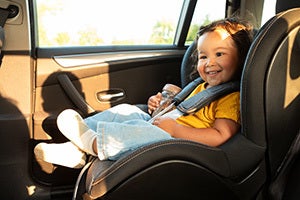
If the driver is charged with a DUI and there is a passenger under 14 in the vehicle, the penalties increase significantly.
Under California law, you generally have the right to refuse a roadside PAS breath test before an arrest.
According to California Vehicle Code 23572 VC, prosecutors can impose a mandatory sentencing enhancement that requires jail time, even for a first-time misdemeanor.
It's crucial to understand how VC 23572 relates to standard DUI charges, including the statutory penalties and possible legal defenses, especially if you or a loved one is confronting these accusations.
The Esfandi Law Group can help you. Schedule your free consultation at (310) 274-6529 or use the contact form here.
What is the Vehicle Code 23572 VC Sentence Enhancement?
Vehicle Code 23572 VC does not constitute an independent criminal charge.
Rather, it serves as a sentencing enhancement linked to a standard DUI charge under Vehicle Code 23152. To apply the penalties specified in VC 23572, two specific conditions must be satisfied:
-
DUI Conviction: The driver needs to be convicted of the original DUI charge.
-
Minor Passenger: The prosecution must demonstrate that a child under 14 was a passenger in the vehicle at the time of the violation.
Mandatory Jail Time: The notable aspect of VC 23572 is that its penalties are mandatory. Even if a judge grants probation and decides not to impose jail time for a standard DUI, the law states that the extra jail time mandated by the VC 23572 enhancement must be served and cannot be deferred, suspended, or omitted.
Enhanced Jail Penalties Under VC 23572
This enhancement's penalty varies based on the number of DUI convictions a driver has within a 10-year period. These mandatory sentences are served consecutively, on top of the penalties for the original DUI conviction.
|
Offense Level |
Mandatory Additional Jail Time under VC 23572 |
| First-Time DUI Offense | 48 continuous hours in county jail |
| Second DUI Offense (Within 10 years) | 10 days in county jail |
| Third DUI Offense (Within 10 years) | 30 days in county jail |
| Fourth or Subsequent Misdemeanor DUI | 90 days in county jail |
General California DUI Penalties and Consequences
To fully understand the significance of a VC 23572 enhancement, it should be compared to the standard penalties for a California DUI under VC 23152.
First-Time DUI Penalties
-
Probation: Informal summary probation lasting 3 to 5 years.
-
Fines: The court imposes fines and penalty assessments ranging from $1,500 to $2,000.
-
Education: Required participation in a state-approved DUI school for a duration of 3 to 9 months.
-
License Restrictions: A 6-month driver's license suspension is possible, but drivers often can keep their driving privileges by installing an Ignition Interlock Device (IID).
-
Incarceration: Up to 6 months in county jail. (Note: If a child under 14 was present, the mandatory 48 hours from VC 23572 are added on top of this period.)
Subsequent DUI Penalties (Second and Third Offenses)
As prior convictions build up over a decade, penalties increase significantly, including higher fines, up to a year in county jail or prison, extended license suspensions, and multi-year IID mandates.
The VC 23572 enhancement adds an extra 10 or 30 days of mandatory custody to these strict penalties.
A DUI conviction under California Vehicle Code Section 23152 involves more than penalties like fines, probation, or jail; it can also jeopardize the careers of many Californians who hold professional licenses regulated by the state.
Related California Statutes
When someone is investigated for a DUI with a minor passenger, prosecutors often consider other relevant statutes that may include separate or conflicting enhancements or charges.
-
Penal Code 273a PC – Child Endangerment: This law criminalizes intentionally placing a child under 18 in a situation that risks their health or safety. For example, driving under the influence with a child in the vehicle often qualifies. Importantly, California law clearly states that penalties for VC 23572 and PC 273a cannot be imposed for the same incident. Prosecutors must decide whether to pursue the sentence enhancement or the more serious charge of child endangerment.
-
Vehicle Code 23582 VC – Speed and Reckless Driving Enhancement: Imposes an extra mandatory 60 days in county jail if the driver was speeding (more than 20 mph over the limit on surface streets or over 30 mph on highways) and driving recklessly while under the influence.
-
Vehicle Code 23578 VC – Excessive BAC or Test Refusal: Authorizes stricter penalties when a driver's blood alcohol concentration is 0.15% or higher, or if the driver refuses a lawful chemical breath or blood test after arrest.
Common Legal Defenses Against VC 23572
An arrest or allegation does not automatically lead to a conviction. A lawyer can assess the details of the traffic stop, chemical tests, and arrest procedures to develop an effective defense plan. Typical strategies include:
-
Challenging the Underlying DUI: Since the VC 23572 enhancement relies completely on a DUI conviction, successfully disputing the original DUI charge—by, for instance, questioning breathalyzer calibration accuracy, blood sample handling, or demonstrating a rising blood alcohol level—effectively cancels out the enhancement.
-
Disputing Probable Cause for the Stop: Under the Fourth Amendment, law enforcement officers need reasonable suspicion to start a traffic stop. If it can be proven that the initial stop was not constitutionally justified, then any evidence collected afterward might be considered inadmissible.
-
Factual Dispute Regarding the Passenger's Age: The text of VC 23572 states that the passenger must be under 14 years old. If a passenger was exactly 14 or older at the time of the incident, the statutory enhancement specified in VC 23572 cannot be legally applied.
A Wet Reckless is a lesser charge, resulting from a plea deal where a prosecutor allows a DUI driver to plead guilty to a modified reckless driving charge under CVC § 23103.5.
The most effective method to achieve a favorable outcome is by seeking counsel from an experienced criminal defense attorney at Esfandi Law Group in California.
Please schedule your complimentary consultation by utilizing the contact form provided herein.