
Felon in Possession of a Firearm in California – Penal Code 29800 PC
California Penal Code 29800 PC makes it a felony offense for certain individuals to own, possess, receive, or purchase a firearm.
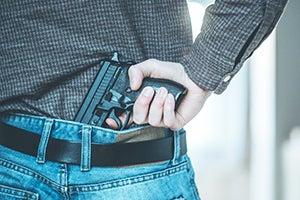
This law is commonly referred to as “felon in possession of a firearm” and is aggressively enforced throughout California.
If you have a prior felony conviction, certain qualifying misdemeanor convictions, or are classified as a narcotics addict under the law, you may be prohibited from having any form of firearm.
Even temporary or indirect possession can lead to serious felony charges.
Understanding how this law works, what qualifies as possession, and what defenses may apply is critical if you are facing allegations under Penal Code 29800.
Your best chance for a positive outcome in a weapons offense is to work with our experienced California criminal defense attorney at Esfandi Law Group.
We'd love to hear from you—call us for a free consultation at (310) 274-6529 or reach out to us here whenever you're ready.
What Is Felon in Possession of a Firearm?
Felon in possession of a firearm under California Penal Code 29800 is a felony offense that prohibits certain individuals from owning, purchasing, receiving, or having control over any firearm.
This law applies not only to convicted felons, but also to individuals with specific disqualifying conditions, such as certain misdemeanor convictions or narcotics addiction.
The statute is intentionally broad, focusing on access and control—not just ownership. You do not need to be holding or actively using a firearm to be charged. If prosecutors believe you had the ability to access or control the weapon, that may be enough to qualify as possession.
Conduct Prohibited Under Penal Code 29800
The law makes it illegal to:
- Own a firearm
- Purchase or attempt to purchase a firearm
- Receive a firearm from another person
- Have actual or constructive possession of a firearm
- Exercise control or custody over a firearm
What Qualifies as a Firearm?
A firearm includes any device designed to expel a projectile by force. This covers:
- Handguns and pistols
- Revolvers
- Rifles
- Shotguns
The firearm does not need to be loaded, operational, or recently used. Its mere presence can be enough if possession is established.
Types of Possession Under California Law
California recognizes multiple forms of possession, all of which can lead to criminal charges:
- Actual possession
- The firearm is on your person or within immediate reach
- Example: A gun in your waistband or backpack
- Constructive possession
- The firearm is located in a place you control or have access to
- Example: A gun in your car, bedroom, or storage area
- Joint possession
- More than one person has access to or control over the same firearm
- Example: A weapon in a shared residence or vehicle
Why This Definition Matters
Because the law is so broad, many cases hinge on specific factual details, including:
- Whether you knew the firearm was present
- Whether you had control or access to it
- Whether the firearm actually belonged to someone else
- Whether the location of the firearm suggests possession
Even brief or indirect contact with a firearm can lead to charges, which is why these cases often require a detailed legal analysis and a strong defense strategy.
Who Is Prohibited Under Penal Code 29800?
California law applies this statute broadly. You may be prohibited from possessing a firearm if you fall into one of the following categories:
Individuals with Felony Convictions
Anyone convicted of a felony in California, another state, or federal court is prohibited from firearm possession. This includes convictions from outside the United States.
Individuals with Certain Misdemeanor Convictions
Some misdemeanor offenses can result in firearm restrictions, including:
- Multiple convictions for brandishing a weapon
- Domestic violence-related offenses
- Other qualifying firearm-related misdemeanors
These restrictions may be temporary or lifetime bans, depending on the offense.
Individuals Addicted to Narcotics
California law prohibits firearm possession by individuals classified as addicted to narcotic drugs. This classification can be based on evidence presented by the prosecution.
Other Restricted Categories
Additional individuals may be restricted, including:
- Juveniles prosecuted as adults
- Individuals subject to restraining orders
- Persons on probation with firearm restrictions
What Counts as Possession of a Firearm?
Possession under California law includes more than physically holding a weapon.
Actual Possession
Actual possession means the firearm is on your person or within immediate reach.
Example: A handgun found in your waistband or backpack.
Constructive Possession
Constructive possession means you have control over or access to the firearm, even if it is not physically on you.
Example: A firearm found in your car, home, or shared space where you have access.
Joint Possession
More than one person can be charged if multiple individuals have access or control over the same firearm.
Example: A gun found in a shared apartment accessible to multiple occupants.
Legal Elements the Prosecutor Must Prove
To convict you under Penal Code 29800, the prosecution must prove:
- You were previously convicted of a qualifying offense or otherwise prohibited
- You owned, possessed, or controlled a firearm
- You knew the firearm was present
If any of these elements cannot be proven beyond a reasonable doubt, the charges may not stand.
Penalties for Felon in Possession of a Firearm in California
The penalties for violating California Penal Code 29800 are serious and can increase depending on prior convictions, case facts, and whether additional charges are filed. The chart below breaks down the key sentencing ranges and consequences.
| Charge Type | Statute | Classification | Custody Exposure | Maximum Fine | Key Factors |
|---|---|---|---|---|---|
|
Felon in Possession of a Firearm |
PC 29800(a) |
Felony |
16 months, 2 years, or 3 years in county jail |
Up to $10,000 |
Base offense; no use required |
|
Felon with Prior Serious/Violent Felony |
PC 29800 + sentencing enhancements |
Felony |
Increased prison exposure (can exceed 3 years) |
Up to $10,000+ |
Prior “strike” offenses can enhance penalties |
|
Felon in Possession with Additional Gun Charges |
PC 29800 + PC 25400 / 25850 |
Felony + additional charges |
Additional consecutive sentences possible |
Increased fines |
Carrying concealed or loaded firearm adds exposure |
|
Felon in Possession with Gang Enhancement |
PC 29800 + PC 186.22 |
Felony with enhancement |
Additional years added to sentence |
Increased fines |
Applies if tied to gang activity |
|
Felon in Possession with Gun Use Enhancement |
PC 29800 + PC 12022.53 |
Felony with enhancement |
Significant additional prison time (10+ years possible) |
Increased fines |
Applies if firearm used in another felony |
Key Takeaways About Penalties
- Penal Code 29800 is always charged as a felony in California
- No use of the firearm is required—possession alone is enough
- Prior convictions can significantly increase sentencing exposure
- Additional firearm-related charges can stack penalties
- Enhancements can add years or even decades to a sentence
Additional Consequences
Beyond jail or prison time, a conviction may also result in:
- Formal felony probation in some cases
- Lifetime firearm prohibition
- Immigration consequences, including deportation
- Loss of employment opportunities and professional licenses
- Increased penalties for any future criminal charges
Understanding how penalties are calculated—and how they can escalate—is essential when building a defense strategy. Early legal intervention can often reduce exposure, challenge enhancements, or avoid the most severe outcomes.
Real-World Examples
Understanding how these cases arise can help clarify how broadly the law is applied.
A person with a prior felony conviction borrows a friend's car and is unaware a firearm is inside the glove compartment. Prosecutors may still file charges based on constructive possession.
In another scenario, a firearm is found in a shared residence. Even if it belongs to someone else, multiple occupants may face charges if they had access to the weapon.
A third example involves a person who briefly handles a firearm without intending to keep it. Even temporary possession can lead to charges under this law.
Common Defense Strategies for Felon in Possession of a Firearm (PC 29800)
Felon in possession cases often turn on small but critical details—such as knowledge, control, and how the firearm was discovered.
A strong defense focuses on attacking these elements and exposing weaknesses in the prosecution's evidence. Below are the most effective strategies used in California.
Lack of Knowledge
The prosecution must prove that you knew the firearm was present. If you were unaware of its existence, you cannot knowingly possess it.
This defense commonly applies when:
- The firearm was hidden or concealed
- The weapon belonged to someone else
- You were in a shared space, vehicle, or residence
Example: You borrow a car and do not know there is a firearm in the glove compartment.
No Possession or Control
Being near a firearm is not enough. The law requires that you had control over it or the ability to access it.
This defense focuses on showing:
- You did not have control over the area where the firearm was found
- The firearm belonged to another person
- You did not have the ability to exercise control over the weapon
Example: A firearm is found in a shared home, but you had no access to the room where it was located.
Unlawful Search and Seizure
If law enforcement violated your constitutional rights when locating the firearm, the evidence may be suppressed.
This defense may apply when:
- Police conducted a search without a warrant or valid exception
- The stop or detention was unlawful
- Consent to search was not properly given
If the court excludes the firearm as evidence, the case may be dismissed.
Momentary or Transitory Possession
In limited situations, brief possession of a firearm may not be criminal if it was for a lawful purpose.
This defense may apply if:
- You briefly possessed the firearm to dispose of it safely
- You took control of the weapon to prevent harm
- You intended to turn it over to authorities
Example: You pick up a firearm to remove it from a dangerous situation and immediately attempt to surrender it.
False Accusations or Misidentification
In some cases, the firearm may belong to someone else, or the facts may be misrepresented.
A defense attorney may challenge:
- Inconsistent witness statements
- Lack of physical evidence tying you to the firearm
- Errors in police reports
Example: Multiple people are present, and ownership or control of the firearm is unclear.
Invalid or Ineligible Prior Conviction
Penal Code 29800 only applies if you are legally prohibited from possessing a firearm. If your prior conviction does not qualify, the charge may not apply.
This may include situations where:
- The prior conviction was reduced or dismissed
- The offense does not meet the legal definition of a disqualifying crime
- Your firearm rights were lawfully restored
Insufficient Evidence
The prosecution must prove every element beyond a reasonable doubt. If the evidence is weak or incomplete, the case may not hold.
This defense focuses on:
- Lack of direct evidence linking you to the firearm
- Absence of fingerprints, DNA, or other forensic proof
- Conflicting accounts of where and how the firearm was found
Strategic Defense Insight
Many Penal Code 29800 cases involve overlapping issues of knowledge, access, and control. A well-developed defense often combines multiple strategies to challenge the prosecution from different angles.
Early investigation is essential. Reviewing police conduct, analyzing search procedures, and identifying who actually controlled the firearm can create strong opportunities for reduced charges or dismissal.
Taking immediate action with a defense attorney can significantly improve your chances of protecting your rights and achieving the best possible outcome.
Related California Crimes to Felon in Possession of a Firearm
Charges under California Penal Code 29800 are often filed alongside other firearm-related offenses or sentencing enhancements. Prosecutors frequently combine multiple charges arising from the same incident to increase potential penalties and strengthen their case.
Understanding how these related crimes work—and how they overlap—is essential because many share similar legal elements such as possession, knowledge, and control.
Carrying a Concealed Firearm – Penal Code 25400
California Penal Code 25400 makes it illegal to carry a concealed firearm on your person or within a vehicle. This charge focuses on how the firearm is carried rather than whether you are legally prohibited from possessing it.
It is commonly filed in addition to Penal Code 29800 when a firearm is discovered during a search.
Carrying a Loaded Firearm in Public – Penal Code 25850
Penal Code 25850 prohibits carrying a loaded firearm in public or in a vehicle. This offense is often charged alongside possession allegations when a firearm is accessible and capable of being used. The presence of ammunition can increase the seriousness of the case.
Brandishing a Weapon – Penal Code 417
PC 417 brandishing occurs when a firearm or weapon is displayed in a rude, angry, or threatening manner. While it does not require actual use of the weapon, it focuses on how the firearm is presented. Prior convictions for brandishing can also contribute to firearm prohibitions under California law.
Ammunition Possession by a Prohibited Person – Penal Code 30305
California Penal Code 30305 makes it illegal for prohibited individuals to possess ammunition. This charge is frequently filed together with Penal Code 29800, even if no firearm is recovered. Prosecutors often rely on this statute when ammunition is discovered during a search.
Possession of a Firearm with Prior Convictions or Enhancements
In some cases, prosecutors seek increased penalties based on prior convictions or the surrounding circumstances. Prior serious or violent felonies can enhance sentencing exposure and limit sentencing options. These enhancements can significantly increase potential custody time.
Gang Enhancement – Penal Code 186.22
Penal Code 186.22 allows additional penalties when firearm possession is allegedly connected to gang activity. This enhancement can add substantial time to a sentence and is often used to increase leverage during prosecution.
Firearm Use Enhancement – Penal Code 12022.53
This enhancement applies when a firearm is used during the commission of certain serious felonies. While Penal Code 29800 focuses on possession, this enhancement addresses alleged use and can result in significant additional prison time.
Why These Related Charges Matter
Prosecutors often file multiple charges to increase pressure and potential penalties. A single allegation involving a firearm can quickly expand into several overlapping offenses.
Because these charges rely on similar legal elements—such as whether you possessed the firearm, whether you knew it was present, and whether you had control over it—a focused defense strategy can challenge multiple allegations at once.
Successfully disputing possession, knowledge, or the legality of the search can weaken or eliminate several charges simultaneously.
Frequently Asked Questions
Can I be charged if the gun was not mine?
Yes. Ownership is not required. You can be charged if you had control over or access to the firearm.
Does the firearm have to be loaded?
No. A firearm does not need to be loaded to qualify under Penal Code 29800.
What if I only had the gun briefly?
Even temporary possession can lead to charges. However, the circumstances may provide a defense depending on intent and control.
Can these charges be reduced or dismissed?
Yes. Many cases are reduced or dismissed due to insufficient evidence, unlawful searches, or successful defense strategies.
Will this affect my immigration status?
Yes. Firearm convictions can carry serious immigration consequences, including deportation.
Do I need a lawyer for this charge?
Yes. Felony firearm charges carry serious consequences, and legal representation is critical to protecting your rights and achieving the best outcome.
Take Action: Protect Your Rights Immediately
Being charged with felon in possession of a firearm is a serious legal matter, but it does not mean a conviction is inevitable. Early intervention allows your defense team to challenge the evidence, file motions, and negotiate from a position of strength.
If you are facing charges under California Penal Code 29800 PC, consulting with an experienced criminal defense attorney can significantly impact the direction and outcome of your case.
Esfandi Law Group is committed to assisting you. Please schedule your complimentary consultation by contacting us at (310) 274-6529 or by utilizing the contact form provided here.