
California Ride-Sharing DUI - Vehicle Code 23152e
California enforces a strict DUI standard for motorists who transport passengers for compensation.
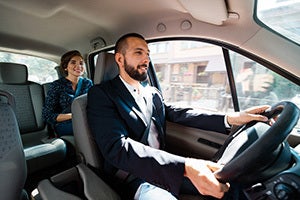
Under California Vehicle Code 23152e VC, it is illegal for taxi, limousine, and ride-sharing drivers to operate a vehicle with a blood alcohol concentration (BAC) of 0.04 percent or higher while a paying passenger is inside the vehicle.
This statute establishes a per se standard, meaning that if an on-duty passenger-for-hire driver meets or exceeds the 0.04 percent threshold, they are legally deemed under the influence.
In these cases, prosecutors need not prove that the driver's actual driving ability was impaired; the chemical test result alone is sufficient for a conviction.
This standard directly aligns the legal limit for ride-share drivers with the rules enforced against commercial driver's license (CDL) holders, cut in half from the standard 0.08 percent BAC limit applied to non-commercial motorists aged 21 and older.
The Esfandi Law Group can help you. Schedule your free consultation at (310) 274-6529 or use the contact form here.
Under California law, you generally have the right to refuse a roadside PAS breath test before an arrest.
Scope and Legal Definition of Passenger for Hire
The lowered BAC threshold applies specifically to individuals actively operating as commercial transport providers. The law provides distinct definitions for what constitutes an offense under this section.
Defining the Passenger for Hire Relationship
According to the statutory language of VC 23152e, a passenger for hire means an individual for whom consideration—such as a fare, fee, or tip—is contributed or expected as a condition of carriage.
This compensation can flow directly to the driver or indirectly through an app-based ride-sharing platform.
Applicable Drivers and Duty Status
The 0.04 percent BAC limit applies to the following categories of drivers while they are on duty:
-
Ride-sharing drivers operate via app-based platforms like Uber or Lyft.
-
Traditional taxi drivers.
-
Limousine drivers operating vehicles configured to carry ten passengers or fewer.
A driver is considered subject to this law when a paying passenger is physically in the vehicle.
If a ride-sharing driver is completely off-duty, has logged out of all transport applications, and is utilizing the vehicle strictly for personal use, the standard California legal limit of 0.08 percent BAC applies.
The Three-Hour Rebuttable Presumption
Vehicle Code 23152e VC establishes a rebuttable presumption regarding chemical test timing.
If a blood or breath test performed within three hours of the time of driving shows a BAC of 0.04 percent or higher, the law automatically presumes the driver was at or above that limit while operating the vehicle.
The defense retains the right to challenge this presumption with contrary evidence in court.
The implied consent legal doctrine means that by driving on California public roads, you agree to chemical testing if lawfully arrested for a DUI. Vehicle Code 23612 VC defines DUI chemical test refusal enhancements.
Comparison of California DUI Blood Alcohol Limits
The following table contrasts the different legal blood alcohol concentration thresholds enforced across various driver classifications under California law.
|
Driver Classification |
Applicable Statute |
Requirement for Prosecution |
|
Standard Adult Driver (Non-Commercial) |
Vehicle Code 23152b | Per Se violation; proof of erratic driving is not required if the threshold is met. |
|
Passenger for Hire (Uber, Lyft, Taxi, Limo) |
Vehicle Code 23152e | Per Se violation; applies strictly when a paying passenger is in the vehicle. |
| Vehicle Code 23152d | Standard applied to operators of commercial motor vehicles requiring a CDL. | |
| Vehicle Code 23136 | Zero-tolerance policy; triggers administrative licensing penalties. | |
| Drivers on DUI Probation | Vehicle Code 23154 | Strict condition of probation; any measurable alcohol constitutes a violation. |
Penalties and Employment Consequences
A typical drunk driving arrest, mainly governed by California Vehicle Code Section 23152 VC, is usually prosecuted as a DUI misdemeanor.
A conviction for a passenger-for-hire DUI carries substantial criminal penalties alongside severe long-term impacts on an individual's livelihood.
In California, a DUI conviction doesn't always lead to jail. The court often approves a “DUI alternative sentence" that replaces incarceration with programs focused on education, rehabilitation, and accountability.
Criminal Penalties for a First-Time Offense
A first-time violation of Vehicle Code 23152e VC is typically prosecuted as a misdemeanor. The statutory penalties generally include:
-
Fines ranging from $390 to $1,000, plus substantial court-ordered assessments.
-
A period of county jail time up to a maximum of six months.
-
Court-ordered probation lasting between three and five years.
-
Mandatory attendance at a state-approved DUI education program lasting from three to nine months.
License Suspensions and Restricting Devices
The California Department of Motor Vehicles (DMV) will initiate administrative action to suspend the driver's operating privileges for at least 6 months.
To regain driving privileges or obtain a restricted license during the suspension period, drivers are frequently required to install an Ignition Interlock Device (IID) in their vehicle, which requires a clean breath sample before the engine will start.
Aggravated Offenses (DUI Causing Injury)
If an on-duty ride-sharing driver is involved in an accident that causes bodily harm to any third party—including their own passengers—while maintaining a BAC of 0.04 percent or higher, the offense is elevated under Vehicle Code 23153e VC.
A violation of VC 23153e can be charged as a felony, carrying a potential state prison sentence of up to three years and mandatory restitution payments to the injured parties.
Industry Disqualification and Loss of Employment
Under California background check regulations, ride-sharing networks and commercial transport companies are legally prohibited from contracting with or employing any individual who has been convicted of a DUI within the preceding seven years.
Consequently, a conviction under VC 23152e results in an immediate platform ban and disqualifies the individual from working within the gig economy or commercial transportation sector.
Common Legal Defense Strategies
Challenging a passenger-for-hire DUI charge requires a technical review of the law-enforcement stop, the testing equipment, and the driver's precise status at the time of arrest.
Contesting Duty Status and Capacity
Because the strict 0.04 percent threshold applies only when a passenger for hire is inside the vehicle, the defense can challenge the applicability of the statute if there is ambiguity regarding whether the occupant was a paying customer.
If the driver was transporting a friend, family member, or acquaintance without expectation of compensation, the 0.08 percent standard applies instead.
Challenging the Accuracy of Chemical Testing
Breathalyzers and blood analysis instruments must adhere to rigid maintenance and calibration schedules under California Title 17 regulations.
A skilled defense can examine logbooks to determine whether the testing device was out of calibration, whether the officer failed to observe a proper 15-minute continuous deprivation period before administering a breath test, or whether blood samples were stored incorrectly, leading to fermentation and artificially inflated BAC readings.
Asserting Rising Blood Alcohol Levels
Because alcohol takes time to absorb into the metabolic system, a driver's BAC may rise between the time they were operating the vehicle and the time the chemical test was administered at the station.
If the defense can show that the driver's BAC was below 0.04 percent while they were behind the wheel but rose above it during the delay before testing, they can challenge the prosecution's case.
Evaluating Constitutional Violations and the Traffic Stop
Law enforcement officers must possess a reasonable, articulable suspicion of criminal activity or a traffic infraction to initiate a vehicle stop.
If the initial detention was conducted unlawfully without a valid reason, or if the officer lacked probable cause to order a chemical test, a defense attorney can file a motion to suppress the evidence, which often results in dismissal of the charges.
Accompanying Traffic and Criminal Offenses
When a ride-share, taxi, or limousine driver is detained on suspicion of a DUI, law enforcement officers investigate the entire scene for additional statutory violations. The most common related crimes include:
Reckless Driving | Vehicle Code 23103 VC
This charge applies when a driver operates a vehicle with a willful or wanton disregard for the safety of persons or property. It allows prosecutors to penalize dangerous driving maneuvers observed by officers or passengers, regardless of blood alcohol concentration.
Child Endangerment | Penal Code 273a PC
This offense is filed if an impaired driver transports passengers under the age of 18. Operating a passenger-for-hire vehicle while under the influence with minors on board constitutes willfully placing a child in a situation where their health or safety is endangered.
Driving Under the Influence of Drugs | Vehicle Code 23152f VC
This charge applies if a driver is impaired by narcotics, marijuana, prescription medications, or over-the-counter drugs rather than alcohol. Prosecutors must prove that the substance actively compromised the driver's ability to operate the vehicle safely.
Open Container Laws | Vehicle Code 23222 VC and 23223 VC
These statutes prohibit keeping an unsealed container of alcohol or cannabis within the passenger compartment of a vehicle on public roads. While certain commercial limousines are exempt, standard ride-share drivers using personal vehicles face infractions or misdemeanors for violations.
Carrying a Concealed Weapon | Penal Code 25400 PC
This charge is filed if a driver carries a concealed firearm or prohibited weapon within the vehicle cabin or utility compartments without a valid California permit. Weapons are frequently discovered during routine vehicle inventory searches following a DUI arrest.
Frequently Asked Questions (FAQs)
Does the 0.04% BAC limit apply if I am waiting for a ride request but have no passenger?
No. The strict 0.04 percent limit applies only when a paying passenger is physically in the vehicle. However, standard DUI laws still apply, and ride-share platforms maintain zero-tolerance policies for alcohol use while active on the app.
Can a ride-sharing driver get a restricted license to keep working after a DUI?
No. While the DMV may issue a restricted license with an Ignition Interlock Device for personal use, California law strictly prohibits ride-sharing networks from allowing anyone with a DUI conviction within the past seven years to drive on their platforms.
What happens if an on-duty ride-share driver refuses a breath test?
Under California's implied consent law, a willful refusal results in an automatic 1-year administrative license suspension by the DMV, with no option for a restricted license, and the refusal can be used as evidence of guilt in court.
Can a ride-share driver be charged with a DUI for using prescription medication?
Yes. Vehicle Code 23152f VC makes it illegal to drive under the influence of any drug. If a legally prescribed or over-the-counter medication impairs your ability to operate a vehicle safely while on duty, you can face standard DUI charges.
Legal Counseling and Case Evaluation
Facing a passenger-for-hire DUI charge puts both your freedom and your professional livelihood at immediate risk. Navigating the dual challenges of a criminal court case and a DMV administrative hearing requires immediate intervention.
A Wet Reckless is a lesser charge, resulting from a plea deal where a prosecutor allows a DUI driver to plead guilty to a modified reckless driving charge under CVC § 23103.5.
A DUI conviction under California Vehicle Code Section 23152 involves more than penalties like fines, probation, or jail; it can also jeopardize the careers of many Californians who hold professional licenses regulated by the state.
The California criminal defense firm of Esfandi Law Group provides targeted, strategic defense representation for ride-share and commercial drivers throughout the Los Angeles area.
Contact our office or utilize our secure communication portal to schedule a private evaluation of your case.