
DUI Causing Injury in California – Vehicle Code 23153
California Vehicle Code 23153 makes it a crime to drive under the influence of alcohol or drugs and cause bodily injury to another person.
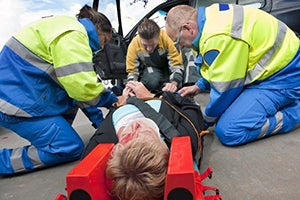
This offense is significantly more serious than a standard DUI under Vehicle Code 23152 because it involves injury to someone other than the driver.
DUI causing injury can be charged as either a misdemeanor or a felony. Because it is a wobbler offense, the prosecution has discretion based on the severity of injuries and the facts of the case.
If you are facing DUI causing injury charges in Los Angeles or anywhere in California, you are exposed to jail or prison time, long-term license suspension, and substantial fines.
Your best hope for a favorable outcome, even for a first DUI offense, is with an experienced California criminal defense attorney at Esfandi Law Group. To schedule a free consultation, call (310) 274-6529 or contact us here.
What Is DUI Causing Injury Under Vehicle Code 23153?
Vehicle Code 23153 applies when a person:
-
Drives a vehicle,
-
While under the influence of alcohol or DUI drugs, or with a blood alcohol concentration (BAC) of 0.08 percent or higher,
-
Commits an unlawful act or neglects a legal duty, and
-
Causes bodily injury to another person.
There are two primary subdivisions:
Vehicle Code 23153(a) – DUI causing injury based on impairment.
Vehicle Code 23153(b) – DUI causing injury based on 0.08 percent BAC or higher.
Vehicle Code 23612 VC defines DUI chemical test refusal enhancements.
Under California law, you generally have the right to refuse a roadside PAS breath test before an arrest.
Unlike a standard DUI, the prosecution must prove both intoxication and that the driver's unlawful or negligent act caused injury.
Elements the Prosecution Must Prove
To obtain a conviction, prosecutors must establish:
-
The defendant drove a vehicle.
-
The defendant was under the influence of alcohol or drugs, or had a BAC of 0.08 percent or more.
-
The defendant committed an illegal act or failed to perform a legal duty.
-
That act or failure caused bodily injury to another person.
The injury must be more than minor discomfort. However, it does not need to be life-threatening.
Causation is often the most heavily contested element in these cases.
What Is the Difference Between Standard DUI and DUI Causing Injury?
Standard DUI – Vehicle Code 23152
A standard DUI involves driving under the influence without injury to another person.
Penalties for a first offense typically include:
-
Up to 6 months in county jail
-
Fines between $390 and $1,000
-
3 to 5 years of probation
-
DUI education program
DUI Causing Injury – Vehicle Code 23153
DUI causing injury adds the element of bodily injury to another person. Because of this added harm, penalties increase significantly.
DUI Causing Injury as a Misdemeanor
If charged as a misdemeanor, potential penalties include:
-
5 days to 1 year in county jail
-
Fines between $390 and $5,000
-
DUI school up to 30 months
-
Ignition interlock device
-
Restitution to injured parties
Misdemeanor filing is more common when injuries are minor and the defendant has no significant prior record.
Vehicle Code 23540 VC is a California law that imposes additional penalties if you receive a second DUI conviction within ten years of a prior DUI conviction.
Under Vehicle Code 23572, penalties are much harsher if a driver faces a DUI charge and has a passenger under 14 in the vehicle.
DUI Causing Injury as a Felony
If charged as a DUI felony, penalties may include:
-
2, 3, or 4 years in state prison
-
Fines between $1,015 and $5,000
-
Formal felony probation
-
Up to 30 months of DUI school
-
Driver's license revocation
-
Victim restitution
If the victim suffers great bodily injury, additional sentencing enhancements may apply, increasing prison exposure to 3 to 6 years or more. Great bodily injury findings may also count as a strike under California's Three Strikes law.
Under California Vehicle Code 23550 VC, a fourth DUI is treated as more than a standard DUI misdemeanor.
DUI Causing Death
If a DUI results in death, prosecutors may file more serious charges, including:
Penal Code 191.5 – Vehicular Manslaughter While Intoxicated
This charge applies when a DUI driver causes death without malice. Penalties vary based on whether negligence is ordinary or gross.
Penal Code 187 – Second-Degree Murder (Watson Murder)
A "Watson Murder" is a legal term in California for cases in which someone drives under the influence, causes a fatal crash, and faces second-degree murder charges under California Penal Code Section 187 (PC 187).
Related California Crimes
DUI cases under Vehicle Code 23153 that cause injury are often filed alongside additional charges. Depending on the facts, prosecutors may pursue related crimes that significantly increase sentencing exposure and legal risk.
Understanding these related offenses is essential because they may carry separate penalties, enhancements, or strike consequences.
Vehicle Code 23152 – Standard DUI
If the prosecution cannot prove that the defendant committed an additional unlawful act or caused bodily injury, the charge may be reduced to standard DUI under Vehicle Code 23152.
This offense requires proof that the defendant:
-
Was driving a vehicle, and
-
Was under the influence of alcohol or drugs, or
-
Had a blood alcohol concentration of 0.08 percent or greater
Standard DUI carries misdemeanor penalties but does not require proof of injury or causation.
Boating under the influence, often called a BUI, is strictly regulated under California Harbors and Navigation Code 655.
Vehicle Code 23103 – Reckless Driving
Reckless driving may be charged if prosecutors cannot establish intoxication beyond a reasonable doubt but believe the driving conduct was dangerous.
To convict, the prosecution must show the driver operated a vehicle with willful or wanton disregard for safety.
In some cases, DUI causing injury charges may be negotiated down to reckless driving through plea bargaining, particularly when chemical test evidence is weak.
Under California Vehicle Code Section 23104, operating a vehicle with reckless or malicious disregard for safety that causes physical injury to another person is illegal, called "reckless driving causing injury."
Vehicle Code 20001 – Felony Hit and Run
Under VC 20001, if a driver leaves the scene of an accident that resulted in injury without providing the required information or assistance, they may face felony hit-and-run charges.
This offense requires proof that:
-
The defendant was involved in an injury accident, and
-
Knew or reasonably should have known someone was injured, and
-
Failed to stop and provide identifying information
Penalties can include state prison, fines, restitution, and additional license suspension.
Vehicle Code 20002 – Misdemeanor Hit and Run
Under VC 20002, if only property damage occurred and the driver failed to stop and exchange information, prosecutors may file misdemeanor hit-and-run charges.
Although less severe than a felony hit-and-run, this offense still carries potential jail time and fines.
Penal Code 191.5(a) – Gross Vehicular Manslaughter While Intoxicated
If a DUI results in death and the conduct is considered grossly negligent, prosecutors may file gross vehicular manslaughter while intoxicated.
Gross negligence involves reckless behavior that shows a disregard for human life.
Convictions may carry:
-
Four, six, or ten years in state prison
-
Strike consequences under California's Three Strikes law
Penal Code 191.5(b) – Vehicular Manslaughter While Intoxicated
This offense applies when death results from ordinary negligence while driving under the influence.
Unlike gross vehicular manslaughter, this charge involves less egregious conduct but still carries serious prison exposure.
Penal Code 273a – Child Endangerment
If a minor child was present in the vehicle during a DUI causing injury incident, prosecutors may add child endangerment charges.
This offense may be charged as a misdemeanor or felony, depending on the level of risk to the child.
Penalties may include:
-
Jail or prison time
-
Protective court orders
-
Impact on custody or visitation rights
Penal Code 12022.7 – Great Bodily Injury Enhancement
If the victim suffered significant or substantial physical injury, prosecutors may allege a great bodily injury enhancement.
This enhancement can add:
-
Three additional years in state prison
-
Strike consequences
The prosecution must prove the injury was substantial, not minor or moderate.
Why Related Charges Matter
When additional charges or enhancements are filed, the case becomes significantly more complex.
Related crimes can result in:
-
Consecutive prison sentences
-
Increased fines and restitution
-
Strike allegations
-
Longer driver's license revocation
-
Permanent felony records
A strategic defense must address not only the DUI allegation itself but also any related charges and enhancements.
Early legal intervention can sometimes:
-
Challenge enhancement allegations
-
Separate counts for negotiation purposes
-
Reduce felony exposure
-
Prevent additional charges from being filed
Because DUI causing injury cases often involve multiple layers of legal exposure, a comprehensive defense strategy is critical from the beginning.
Common Legal Defenses to DUI Causing Injury
DUI cases involving injury are complex and fact-driven. Several defense strategies may apply.
Inaccurate Chemical Testing
Breath or blood tests may be unreliable due to:
-
Improper calibration
-
Contaminated samples
-
Rising blood alcohol levels
-
Improper administration
Lack of Causation
The prosecution must prove your actions caused the injury.
If the other driver was at fault, or if injury was unrelated to alleged intoxication, this may create reasonable doubt.
No Unlawful Act or Negligence
Driving under the influence alone is not enough. The prosecution must show an additional unlawful act or negligent behavior caused the injury.
Constitutional Violations
Illegal traffic stops, improper arrest procedures, or Miranda violations may weaken the case.
Frequently Asked Questions
Is DUI causing injury always a felony?
No. It is a wobbler offense and may be filed as either a misdemeanor or a felony depending on the circumstances.
What qualifies as bodily injury?
Any physical injury beyond minor discomfort may qualify, including bruises, cuts, or broken bones.
Can DUI causing injury be reduced?
In some cases, charges may be reduced to misdemeanor DUI or reckless driving through negotiation.
Is DUI causing injury a strike offense?
If great bodily injury is found true, it may count as a strike under California law.
Why Early Legal Intervention Matters
DUI causing injury cases involve:
-
Accident reconstruction
-
Toxicology analysis
-
Injury documentation
-
Sentencing enhancements
-
Restitution claims
Early intervention may allow for:
-
Negotiation before formal filing
-
Reduction of felony to misdemeanor
-
Suppression of evidence
-
Strategic prefiling advocacy
Because exposure includes potential prison time and strike consequences, these cases demand immediate legal attention.
DUI Causing Injury Defense Attorney in Los Angeles
A Wet Reckless is a lesser charge, resulting from a plea deal where a prosecutor allows a DUI driver to plead guilty to a modified reckless driving charge under CVC § 23103.5.
If you have been arrested for DUI causing injury under Vehicle Code 23153, you are facing serious criminal exposure.
An experienced Los Angeles DUI defense attorney can:
-
Review chemical testing procedures
-
Analyze accident causation
-
Challenge enhancement allegations
-
Negotiate reduced charges
-
Prepare a strategic defense for trial if necessary
A DUI arrest is not a conviction. You have the right to challenge the evidence and protect your future.
Esfandi Law Group is here to help. Schedule your free consultation at (310) 274-6529 or use the contact form here.