
Health and Safety Code 11378 – Possession of Methamphetamine for Sale in California
Health and Safety Code 11378 makes it a felony to possess methamphetamine with the intent to sell it.
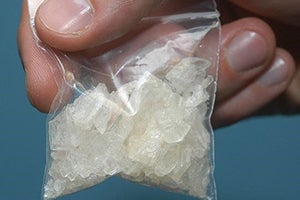
Unlike simple possession under HS 11377, possession for sale does not require proof of an actual sale. The prosecution only needs to prove that the methamphetamine was possessed with the intent to sell.
A conviction under HS 11378 can result in state prison, sentence enhancements, immigration consequences, and permanent felony record implications.
If you are under investigation or charged with possession of methamphetamine for sale, immediate legal representation is critical.
Your best hope for a favorable outcome in a drug crime case is with an experienced California criminal defense attorney at Esfandi Law Group. To schedule a free consultation, call (310) 274-6529 or contact us here.
What Is Possession of Methamphetamine for Sale?
Under California law, it is illegal to possess methamphetamine with the intent to sell it to another person.
Methamphetamine is classified as a controlled substance under California law. HS 11378 also applies to possession for sale of other narcotics such as:
-
Ecstasy (MDMA)
-
PCP
-
GHB
-
Ketamine
-
Certain opiates
-
Anabolic steroids
The intent to sell can be inferred even if no sale has taken place.
What Must the Prosecutor Prove?
To convict someone under HS 11378, the prosecution must prove beyond a reasonable doubt:
-
The defendant unlawfully possessed methamphetamine;
-
The defendant knew of its presence;
-
The defendant knew it was a controlled substance;
-
The substance was in a usable amount;
-
The defendant possessed it with the intent to sell.
The key element that distinguishes this offense from simple possession is intent to sell.
How Do Prosecutors Prove Intent to Sell?
Intent is usually proven through circumstantial evidence, including:
-
Large quantities of methamphetamine;
-
Individually packaged baggies;
-
Digital scales;
-
Large amounts of cash;
-
Text messages or call logs indicating sales;
-
Lack of personal-use paraphernalia.
A defendant does not need to be caught in the act of selling to face charges.
Penalties for HS 11378 Possession for Sale
Possession of methamphetamine for sale is always a felony.
The base sentence includes:
-
16 months, 2 years, or 3 years in county jail.
However, sentence enhancements can significantly increase exposure.
Quantity Enhancements
If the prosecution proves possession of more than one kilogram of methamphetamine, additional prison time may be imposed.
Enhancements may add:
-
3 to 15 additional years in state prison.
Location-Based Enhancements
Possessing methamphetamine for sale within 1,000 feet of:
-
A drug treatment facility, or
-
A homeless shelter
Can result in an additional 1-year enhancement.
Using a Minor in Drug Sales
If a minor is used to assist in the sale, additional penalties of:
-
3, 6, or 9 years
May be imposed.
Additional charges under Penal Code 272 (contributing to the delinquency of a minor) may also apply.
Immigration Consequences
A conviction under HS 11378 is considered a deportable offense for non-citizens.
Drug sales offenses can lead to:
-
Deportation
-
Inadmissibility
-
Denial of naturalization
Immigration-safe plea negotiations are critical in these cases.
Ineligibility for Drug Diversion
Unlike simple possession under HS 11377, possession for sale does not qualify for drug diversion programs such as:
-
Proposition 36
-
Deferred Entry of Judgment
-
Drug court programs
This makes reducing the charge to simple possession a primary defense objective.
Common Defenses to HS 11378 Possession of Methamphetamine for Sale Charges
Because possession with intent to sell is a felony that requires proof of intent, multiple legal defenses may apply depending on the facts of the case.
A skilled California criminal defense attorney will examine both the evidence and law enforcement's conduct to identify weaknesses in the prosecution's case.
Illegal Search and Seizure
Many HS 11378 cases arise from vehicle stops, probation searches, residential searches, or warrantless encounters.
Under the Fourth Amendment, law enforcement officers must have a valid search warrant or fall within a recognized exception to the warrant requirement. Commonly cited exceptions include:
-
Search incident to arrest
-
Automobile exception
-
Plain view doctrine
-
Consent searches
-
Probation or parole search conditions
If police lacked probable cause or exceeded the scope of a lawful search, a motion to suppress evidence under Penal Code 1538.5 can be filed. If the methamphetamine or related evidence is suppressed, the prosecution may be forced to dismiss the case.
Search and seizure challenges are often the strongest defense in drug cases.
Lack of Intent to Sell
The key element distinguishing HS 11378 from simple possession is intent to sell.
If the methamphetamine was possessed strictly for personal use, the proper charge would be simple possession under Health and Safety Code 11377 — a significantly less serious offense that may qualify for diversion.
To prove intent, prosecutors rely heavily on circumstantial evidence, such as:
-
Quantity of the drug
-
Packaging in individual baggies
-
Presence of scales
-
Large amounts of cash
-
Absence of personal-use paraphernalia
If the defense can demonstrate that the quantity was consistent with personal use and that alleged “sales indicators” have innocent explanations, the charge may be reduced or dismissed.
Lack of Knowledge
To convict under HS 11378, the prosecution must prove that the defendant knew:
-
The methamphetamine was present, and
-
It was a controlled substance.
If drugs were found in a shared vehicle, apartment, or storage space, it may be possible to argue that the defendant was unaware of their presence.
Constructive possession cases frequently hinge on whether the prosecution can prove knowledge beyond a reasonable doubt.
Drugs Belonged to Someone Else
Ownership is not required for conviction, but control and knowledge are.
If the methamphetamine belonged to another individual and there is no evidence showing the defendant exercised control over it, the prosecution may not be able to prove possession.
This defense is especially relevant in cases involving multiple occupants of a vehicle or residence.
Insufficient Evidence of Sales Indicators
Possession for sale cases often rely on circumstantial “indicia of sales.”
However, certain items commonly cited by prosecutors can have innocent explanations:
-
Cash may come from employment or savings
-
Baggies may be used for lawful purposes
-
Scales may be used for personal measurement
-
Text messages may be ambiguous
If the prosecution cannot establish a clear link between the evidence and drug sales activity, the case may be reduced to simple possession.
Quantity Consistent with Personal Use
While large quantities strongly suggest sales, smaller quantities may not.
In some cases, expert testimony from a narcotics specialist may be challenged by presenting alternative interpretations of the amount possessed.
Demonstrating that the quantity is consistent with heavy personal use rather than distribution can significantly weaken the prosecution's case.
Entrapment
If law enforcement officers pressured or induced the defendant to engage in conduct they were not otherwise predisposed to commit, an entrapment defense may apply.
Entrapment is rare but may be relevant in undercover sting operations or controlled buys.
Immigration-Safe Negotiation Strategy
For non-citizens, reducing a possession-for-sale charge to simple possession or another non-deportable offense may be critical.
Strategic plea negotiations can significantly impact immigration consequences.
Why Intent Is the Central Battlefield in HS 11378 Cases
Unlike simple possession, HS 11378 requires proof of intent to sell.
Because intent is often inferred rather than directly observed, it provides the defense with multiple avenues to create reasonable doubt.
If intent cannot be proven beyond a reasonable doubt, the charge cannot stand.
Related California Drug Crimes to HS 11378
Charges under Health and Safety Code 11378 are often filed alongside other narcotics offenses, depending on the facts of the arrest, quantity of drugs involved, and alleged sales activity.
Health and Safety Code 11377 – Simple Possession of Methamphetamine
HS 11377 makes it illegal to possess methamphetamine for personal use. Unlike possession for sale, this offense does not require proof of intent to sell. Most simple possession cases are misdemeanors and may qualify for drug diversion programs such as Proposition 36 or Deferred Entry of Judgment.
Health and Safety Code 11379 – Selling or Transporting Methamphetamine
HS 11379 applies when someone sells, transports, imports, or furnishes methamphetamine. This offense is more serious than possession for sale because it involves the completed distribution or movement of narcotics. It is a felony and can carry enhanced penalties for large quantities or sales across county lines.
Under California Health & Safety Code 11370.6, possessing of drug money over $100,000 derived from drug sales or intended for purchasing illegal drugs is considered a serious drug offense.
Health and Safety Code 11351 – Possession of a Controlled Substance for Sale
HS 11351 is similar to HS 11378 but applies to controlled substances other than methamphetamine, such as cocaine or heroin. Prosecutors must prove intent to sell, which is typically inferred from packaging, scales, cash, or communications indicating sales.
Health and Safety Code 11379.6 – Manufacturing a Controlled Substance
HS 11379.6 criminalizes the manufacturing or production of methamphetamine. Operating a meth lab or participating in the manufacturing process is a serious felony that carries substantial prison time and often additional environmental or hazardous materials charges.
California Health and Safety Code 109575 HS makes it a crime to knowingly manufacture, distribute, or possess an imitation controlled substance with the intent to distribute.
Health and Safety Code 11383.5 – Possession of Materials to Manufacture Meth
HS 11383.5 prohibits possession of chemicals, equipment, or materials used to manufacture methamphetamine. Even if no drugs were successfully produced, possession of precursor ingredients with the intent to manufacture can result in felony prosecution.
Health and Safety Code 11370.6 – Possession of Drug Money
HS 11370.6 applies when a defendant possesses large amounts of cash derived from drug sales. Prosecutors must prove the money is connected to narcotics trafficking. This charge often accompanies possession for sale allegations.
- Under California Penal Code 186.10 PC, money laundering is considered a serious crime with life-changing penalties.
Health and Safety Code 11370.9 – Money Laundering Involving Drug Sales
HS 11370.9 targets financial transactions designed to conceal or disguise proceeds from narcotics sales. This offense may involve structured deposits, transfers between accounts, or business fronts used to hide illegal drug profits.
Penal Code 272 – Contributing to the Delinquency of a Minor
PC 272 may be charged if a defendant uses or involves a minor in methamphetamine sales. This offense can significantly increase sentencing exposure and is frequently added when prosecutors allege that minors were used in drug distribution activity.
Frequently Asked Questions About HS 11378
Is possession of meth for sale always a felony?
Yes. HS 11378 is a felony offense.
Can I go to prison for possession for sale?
Yes. The base sentence ranges from 16 months to 3 years, with possible enhancements.
Can the charge be reduced to simple possession?
Yes, if the prosecution cannot prove intent to sell.
Does the amount of meth matter?
Yes. Larger quantities increase the likelihood of sale allegations and sentence enhancements.
Can immigration status be affected?
Yes. Drug sales convictions can trigger deportation.
Contact a California Drug Crime Defense Lawyer
Possession of methamphetamine for sale under Health and Safety Code 11378 is a serious felony that can result in years in custody, immigration consequences, and long-term damage to your record.
Because diversion is not available for sales offenses, aggressive defense strategies are crucial. Challenging the intent, suppressing unlawfully seized evidence, and negotiating a reduction can dramatically change the outcome of your case.
If you or a loved one is facing HS 11378 charges, contact an experienced California criminal defense attorney immediately to protect your rights and build a strategic defense.
Early action can make the difference between a felony conviction and a reduced charge. Esfandi Law Group is here to help. Schedule your free consultation today.