
Health and Safety Code 11366.8 HS: Concealing Drugs in a False Compartment
California Health and Safety Code 11366.8 HS criminalizes possessing, using, controlling, building, modifying, installing, or attaching a false compartment in a vehicle if done with the intent to conceal, smuggle, or transport controlled substances.
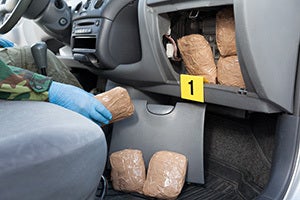
The law specifically addresses hidden vehicle compartments used for hiding drugs, such as those built into gas tanks, factory panels, interior spaces, or other modified parts of a vehicle.
This offense is a wobbler, which means prosecutors may charge it as either a misdemeanor or a felony depending on the facts of the case.
Penalties can include up to one year in county jail for possession, use, or control of a false compartment, or 16 months, two years, or three years in jail or prison for designing, building, installing, or attaching one.
If you are facing drug-related charges, the Esfandi Law Group is ready to assist you. Contact us for a free consultation at (310) 274-6529 or fill out the contact form here.
What Is a False Compartment?
A false compartment is any box, container, space, or enclosure within or attached to a vehicle intended to conceal controlled substances from detection.
It doesn't have to appear obviously illegal initially; it can be an original part of the vehicle that has been altered or modified to serve as a concealment space.
Common examples include:
-
Modified fuel tanks.
-
Hidden spaces inside car panels or interiors.
-
Compartments built into spare tire areas.
-
Fabricated spaces created from existing factory equipment.
-
Secret storage areas were installed to avoid detection by law enforcement.
What the Prosecutor Must Prove
To convict someone under HS 11366.8, the prosecution must prove beyond a reasonable doubt that:
-
A false compartment existed.
-
The compartment was designed or used to conceal controlled substances.
-
The defendant knew about the compartment or helped create it.
-
The defendant intended to store, hide, smuggle, or transport drugs in it.
In many cases, knowledge is established through circumstantial evidence, such as vehicle ownership, fingerprints, admissions, surveillance, or witness testimony.
Penalties And Sentencing
HS 11366.8 is a serious offense related to drug violations, with penalties that differ based on the specific conduct involved.
Possession, Use, or Control
If a person possesses, uses, or controls a false compartment with the intent to hide controlled substances, the punishment can include:
-
Up to one year in county jail.
-
Or felony sentencing under California law, depending on how the case is filed.
- Under California Health and Safety Code 11370.4 HS, prosecutors are authorized to file "drug weight enhancements."
Building, Installing, or Modifying
If someone designs, constructs, builds, alters, fabricates, installs, or attaches a false compartment to a vehicle with the necessary intent, the penalties may include:
-
16 months.
-
Two years.
-
Three years.
HS 11366.8 Penalties Chart
Examples
Here are a few examples of conduct that may lead to an HS 11366.8 charge:
-
A driver hides narcotics in a concealed compartment within a car door.
-
A mechanic sets up a hidden fuel-tank compartment at a customer's request, claiming it's for concealing drugs.
-
Police discover a false compartment beneath a truck bed used to hide controlled substances.
-
A vehicle owner intentionally drives a car that has a hidden panel built for transporting drugs.
-
A person modifies the interior of a van to create a concealed storage area for illegal drugs.
Common Defenses
Various defenses can be used in a false compartment case, depending on the specifics of the situation. Typical defenses include lack of knowledge, absence of intent, illegal search and seizure, no genuine false compartment, lack of possession or control, and insufficient evidence.
-
Lack of knowledge: You did not know the compartment existed.
-
Lack of intent: The compartment was not intended to store or hide controlled substances.
-
Illegal search and seizure: Police found the evidence through an unconstitutional search.
-
No actual false compartment: The structure was not designed to conceal drugs.
-
Lack of possession or control: You did not own, control, or have access to the vehicle or compartment.
-
Insufficient evidence: The prosecution cannot prove every element beyond a reasonable doubt.
Related Laws
Several California statutes are frequently charged or discussed together with HS 11366.8:
-
Health and Safety Code 11366 HS — Operating or maintaining a place for unlawful drug activity. This law is relevant when an individual keeps a place for selling, distributing, or using controlled substances.
-
Health and Safety Code 11351 HS — Possession of a controlled substance for sale. This charge is applicable if drugs are supposedly possessed with the intent to distribute.
-
Health and Safety Code 11352 HS — Sale or transportation of controlled substances. This law addresses the sale, transport, supply, or distribution of specific illegal drugs.
-
Health and Safety Code 11366.5 HS — Allowing a place to be used for drug manufacturing or storage. This statute may apply when property is used in drug operations.
-
Health and Safety Code 11379.6 HS — Manufacturing controlled substances. This law addresses the manufacturing or handling of illegal drugs..
-
Health and Safety Code 11357.5 HS — Synthetic cannabis offenses. This law covers the sale or possession of certain synthetic cannabis products.
California Health and Safety Code 11375.5 HS prohibits the sale, distribution, furnishing, administration, giving away, or offering to sell synthetic stimulants.
Frequently Asked Questions
What does California HS 11366.8 mean?
The law prohibits possessing, using, building, installing, or attaching a false compartment in a vehicle to hide controlled substances.
Is HS 11366.8 a misdemeanor or felony?
It is classified as a wobbler, meaning it can be charged as either a misdemeanor or a felony based on the specifics of the case.
What is the maximum punishment?
Punishment varies based on the charge, potentially involving up to one year in county jail or up to three years if sentenced as a felony.
Do police have to prove I knew about the hidden compartment?
Yes. Knowledge is crucial, and the prosecution must establish your connection to the compartment or its use.
Can a hidden compartment be part of the vehicle itself?
Yes. A false compartment can be created by altering existing factory equipment or adding a hidden space to the vehicle.
What if the compartment was not used for drugs?
If there is no intention to store, hide, smuggle, or transport controlled substances, this could serve as a strong defense.
Speak to a Drug Crime Lawyer
If you are charged under California HS 11366.8, it is important to consult a drug crime lawyer promptly.
A defense attorney at the Esfandi Law Group can examine the evidence, challenge the search's legality, and assess whether the prosecution can demonstrate knowledge, intent, and control over the alleged false compartment.
Seeking early legal assistance can increase the likelihood of having your charge reduced or dismissed.
Since drug-related vehicle cases often depend on technical details, a lawyer can spot weaknesses in the case and safeguard your rights from the beginning. Contact a California drug crime lawyer today for a confidential consultation.