
Large-Capacity Magazines in California – Penal Code 32310 PC
California Penal Code 32310 PC regulates large-capacity magazines and makes it generally illegal to manufacture, import, sell, give, or possess these devices within the state.
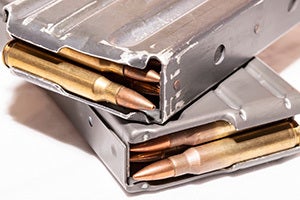
A large-capacity magazine is defined as any ammunition-feeding device capable of holding more than ten rounds.
This law is one of California's most actively litigated firearm restrictions. While courts have reviewed its constitutionality multiple times, enforcement remains in effect unless and until a court rules otherwise.
As a result, individuals can still face criminal charges for violations.
Understanding how the law defines large-capacity magazines, what conduct is prohibited, and what defenses may apply is essential if you are facing allegations.
Your most promising avenue for achieving a favorable result when facing a weapons offense is to engage the services of an experienced California criminal defense attorney at Esfandi Law Group.
To arrange a complimentary consultation, please call (310) 274-6529 or contact us through our website.
What Is a Large-Capacity Magazine?
Under California Penal Code 32310, a large-capacity magazine is any ammunition-feeding device capable of holding more than ten rounds of ammunition. The definition focuses on capacity—not whether the magazine is loaded, attached to a firearm, or actively used.
This means that if a magazine can hold more than 10 rounds, it may qualify as a prohibited device under California law, even if you never actually load it to capacity.
What Devices Are Included?
A large-capacity magazine can include a wide range of feeding devices, such as:
- Detachable magazines used in rifles or handguns
- Fixed magazines built into a firearm that exceed ten rounds
- Drum magazines or extended magazines
- Magazine kits or components that can be assembled into a functioning device
The law also applies to magazines that can be restored or converted to hold more than 10 rounds.
What Is Not Considered a Large-Capacity Magazine?
California law provides specific exceptions. The following are generally excluded:
- Magazines permanently modified to hold ten rounds or fewer
- .22 caliber tubular ammunition feeding devices
- Tubular magazines contained in lever-action firearms
For a modification to qualify, it must be permanent and not easily reversible.
Why Capacity Matters
The key issue is not how the magazine is used, but what it is capable of doing. Prosecutors will focus on whether the device can hold more than ten rounds, regardless of:
- Whether it was loaded
- Whether it was attached to a firearm
- Whether it was actually used
Common Issues in These Cases
Many charges arise from misunderstandings about magazine capacity or configuration. Common issues include:
- Aftermarket or extended magazines that exceed legal limits
- Magazine parts or kits assembled into larger-capacity devices
- Devices that appear compliant but can be easily modified
Why This Definition Is Important
Because California's definition is based on capability and construction, even small differences in design or modification can determine whether a device is legal. As a result, many cases hinge on technical analysis of the magazine itself.
If you are facing allegations, determining whether the device truly qualifies as a large-capacity magazine is often one of the most important parts of building a defense.
Legal Elements Prosecutors Must Prove
To secure a conviction, the prosecution must establish:
- The device qualifies as a large-capacity magazine
- You manufactured, transferred, or possessed the magazine
- You knowingly engaged in the prohibited conduct
If any of these elements cannot be proven beyond a reasonable doubt, the charges may be challenged.
Types of Possession
Possession under California law includes both direct and indirect control.
- Actual possession
- The magazine is on your person or within immediate reach
- Constructive possession
- The magazine is located in a place you control, such as your home or vehicle
- Joint possession
- Multiple individuals have access to or control over the same magazine
Penalties for Violating Penal Code 32310
Penalties vary depending on the type of conduct involved.
Manufacturing, Selling, or Importing (PC 32310(a))
This is a “wobbler” offense, meaning it can be charged as either a misdemeanor or a felony.
| Classification | Custody Exposure | Fine | Key Notes |
|---|---|---|---|
|
Misdemeanor |
Up to 1 year in county jail |
Fine imposed by court |
Less severe cases |
|
Felony |
16 months, 2 years, or 3 years in custody |
Fine imposed by court |
More serious conduct |
Possession of a Large-Capacity Magazine (PC 32310(c))
Possession is treated less severely but can still result in penalties.
| Classification | Penalty | Key Notes |
|---|---|---|
|
Infraction |
Fine up to $100 per magazine |
Most common outcome |
|
Misdemeanor |
Up to 1 year in county jail + fine |
Repeat or aggravated cases |
Legal Challenges and Ongoing Litigation
Penal Code 32310 has been subject to ongoing legal challenges in both federal and state courts. While there have been rulings questioning the law, enforcement generally continues while appeals are pending.
Because the legal landscape can change, it is important to stay informed and consult legal counsel if you are charged under this statute.
Real-World Examples
Large-capacity magazine cases often arise from everyday situations.
Examples include:
- Keeping magazines in a home that exceed the legal limit
- Purchasing or receiving magazines from out of state
- Assembling magazine parts into a functioning device
- Selling or transferring magazines to another person
Many cases involve individuals who were unaware that the magazine exceeded the legal capacity or violated California law.
Common Defense Strategies for Large-Capacity Magazine Charges (PC 32310)
Allegations under California Penal Code 32310 often turn on technical details about the device, how it was obtained, and whether you actually had knowledge or control. A strong defense focuses on challenging these elements and exposing weaknesses in the prosecution's case.
Below are the most effective defense strategies used in California.
Lack of Knowledge
The prosecution must show that you knowingly possessed, received, or transferred a large-capacity magazine.
This defense may apply when:
- You did not know the magazine was present
- You were unaware of its capacity
- The device belonged to someone else
Example: A magazine is found in a shared residence or vehicle without your knowledge.
Magazine Does Not Meet the Legal Definition
Not every device qualifies as a large-capacity magazine under California law. A detailed inspection may reveal the item is legal.
This defense focuses on showing:
- The magazine holds ten rounds or fewer
- The device was permanently modified to comply with the law
- The item falls within a statutory exception
No Possession or Control
You must have control over the magazine to be charged. Mere proximity is not enough.
This defense may apply when:
- The magazine was in a shared space you did not control
- You had no access to the area where it was found
- Another person had exclusive possession
Unlawful Search and Seizure
If law enforcement violated your constitutional rights when discovering the magazine, the evidence may be excluded.
This defense may apply when:
- Police conducted a search without a warrant or valid exception
- The stop or detention was unlawful
- Consent to search was not properly given
If the evidence is suppressed, the case may be dismissed.
Legal Exemption Applies
Certain individuals may be exempt under California law, including law enforcement, military personnel, or licensed dealers in specific circumstances.
A defense attorney may demonstrate that:
- You fall within a recognized exemption
- Your possession or conduct was legally authorized
Insufficient Evidence
The prosecution must prove every element beyond a reasonable doubt. If there are gaps in the evidence, the case may not hold.
This defense focuses on:
- Lack of reliable proof of possession
- No clear evidence of the magazine's capacity
- Conflicting or incomplete testimony
Constitutional Challenges
Because Penal Code 32310 has been subject to ongoing legal challenges, constitutional arguments may play a role in certain cases.
While outcomes vary, this defense may involve:
- Challenging the legality of the statute as applied
- Raising issues related to Second Amendment rights
Strategic Defense Insight
Many PC 32310 cases involve overlapping issues such as knowledge, possession, and technical classification of the device. A comprehensive defense often combines multiple strategies to challenge the prosecution from different angles.
Early investigation is critical. Examining the magazine, reviewing how it was discovered, and analyzing police conduct can uncover weaknesses that lead to reduced charges or dismissal.
Taking prompt legal action can significantly improve your chances of protecting your rights and achieving the best possible outcome.
Related California Crimes
Large-capacity magazine charges are often filed alongside other firearm-related offenses.
Possession of an Assault Weapon – Penal Code 30605
PC 30605 prohibits the possession of certain firearms defined as assault weapons. These charges frequently overlap with magazine restrictions.
Manufacture or Sale of Assault Weapons – Penal Code 30600
This offense involves producing or distributing prohibited firearms and carries more severe penalties than simple possession.
Felon in Possession of a Firearm – Penal Code 29800
PC 29800 prohibits individuals possessing firearms from facing additional charges if found with weapons or related components.
Possession of Ammunition by a Prohibited Person – Penal Code 30305
This statute makes it illegal for certain individuals to possess ammunition and is often charged alongside firearm offenses.
Carrying a Concealed Firearm – Penal Code 25400
PC 25400 applies when a firearm is concealed on a person or in a vehicle.
Carrying a Loaded Firearm in Public – Penal Code 25850
This charge applies when a loaded firearm is carried in a public setting and can increase the seriousness of a case.
Why These Charges Matter
Even though possession may be treated as a lower-level offense, large-capacity magazine cases can escalate quickly when combined with other firearm charges. Prosecutors often file multiple allegations to increase potential penalties and pressure during negotiations.
Because these offenses often rely on similar elements—such as possession, knowledge, and control—a strategic defense can challenge multiple charges at once.
Frequently Asked Questions
What is the legal limit for magazine capacity in California?
California generally limits magazines to ten rounds. Devices capable of holding more than ten rounds are considered large-capacity magazines.
Can I legally own a large-capacity magazine?
In most cases, possession is prohibited under current California law, subject to ongoing legal challenges.
What if I bought the magazine legally in another state?
Importing large-capacity magazines into California is prohibited, even if they were purchased legally elsewhere.
Can charges be reduced or dismissed?
Yes. Depending on the facts, charges may be reduced to an infraction or dismissed if the prosecution cannot prove key elements.
Will I go to jail for possession?
Most possession cases are handled as infractions with fines, but misdemeanor charges can include jail time in certain situations.
Do I need a lawyer for this charge?
Yes. Even lower-level offenses can have lasting consequences, especially when combined with other firearm-related charges.
Take Action: Protect Your Rights
Facing charges under California Penal Code 32310 can have serious legal consequences, particularly if combined with other firearm offenses. Early legal intervention can help you understand your options, challenge the evidence, and work toward the best possible outcome.
If you are under investigation or charged with a large-capacity magazine offense, consulting with an experienced criminal defense attorney is the most effective step to protect your rights and your future.
Esfandi Law Group is available to assist. Please schedule your complimentary consultation by calling (310) 274-6529 or utilizing the contact form provided here.