
Health and Safety Code 11361 HS: Selling or Giving Marijuana to a Minor
Navigating the complexities of California cannabis laws can be challenging, especially when facing severe felony allegations.
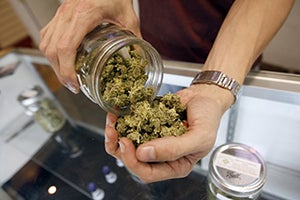
Under California Health and Safety Code 11361 HS, selling, giving, or administering marijuana to a minor is a strictly prosecuted offense that carries mandatory state prison sentences.
Even with the widespread legalization of adult-use cannabis via Proposition 64, California maintains a zero-tolerance policy for involving minors in commercial or casual drug transactions.
If you were accused of selling marijuana, the most effective way to secure a favorable outcome is to consult an experienced criminal defense attorney at Esfandi Law Group in California.
Schedule your free consultation at (310) 274-6529 or use the contact form here.
What is Health and Safety Code 11361 HS?
California Health and Safety Code 11361 makes it a felony for any adult (aged 18 or older) to involve a minor (anyone under the age of 18) in commercial cannabis activities or to provide cannabis to a minor.
Specifically, the law prohibits:
-
Selling, giving, or marketing marijuana to a minor.
-
Hiring, employing, or using a minor to transport, carry, sell, give away, or prepare marijuana for sale.
-
Inducing or encouraging a minor to use cannabis.
Important Note: Unlike standard adult cannabis offenses, which are often treated as infractions or misdemeanors post-Prop 64, offenses involving minors under HS 11361 remain strictly classified as straight felonies.
Legal Penalties and Sentencing
The penalties for violating HS 11361 depend heavily on the minor's age. Judges rarely grant standard probation for these offenses, and convictions typically result in formal state prison sentences.
|
Offense Description |
Minor's Age |
Potential Prison Sentence |
| Using a minor to sell/transport, or selling/giving marijuana to a minor | Under 14 years old | 3, 5, or 7 years in California State Prison |
| Using a minor to sell/transport, or selling/giving marijuana to a minor | 14 to 17 years old | 3, 4, or 5 years in California State Prison |
Additional Consequences
Beyond incarceration, a conviction under HS 11361 carries long-term consequences:
-
A permanent felony criminal record.
-
Loss of the right to own or possess firearms.
-
Severe damage to professional licensing and employment opportunities.
-
Potential immigration consequences for non-citizens, as drug offenses involving minors are frequently categorized as aggravated felonies.
Legal Defenses Against HS 11361 Charges
A charge is not the same as a conviction. An experienced California criminal defense attorney can analyze the specifics of the case to build a robust defense strategy. Common legal defenses include:
1. Lack of Intent or Knowledge
To be convicted, the prosecution must prove you knew the substance in question was marijuana. If you were unaware of what the package contained, or if you were tricked into handling it, you may lack the required criminal intent.
2. Mistake of Age (Limited Application)
While California law generally holds adults strictly accountable for verifying ages, a defense may arise if the minor used highly sophisticated fake identification that would deceive a reasonably prudent person. However, simply claiming "they looked 18" is rarely a viable defense on its own.
3. No Marijuana Involved
If the substance seized was not actually cannabis, or if laboratory testing proves the substance lacks THC or fails to meet the legal definition of marijuana under California law, the charges cannot stand.
4. Illegal Search and Seizure
If law enforcement discovered the cannabis through an unlawful traffic stop, a search without a warrant, or by exceeding the scope of a search warrant, the evidence may be suppressed under the Fourth Amendment. Without the evidence, the prosecution's case typically collapses.
Related Offenses
In California, cannabis charges involving minors are frequently joined by other drug-related or juvenile-related offenses, depending on the specific facts of the case. Common related crimes include:
Contributing to the Delinquency of a Minor – Penal Code 272 PC
This law makes it a misdemeanor to commit any act, or fail to perform any legal duty, that causes or tends to cause a minor to become a dependent of the juvenile court or a delinquent. Providing any controlled substance or adult-use item to a minor frequently triggers a PC 272 charge alongside felony drug charges.
-
Penalties: Up to one year in county jail and a fine of up to $2,500.
2. Possession of Cannabis for Sale – Health and Safety Code 11359 HS
If law enforcement discovers a large quantity of cannabis, scales, packaging materials, or significant amounts of cash alongside evidence that minors were involved, prosecutors may tack on a charge for possession with intent to sell.
Following Prop 64, this is generally a misdemeanor for adults, but it can be elevated to a felony under specific aggravating circumstances (such as involving minors or having certain prior violent convictions).
-
Penalties: Up to 180 days in county jail for a misdemeanor, or 16 months, 2 years, or 3 years in county jail for a felony.
3. Sale or Transport of Cannabis – Health and Safety Code 11360 HS
While HS 11361 specifically targets transactions involving minors, HS 11360 governs the general illegal sale, gift, transport, or importation of cannabis in California without a commercial license.
-
Penalties: Usually a misdemeanor carrying up to 6 months in county jail, but can be charged as a felony (punishable by up to 3 years in jail) if the offense involves importing cannabis into the state or if the defendant has specific prior disqualifying offenses.
California Health and Safety Code 11358 makes it illegal to cultivate marijuana in violation of state law.
California Vehicle Code 23222(b) governs the transportation of cannabis in a vehicle.
4. Employing a Minor to Sell Controlled Substances – Health and Safety Code 11353 HS
If the substance involved is not cannabis but rather a controlled substance like cocaine, heroin, methamphetamine, or prescription pills, the state will charge the defendant under HS 11353. This is an incredibly serious felony.
-
Penalties: 3, 6, or 9 years in California State Prison.
Frequently Asked Questions (FAQs)
Does Proposition 64 protect adults who give cannabis to minors?
No. While Proposition 64 legalized the recreational use and cultivation of cannabis for adults aged 21 and older, it explicitly maintained strict criminal penalties for involving minors. Providing cannabis to anyone under 21 is illegal, but providing it to anyone under 18 triggers the severe felony penalties of HS 11361.
Can I be charged if I didn't sell the marijuana but just shared it?
Yes. Health and Safety Code 11361 specifically penalizes "giving away" or "administering" marijuana to a minor. No money or commercial transaction needs to take place for a felony charge to be filed.
What happens if an adult uses a 17-year-old to deliver cannabis?
Employing or using anyone under the age of 18 to transport, carry, or sell cannabis is a felony under HS 11361. If the minor is between 14 and 17 years old, the adult faces a potential state prison sentence of 3, 4, or 5 years.
Is it a defense if the minor claimed they were over 18?
Verbal statements by a minor regarding their age are generally not a sufficient legal defense. Adults are expected to take reasonable steps, such as checking a government-issued photo ID, to verify age.
Speak with a Qualified Defense Attorney
If you or a loved one is facing allegations under California Health and Safety Code 11361 HS, early legal intervention is critical.
Contact a qualified criminal defense attorney to review the details of your case, protect your constitutional rights, and discuss your legal options.
The Esfandi Law Group can help you. Schedule your free consultation using the contact form here.