
Health and Safety Code 11375.5 HS: Sale of Synthetic Stimulants
California Health and Safety Code 11375.5 HS criminalizes the sale, distribution, furnishing, administration, giving away, or offering to sell synthetic stimulants.
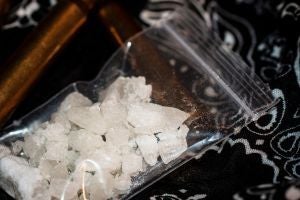
It also bans possession for sale and separately penalizes the use or possession of specific synthetic stimulant compounds and derivatives.
Synthetic stimulants, commonly known as designer drugs, are chemically modified substances designed to mimic the effects of drugs like cocaine or methamphetamine.
They are often sold under labels such as bath salts, plant food, or research chemicals. However, labeling them as “not for human consumption” does not guarantee their legality.
If you're dealing with a drug-related crime, the Esfandi Law Group is ready to assist you. Call (310) 274-6529 for a free consultation or fill out the contact form here.
What Counts as a Synthetic Stimulant?
A synthetic stimulant is a substance, compound, mixture, or preparation that meets the chemical criteria defined by law. This includes certain analogs, salts, isomers, esters, and ethers.
The law specifically covers substances that are structurally related to 2-amino-1-phenyl-1-propanone, along with the particular chemical modifications listed in the statute.
In practical terms, this law targets designer stimulant drugs that imitate traditional stimulants but are designed to bypass drug regulations. Typical examples include MDPV, mephedrone, and Alpha-PVP, also called flakka.
HS 11375.5 Penalties Chart
Elements Of The Offense
To establish a sale or possession-for-sale case under HS 11375.5, prosecutors must demonstrate that the substance is covered by the statute and that the defendant sold, offered to sell, furnished, distributed, administered, gave, or possessed it with the intent to sell.
In a case involving use or possession, the prosecution must prove that the defendant intentionally used or possessed the illegal synthetic stimulant.
Since the law includes a detailed chemical definition, determining if a substance fits the criteria can be a crucial aspect of the case. This highlights the importance of laboratory testing and expert analysis in many prosecutions.
What Makes These Drugs Dangerous?
Synthetic stimulants can be taken by swallowing, snorting, smoking, or injecting, but their effects are often unpredictable. Side effects reported include increased heart rate, higher blood pressure, agitation, anxiety, paranoia, hallucinations, and in severe instances, death.
California considers designer stimulant offenses to be serious risks, even if the substance isn't a traditional controlled drug.
Examples
Here are some basic examples of conduct that could result in an HS 11375.5 charge:
-
A person sells a packet labeled “bath salts” that contains a banned synthetic stimulant.
-
A defendant attempts to sell a “research chemical” that is, in fact, a synthetic stimulant drug regulated by law.
-
Someone is found with a prohibited synthetic stimulant following a previous possession violation.
Common Defenses
Various defenses might be relevant in an HS 11375.5 case depending on the circumstances. Typical defenses include ignorance of the situation, absence of intent, no possession of the substance, misidentification of the substance, and issues related to unlawful search and seizure.
-
Lack of knowledge: You did not know the substance was a synthetic stimulant.
-
Lack of intent: You did not intend to sell, distribute, or furnish the substance.
-
No possession: The substance was not under your control or in your possession.
-
Misidentification of the substance: The material does not meet the legal definition of a synthetic stimulant.
-
Unlawful search and seizure: Police obtained the evidence in violation of your constitutional rights.
Related Laws
Several California laws may come up in cases involving synthetic stimulants or similar substances:
-
Health and Safety Code 11357.5 HS — Sale of synthetic cannabis. This law prohibits selling, giving, using, or possessing synthetic cannabis and is punishable by up to six months in county jail or a fine of up to $1,000.
-
Health and Safety Code 11352 HS — Sale or transportation of controlled substances. This felony law addresses the sale or transportation of drugs like cocaine, heroin, LSD, and specific prescription opioids.
-
Health and Safety Code 11366 HS — Operating or maintaining a place for drug sales. This law criminalizes maintaining a place for illegal drug activities, and charges can be brought as either a misdemeanor or a felony.
-
Health and Safety Code 109575 HS — Imitation controlled substances. This law pertains to counterfeit or imitation drug products, although it is different from HS 11375.5.
-
Health and Safety Code 11350 HS — Possession of a controlled substance. This law is frequently invoked in drug possession cases involving real controlled substances.
-
Penal Code 484 PC — Theft by false pretenses. This may arise if a person deceives another in a drug-related transaction.
California Health and Safety Code 11355 prohibits offering, arranging, or agreeing to sell, furnish, transport, administer, or give a controlled substance, especially when delivering a counterfeit drug or fake version.
California Health and Safety Code 11370.9 makes it a crime to knowingly handle drug proceeds with the intent to hide their source, ownership, location, or control, known as money laundering involving drug sales.
Health and Safety Code 11173, prescription fraud, forbids obtaining, attempting to obtain, or procuring a prescription for a controlled substance through fraud, deceit, misrepresentation, subterfuge, or concealment of a material fact.
California Health and Safety Code 11366.8 HS prohibits possessing, using, controlling, building, modifying, installing, or attaching a false compartment in a vehicle for the purpose of concealing, smuggling, or transporting controlled substances.
Frequently Asked Questions
What is California HS 11375.5?
HS 11375.5 is a California law that criminalizes the sale, distribution, furnishing, administering, giving, offering to sell, or possession of specific synthetic stimulants. It also imposes penalties for the use or possession of these substances.
Is HS 11375.5 a misdemeanor or felony?
Selling or possessing synthetic stimulants for sale is classified as a misdemeanor, whereas use or possession may be considered an infraction or misdemeanor depending on previous offenses.
What is the maximum jail time?
A sale or possession-for-sale conviction can carry up to six months in county jail.
What are synthetic stimulants?
Synthetic stimulants are designer drugs made to imitate stimulants such as cocaine or methamphetamine, commonly sold under names like bath salts or research chemicals.
Can a substance be illegal even if it is labeled not for human consumption?
Yes. That label does not automatically exclude the substance from California drug laws if it fits the statute's definition.
What if the lab cannot identify the substance?
If the prosecution fails to demonstrate that the material meets the chemical criteria outlined in the statute, this can serve as a strong defense.
Speak to a Drug Crime Lawyer
If you are charged under California Health and Safety Code 11375.5, consult a drug crime lawyer at Esfandi Law Group promptly.
An attorney can examine the arrest details, dispute the evidence, and assist in safeguarding your rights as your case develops.
Drug cases often hinge on quick-moving issues such as search and seizure, substance identification, and whether the prosecution can prove every element beyond a reasonable doubt.
Getting legal help early can also lead to negotiations, diversion programs, or other defenses that might lessen the charge's impact. Contact a California drug crime lawyer today for a confidential consultation.