
Damaging or Abandoning a Vehicle in California – Penal Code 548 PC
California Penal Code 548 PC targets a specific form of auto insurance fraud: intentionally damaging, destroying, concealing, or abandoning a vehicle to collect insurance money.
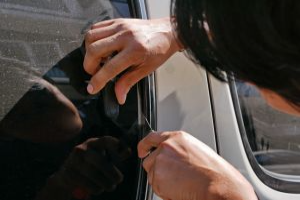
These cases are treated seriously because they involve deliberate deception tied to financial gain, and they are often investigated long before charges are filed.
What may begin as a suspicious claim or vehicle loss can quickly escalate into a felony prosecution.
If you are accused of violating PC 548, you could face prison exposure, substantial fines, and long-term consequences that affect your record, employment, and financial future.
Your best chance for a positive outcome is to work with an experienced California criminal defense attorney at Esfandi Law Group.
To set up a free consultation, feel free to call us at (310) 274-6529 or reach out to us through our contact form.
Understanding how this law works—and how prosecutors attempt to prove these cases—is critical to protecting yourself.
What Is Penal Code 548 PC?
Penal Code 548 PC defines the crime of damaging or abandoning insured property for the purpose of defrauding an insurance company.
In simple terms, it is illegal to:
-
intentionally damage your vehicle
-
abandon or hide your vehicle
-
destroy or dispose of your vehicle
when the goal is to file a fraudulent insurance claim.
Legal Definition of PC 548
Under California law, Penal Code 548 states that:
-
a person commits a crime if they willfully injure, destroy, abandon, or dispose of insured property
-
they act with the intent to defraud or prejudice the insurer
Elements Prosecutors Must Prove
To secure a conviction under PC 548, prosecutors must prove beyond a reasonable doubt that:
-
you damaged, abandoned, concealed, or disposed of a vehicle
-
the vehicle was insured (or you believed it was insured)
-
you acted with the specific intent to defraud the insurance company
Key Legal Insight
The insurance company does not need to suffer an actual financial loss.
An attempt to commit fraud is enough for criminal liability.
Common Examples of PC 548 Violations
Allegations under Penal Code 548 typically arise when investigators believe a vehicle was intentionally damaged, hidden, or abandoned to collect insurance money.
While the facts vary from case to case, prosecutors focus on whether there was a deliberate plan to create or exaggerate a loss.
Below are the most common scenarios that lead to PC 548 charges:
Intentional Vehicle Damage Disguised as Accidental
This involves deliberately damaging a vehicle and then reporting the incident as accidental or caused by a third party.
Examples include:
-
striking your own vehicle and claiming vandalism
-
causing damage and reporting it as a hit-and-run
-
staging collisions to appear unintentional
Abandoning a Vehicle and Reporting It Stolen
One of the most frequently charged scenarios involves leaving a vehicle somewhere and falsely reporting it as stolen.
This may include:
-
abandoning a vehicle in a remote or public location
-
leaving a car to be recovered later while claiming theft
-
attempting to collect insurance proceeds for a “missing” vehicle
Concealing or Hiding a Vehicle
Rather than destroying or abandoning the vehicle, some cases involve hiding it to support a fraudulent claim.
Examples include:
-
storing the vehicle in a garage or private location
-
transferring possession to another person temporarily
-
falsely claiming the vehicle cannot be located
Intentional Destruction of Property
More extreme cases involve deliberately destroying a vehicle to claim a total loss.
This may include:
-
severely damaging the vehicle beyond repair
-
arranging for the vehicle to be dismantled or disposed of
-
coordinating destruction to support an insurance claim
Coordinated or Assisted Fraud Schemes
PC 548 charges are not limited to the vehicle owner. Anyone involved in the scheme can be charged.
Examples include:
-
asking someone else to damage or move the vehicle
-
assisting in concealing or abandoning the car
-
participating in planning or covering up the incident
Financially Motivated “Walk-Away” Schemes
In some cases, individuals abandon vehicles due to financial hardship—such as being unable to afford payments—and then report them as stolen.
While the underlying situation may involve financial stress, falsely reporting the vehicle to obtain insurance benefits can lead to felony charges.
Key Takeaway
The critical issue in every PC 548 case is intent. Accidental damage, mechanical failure, or legitimate theft does not qualify as a crime.
However, when investigators believe the loss was intentionally created or misrepresented for financial gain, it can result in serious felony charges.
Because many of these cases involve circumstantial evidence and insurance company investigations, distinguishing between a legitimate loss and alleged fraud is often the central issue in the defense.
Types of Related Auto Insurance Fraud Conduct
Penal Code 548 is part of a broader set of California insurance fraud laws. Related conduct includes:
-
staging car accidents for insurance payouts
-
submitting false claims for vehicle damage or theft
-
exaggerating damage or loss values
-
filing multiple claims for the same incident
-
providing false written or oral statements
These actions may also be prosecuted under Penal Code 550 and related statutes.
Penalties for Penal Code 548 PC
Damaging or abandoning a vehicle for insurance fraud is a felony offense in California.
Potential Penalties Include:
-
up to 5 years in county jail or state prison
-
fines up to $50,000
-
restitution to the insurance company
-
formal felony probation (in some cases)
Sentence Enhancements
If you have prior auto insurance fraud convictions, you may face:
-
additional prison time (typically 2-year enhancements per prior offense)
Related California Crimes to Penal Code 548 PC (Damaging or Abandoning a Vehicle)
Charges under Penal Code 548 rarely stand alone. Prosecutors frequently file additional or alternative offenses based on the alleged conduct, especially when the case involves deception, staged incidents, or financial gain.
Below are the most relevant related California crimes, with clear explanations of how they connect to auto insurance fraud cases.
Penal Code 550 PC – Fraudulent Insurance Claims
Penal Code 550 is the primary insurance fraud statute in California and is often charged alongside PC 548.
This law makes it illegal to:
-
submit a false or exaggerated insurance claim
-
stage or participate in a fake accident
-
provide false information to support a claim
-
file multiple claims for the same loss
While PC 548 focuses on damaging or abandoning a vehicle, PC 550 targets the act of submitting or supporting the fraudulent claim itself.
Penal Code 549 PC – Soliciting or Participating in Insurance Fraud
This statute applies to individuals who recruit or refer others into insurance fraud schemes.
Examples include:
-
directing someone to a repair shop that files fraudulent claims
-
promoting staged accident schemes
-
operating a network that encourages fraudulent claims
Even indirect involvement—such as referrals—can result in criminal liability.
Penal Code 551 PC – Insurance Kickbacks and Referral Schemes
Penal Code 551 makes it illegal to offer or receive compensation for referrals related to insurance claims.
Common examples include:
-
repair shops paying for customer referrals
-
adjusters or agents receiving kickbacks
-
businesses offering incentives tied to insurance claims
These cases are often part of organized fraud operations.
Penal Code 487 PC – Grand Theft
Grand theft may be charged when the value of the fraudulent insurance claim exceeds $950.
This applies when:
-
insurance proceeds are obtained through deception
-
fraudulent claims result in financial gain
-
the amount involved is significant
Grand theft is a “wobbler” offense that can be charged as a misdemeanor or felony.
Penal Code 532 PC – Theft by False Pretenses
This offense applies when someone obtains money through intentional misrepresentation.
In PC 548 cases, this may occur when:
-
false statements are used to collect insurance money
-
the deception extends beyond the claim itself
-
the insurer relies on misleading information to issue payment
Penal Code 182 PC – Criminal Conspiracy
Conspiracy charges apply when two or more people agree to commit insurance fraud and take steps toward carrying it out.
Examples include:
-
coordinated staged accidents
-
organized fraud rings
-
multiple participants working together to file claims
Each participant can be charged, even if they played a minor role.
Penal Code 470 PC – Forgery
Forgery involves altering or creating false documents to obtain financial benefits.
In auto insurance fraud cases, this may include:
-
falsified repair invoices
-
altered damage reports
-
forged signatures on insurance documents
Forgery is often charged when documentation is used to support fraudulent claims.
Vehicle Code 10501 VC – False Report of Vehicle Theft
This law makes it illegal to falsely report a vehicle as stolen.
Common scenarios include:
-
hiding a vehicle and claiming theft
-
filing a false police report to support an insurance claim
-
misrepresenting circumstances surrounding a missing vehicle
This charge frequently accompanies PC 548 cases involving abandonment or concealment.
Penal Code 451 PC – Arson (Insurance Fraud Scheme)
Arson may be charged when someone intentionally sets fire to a vehicle or property to collect insurance proceeds.
Examples include:
-
burning a car to claim a total loss
-
coordinating property destruction for financial gain
-
filing insurance claims after intentional damage
Arson is a serious felony that significantly increases penalties.
Penal Code 496 PC – Receiving Stolen Property
This offense applies when someone knowingly receives or benefits from property obtained through fraud or theft.
In insurance fraud cases, this may include:
-
accepting proceeds from fraudulent claims
-
handling property tied to staged losses
-
benefiting from schemes involving stolen or misrepresented assets
Why Related Charges Matter
Prosecutors often file multiple charges to:
-
increase potential prison exposure
-
strengthen their case through overlapping offenses
-
gain leverage in plea negotiations
A strong defense strategy must address every charge—not just the primary Penal Code 548 allegation—to protect your rights and minimize consequences.
Frequently Asked Questions About Penal Code 548 PC (Damaging or Abandoning a Vehicle)
What is Penal Code 548 PC in California?
Penal Code 548 PC makes it a felony to intentionally damage, destroy, conceal, or abandon a vehicle in order to collect money from an insurance company.
The key element is intent to defraud the insurer.
Is damaging or abandoning a vehicle always a felony?
Yes. Violating Penal Code 548 is typically charged as a felony offense.
Unlike some related fraud crimes, PC 548 is not usually treated as a misdemeanor because it involves deliberate deception and financial harm.
What are the penalties for Penal Code 548 PC?
A conviction for damaging or abandoning a vehicle can result in:
-
up to 5 years in county jail or state prison
-
fines up to $50,000
-
restitution to the insurance company
-
felony probation in some cases
Additional sentencing enhancements may apply for prior fraud convictions.
Do prosecutors have to prove the insurance company lost money?
No. The prosecution does not need to prove the insurance company suffered a financial loss.
Attempting to commit fraud is enough to support a conviction under PC 548.
What does “intent to defraud” mean?
Intent to defraud means you acted with the purpose of deceiving an insurance company to obtain money or benefits.
This requires proof that you:
-
knowingly engaged in deceptive conduct
-
intended to cause financial loss or gain
Without intent, the charge cannot stand.
Can I be charged if I didn't own the vehicle?
Yes. Ownership of the vehicle is not required for a conviction.
You can still be charged if you:
-
participated in the scheme
-
helped damage, conceal, or abandon the vehicle
-
intended to benefit from the insurance claim
What if my insurance policy was expired?
You can still be charged under Penal Code 548 if you believed the policy was valid and acted with intent to collect insurance money.
The law focuses on your intent—not the actual status of the policy.
What is the difference between PC 548 and PC 550?
Penal Code 548 focuses on damaging or abandoning a vehicle to commit fraud.
Penal Code 550 focuses on submitting false insurance claims or providing false information.
In many cases, both charges are filed together.
Can a mistake lead to PC 548 charges?
No. Honest mistakes or accidental damage do not qualify as insurance fraud.
However, if investigators believe the damage was intentional, it may lead to criminal charges.
What should I do if I am under investigation for insurance fraud?
If you are contacted by law enforcement or an insurance investigator:
-
do not answer questions
-
do not provide statements or documents
-
do not attempt to explain your situation
Contact a criminal defense attorney immediately to protect your rights.
Can Penal Code 548 charges be dismissed?
Yes. Charges may be reduced or dismissed if:
-
there is insufficient evidence
-
intent cannot be proven
-
the allegations are false
-
your rights were violated during the investigation
Early legal representation significantly increases the chances of a favorable outcome.
Will a conviction affect my future?
Yes. A felony conviction can have serious long-term consequences, including:
-
a permanent criminal record
-
difficulty finding employment
-
loss of professional licenses
-
financial penalties and restitution
-
damage to your reputation
Do I need a lawyer for a PC 548 charge?
Yes. These cases are complex and aggressively prosecuted.
An experienced criminal defense attorney can:
-
analyze the evidence
-
challenge the prosecution's case
-
negotiate reduced charges or dismissal
-
protect your rights throughout the process
Legal Defenses to PC 548 Charges
Because intent is the central element, most defenses focus on disproving fraudulent intent or challenging the evidence.
Lack of Intent to Defraud
Prosecutors must prove you intended to deceive the insurance company.
A defense may show:
-
the damage was accidental
-
there was no plan to file a fraudulent claim
-
you misunderstood your insurance coverage
If intent cannot be proven, the charge cannot stand.
False Allegations
You may have been wrongly accused due to:
-
disputes with insurance companies
-
misunderstandings about the incident
-
third-party involvement
Your attorney can challenge the credibility of the allegations.
Insufficient Evidence
Insurance fraud cases often rely on circumstantial evidence.
A defense may challenge:
-
lack of direct proof
-
inconsistencies in investigation reports
-
unreliable witness testimony
No Fraudulent Act Occurred
If the vehicle damage or abandonment was legitimate—and not tied to fraud—the prosecution may not be able to prove the case.
What To Do If You Are Under Investigation
If you are contacted by law enforcement or an insurance investigator:
-
do not answer questions
-
do not provide statements
-
do not attempt to explain the situation
Anything you say can be used against you. Contact a criminal defense attorney immediately.
Why Early Legal Representation Matters
Insurance fraud cases often begin as investigations before charges are filed. Early intervention can:
-
prevent charges from being filed
-
reduce the severity of allegations
-
protect your criminal record
-
improve your chances of dismissal or a favorable resolution
Speak With a Los Angeles Criminal Defense Attorney
If you are under investigation or facing charges under Penal Code 548 PC, acting quickly can make a critical difference in the outcome of your case.
Insurance fraud allegations often begin behind the scenes—through insurance company investigations, claim reviews, and referrals to law enforcement—long before formal charges are filed.
By the time you are contacted, investigators may already be building a case using statements, vehicle inspections, financial records, and surveillance. What you say or do at this stage can significantly impact whether charges are filed and how serious they become.
An experienced Los Angeles criminal defense attorney can intervene early to:
-
stop communication with investigators and protect you from self-incrimination
-
analyze the evidence, claim history, and investigation methods for weaknesses
-
challenge whether any alleged damage or abandonment was intentional
-
dispute the prosecution's claim of fraudulent intent
-
reframe the situation as a legitimate loss, misunderstanding, or civil dispute
-
negotiate with prosecutors before charges are filed or escalate
In many cases, early legal intervention can prevent a case from ever being filed—or significantly reduce the charges and penalties.
These cases are not just about what happened to a vehicle—they are about what prosecutors believe you intended. A strong defense focuses on breaking that connection.
If you have been contacted by an insurance investigator, received a fraud allegation, or believe you may be under investigation, do not wait.
Speaking with a knowledgeable defense attorney as early as possible is the most effective way to protect your rights, your record, and your future.
Esfandi Law Group is ready to assist you. Book your free consultation by calling (310) 274-6529 or through the contact form provided here.