
Los Angeles DUI Lawyer
A DUI arrest in Los Angeles happens in seconds, but the consequences can impact your life for years.
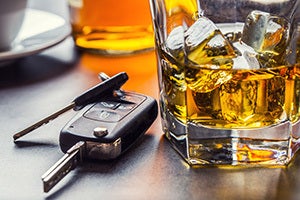
Under California law, a driving under the influence charge carries severe penalties, but an arrest is not a conviction.
A typical drunk driving arrest, mainly governed by California Vehicle Code Section 23152 VC, is usually prosecuted as a DUI misdemeanor.
If you or a loved one has been arrested for a DUI in Los Angeles County, the Esfandi Law Group provides aggressive, strategic defense to protect your driving privileges, career, and future.
Led by Attorney Seppi Esfandi, who brings over 20 years of dedicated criminal defense experience, our firm analyzes every detail of your case to secure the best possible outcome.
CRITICAL TIME SENSITIVITY: You have only 10 days from your arrest date to request an administrative hearing with the California DMV. If you don't, your driver's license will be automatically suspended.
Contact Esfandi Law Group today for a free consultation: 📞 (310) 274-6529
Quick Reference Summary: California DUI Penalties
|
Offense Type |
License Suspension |
Jail Exposure |
Key Program Requirements |
| First-Time DUI | 6 to 10 months (Restricted options available) | Up to 6 months | 3 to 9 months of DUI school |
| Second DUI (Within 10 years) | Up to 2 years | 96 hours to 1 year | 18 to 30 months of DUI school |
| Felony DUI (Injury or 4th+ Offense) | 1 to 4 years (or permanent revocation) | 16 months to multiple years in State Prison | Formal probation, treatment, felony record |
Key California DUI Laws & Statutes
Navigating the California Vehicle Code (CVC) and Penal Code (PC) requires an experienced legal mind. Below are the primary statutes governing impaired driving in Los Angeles:
-
CVC § 23152(a): Prohibits driving under the influence of alcohol, regardless of BAC. If your mental or physical abilities are impaired to the extent that you cannot drive safely like a sober person, you can be convicted.
-
CVC § 23152(b): Establishes the per se DUI limit. It is illegal to drive with a BAC of 0.08% or higher.
-
CVC § 23152(c): Dictates that it is a crime to drive a vehicle if you are addicted to any drug, unless you are participating in an approved treatment program.
-
CVC § 23152(e): Sets a stricter BAC limit of 0.04% or higher for commercial drivers, taxis, limousines, and ride-sharing (Uber/Lyft) drivers operating with a paying passenger.
-
CVC § 23153: Governs DUI causing injury. If an impaired driver causes bodily harm to another person, the offense is elevated to a "wobbler" (can be charged as a misdemeanor or a felony).
-
CVC § 23572: Imposes stricter penalties for drivers convicted of DUI when transporting a passenger under 14.
-
CVC § 23612 (Implied Consent): Driving on California public roads implies consent to chemical testing (breath or blood) if you're lawfully arrested for a DUI. Refusing testing results in automatic license suspension and more severe penalties.
-
PC § 187 ("Watson Murder"): If someone has a previous DUI conviction and later causes a deadly crash while driving under the influence, prosecutors may pursue second-degree murder charges due to implied malice.
-
PC § 1203.4 (DUI Expungement): Allows individuals who complete their DUI probation to petition the court for case dismissal, removing it from background checks for most private employers.
California Related Crimes
To give a thorough overview of the legal landscape concerning driving violations in California, here are 10 related crimes and traffic infractions that often overlap with DUI charges in Los Angeles.
-
Reckless Driving (CVC § 23103): Operating a vehicle with willful or reckless disregard for safety, often settled as a lesser charge like a "dry reckless" instead of a DUI.
-
Hit and Run (CVC § 20002 / CVC § 20001): Leaving the scene of an accident without providing your identity or helping injured individuals can be a misdemeanor (property damage only) or a felony (injury or death).
-
Driving on a Suspended License (CVC § 14601): Driving a motor vehicle while aware that your driving privileges are suspended or revoked, often after an administrative DMV action or a previous DUI conviction.
-
Vehicular Manslaughter while Intoxicated (PC § 191.5): Causing the death of another person unlawfully while driving under the influence, if that death results directly from an illegal act or a lawful act that could lead to death in an unlawful way.
-
Child Endangerment (PC § 273a): Intentionally subjecting a minor under 18 to unnecessary pain, suffering, or danger. This charge may also be filed simultaneously if a minor is present in the vehicle during a DUI arrest.
-
Open Container Violations (CVC § 23222): Having an open container of alcohol or cannabis in a vehicle while driving or riding as a passenger on a public road.
-
Driving Under the Influence of Drugs (DUID) (CVC § 23152(f)): Driving a vehicle while impaired by any drug, whether illegal narcotics, prescription medicines, or over-the-counter drugs that affect your ability to drive.
-
Possession of a Controlled Substance in a Vehicle (HS § 11350 / CVC § 23222(b)): Carrying or transporting illegal drugs or unauthorized prescription medications inside the passenger area of a vehicle.
-
Public Intoxication / Disorderly Conduct (PC § 647(f)): Being in a public place while intoxicated by liquor or drugs to the point where you cannot ensure your own safety or that of others.
-
Resisting Arrest / Evading an Officer (PC § 148(a)(1) / CVC § 2800.1): Wilfully resisting, delaying, or obstructing a peace officer in performing their duties, or driving a vehicle with the intent to evade a pursuing officer's marked vehicle.
California DUI Penalties Breakdown
In California, DUI penalties largely hinge on past offenses within a 10-year look-back period and any aggravating factors during arrest. Here's a detailed overview of the legal consequences for misdemeanor DUI charges.
First-Time DUI Offense
A first-time DUI offense is usually charged as a misdemeanor if no injury resulted from the incident.
-
Fines and Assessments: Base fines range from $390 to $1,000; however, court-ordered penalty assessments can bring the total cost to approximately $2,000.
-
Jail Time: A sentence of up to 6 months in county jail is possible. However, judges often give probation instead of jail time for first offenses.
-
License Suspension: A driver's license may be suspended for 6 to 10 months. Eligible drivers can apply for a restricted license that uses an Ignition Interlock Device (IID), allowing them to drive without any waiting period.
-
DUI School: You must attend a state-licensed 3-month (Ab-541) alcohol and drug education program. If your BAC was 0.20% or higher, a 9-month program is usually required.
-
Probation: 3 to 5 years of informal (summary) probation.
Second DUI Offense (Within 10 Years)
California imposes much harsher penalties for repeat offenses.
-
Fines and Assessments: Total financial penalties can surpass $2,000 to $3,000 following assessments.
-
Jail Time: A compulsory minimum of 96 hours and a maximum of 1 year in county jail.
-
License Suspension: A driver's license suspension can last up to 2 years. Depending on compliance and court conditions, an IID-restricted license may become available either after a certain period or immediately.
-
DUI School: Mandatory participation in an alcohol education program lasting 18 or 30 months for repeat offenders.
-
Probation: 3 to 5 years of informal probation with strict conditions, including a zero-tolerance policy for any measurable alcohol while driving.
Third DUI Offense (Within 10 Years)
A third DUI within the look-back period results in severe mandatory penalties and marks the driver as a habitual traffic offender.
-
Fines and Assessments: Heavy financial penalties that often amount to thousands of dollars in total costs.
-
Jail Time: A required period ranging from at least 120 days to no more than 1 year in county jail..
-
License Suspension: Revocation of a driver's license for up to three years.
-
DUI School: Compulsory 30-month treatment program for repeat offenders.
-
Probation: 3 to 5 years of informal probation.
Statutory Penalty Enhancements (Aggravating Factors)
Some situations during a DUI arrest automatically lead to stricter penalties, whether it's a first or repeat offense.
-
Refusal to Submit to Chemical Testing (CVC § 23612): Imposes a mandatory one-year license suspension without the possibility of a restricted license, combined with at least 48 hours of jail time.
-
Excessive Speeding: Driving 20 mph over the speed limit on a street or 30 mph over on a highway while intoxicated results in a mandatory 60-day jail sentence.
-
Passenger Under 14 (CVC § 23572): Triggers child endangerment enhancements, imposing mandatory jail time from 48 hours for a first offense up to 10 days for a third offense, in addition to the standard DUI sentence.
-
High Blood Alcohol Concentration (BAC): A BAC of 0.15% or higher enables the court to impose stricter probation conditions, extend DUI school requirements, and mandate the installation of an IID.
Proven DUI Defense Strategies
Chemical tests fail, equipment malfunctions, and law enforcement officers make mistakes. At Esfandi Law Group, we systematically dismantle the prosecution's case by examining the following areas:
1. Title 17 Violations & Chemical Test Accuracy
California Title 17 regulations mandate strict procedures for collecting, storing, and analyzing blood and breath samples.
Failure to observe the required 15-minute continuous observation, incorrectly calibrate a breathalyzer, or mishandle a blood draw can lead to the suppression of scientific evidence.
We often file a blood split motion, enabling an independent laboratory to retest your blood sample for accuracy or contamination.
2. Unlawful Traffic Stops & Lack of Probable Cause
Police need reasonable suspicion of criminal activity or a traffic violation to stop you. If the initial stop was illegal, then any evidence collected afterward—such as field sobriety tests (FSTs) and BAC readings—may be dismissed under the Fourth Amendment.
3. Rising Blood Alcohol Defense
Alcohol absorption into your system takes time. You might have a legal BAC when driving, but your BAC can still increase from the moment you're pulled over until the chemical test is conducted at the station.
4. Alternative Explanations (Medical & Environmental)
Conditions such as Gastroesophageal Reflux Disease (GERD), acid reflux, high-protein diets (like ketosis), or specific medications can produce artificial "mouth alcohol," leading to an inaccurately high breathalyzer reading.
Real-World Case Examples
Example 1: The Rising BAC and Improper Stop
A driver was pulled over in downtown Los Angeles for allegedly weaving within their lane. The officer performed a breath test 45 minutes later, showing a 0.09% BAC.
Esfandi Law Group examined the dashboard camera footage, proving the driver stayed within their lines and that the stop lacked reasonable suspicion.
Additionally, a toxicologist confirmed the driver's BAC was below 0.08% while driving but increased during the 45-minute delay. As a result, the case was dismissed.
Example 2: Negotiating a "Wet Reckless"
A first-time offender was stopped at a checkpoint and had a BAC of 0.09%. Since the driver was cooperative and had no criminal background, our legal team used prefiling intervention to point out issues with the checkpoint's operational compliance.
Result: The charges were reduced to a "Wet Reckless" (CVC § 23103.5), avoiding a formal DUI conviction, reducing fines, and preventing mandatory jail time.
Frequently Asked Questions (FAQs)
What is the difference between the court case and the DMV hearing?
They are completely separate processes. The criminal court rules on your guilt or innocence and imposes penalties such as fines, probation, or jail time.
The California DMV hearing specifically concerns your driving rights. You must request a DMV hearing within 10 days of your arrest to prevent an immediate license suspension, regardless of the court's outcome.
Can I get my DUI case dismissed if it's my first offense?
Yes. A dismissal may be granted if your defense attorney demonstrates that the police lacked probable cause to stop you, the chemical testing device was defective, or Title 17 regulations were broken.
Alternatively, we could consider judicial diversion (PC 1001.95) or negotiate for a reduced charge, such as a "Wet Reckless."
What happens if I refuse the breath or blood test in Los Angeles?
Under California's implied consent law (CVC § 23612), refusing a chemical test following a lawful arrest results in a mandatory one-year driver's license suspension, with no possibility of a restricted license.
Additionally, it serves as an "enhancement" that increases criminal penalties in court proceedings.
Will a DUI conviction affect my professional license?
Yes. A DUI conviction under CVC § 23152 can threaten professional licenses in California, such as those for nurses, doctors, lawyers, real estate agents, and teachers. Reporting obligations differ, so early legal intervention is crucial to protect your career.
Can a California DUI be expunged from my record?
If you complete your DUI probation successfully and satisfy all court requirements (such as fines and DUI school), you may apply for an expungement under Penal Code § 1203.4.
Although an expungement results in a dismissal showing on your record for job-related reasons, the DUI still counts as a prior offense on your DMV record for 10 years.
Protecting Your Future Begins Now
Don't navigate the complicated Los Angeles court system by yourself. Whether you're facing a misdemeanor, a felony injury charge, or an administrative DMV dispute, early legal intervention can significantly affect the outcome of your case.
Contact Esfandi Law Group for expert guidance.
-
Direct Line: (310) 274-6529
-
Office Location: Los Angeles, CA
-
Available for emergency consultations and prefiling interventions.