
Culver City DUI Attorney
A Friday night out in Culver City can change from a memorable evening to a legal emergency in seconds. One moment you are leaving a performance at the Kirk Douglas Theatre or having dinner along Culver Boulevard, and the next you are pulled over near Washington Boulevard or Sepulveda Boulevard, facing intrusive questions about your alcohol or medication intake.
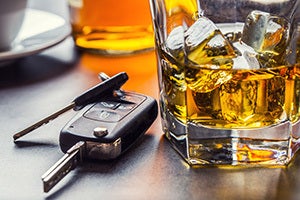
When emergency lights appear in your rearview mirror, a standard traffic stop can rapidly escalate into a driving under the influence (DUI) arrest—endangering your driver's license, professional reputation, and personal freedom.
When federal, state, or municipal law enforcement officers in Los Angeles County are involved, generic advice isn't enough. You need an aggressive, strategic Culver City DUI defense attorney who understands local police procedures, the mechanics of chemical breath and blood testing, and how to negotiate effectively with local prosecutors.
What Are California's DUI Laws and Impairment Standards?
California maintains strict statutory standards for impaired driving under the California Vehicle Code (CVC). A prosecutor in Los Angeles County can charge you under multiple legal theories depending on the circumstances of your arrest:
-
CVC § 23152(a) – Driving Under the Influence of Alcohol: Operating a motor vehicle while your physical or mental abilities are impaired by alcohol so that you can no longer drive with the caution of a sober person.
-
CVC § 23152(b) – Driving with a BAC of 0.08% or Higher: Operating a vehicle with a blood alcohol concentration (BAC) of 0.08% or greater by weight. This is a "per se" offense, meaning the prosecution does not need to prove actual driving impairment, only the chemical result.
-
CVC § 23152(f) – Driving Under the Influence of Drugs (DUID): Operating a vehicle while impaired by prescription drugs, over-the-counter medications, or illegal controlled substances.
-
CVC § 23152(g) – Combined Influence of Drugs and Alcohol: Driving while under the combined influence of any liquor and drug.
Culver City Police Department (CCPD) officers and California Highway Patrol (CHP) troopers regularly conduct targeted DUI patrols along major corridors like I-10, Venice Boulevard, and downtown nightlife districts.
Officers typically justify stops by citing subtle lane weaving, slow braking, or minor equipment violations, then add subjective observations such as slurred speech, a flushed face, or the odor of alcohol.
What Is the Difference Between the DMV Hearing and Criminal Court?
A DUI arrest in Culver City triggers two entirely separate legal processes: the DMV Administrative Per Se (APS) Hearing and the Los Angeles County Criminal Court Proceeding.
The Crucial 10-Day DMV Hearing Rule
When you are arrested for a DUI in California, the arresting officer confiscates your physical driver's license and issues a pink 30-day temporary permit.
You have exactly 10 calendar days from the date of your arrest to contact the DMV and request an Administrative Per Se (APS) hearing.
If you fail to request this hearing within the strict 10-day deadline, your driving privileges will be automatically suspended 30 days after the arrest—even before you ever step foot inside a courtroom.
Hiring an experienced Culver City DUI lawyer immediately ensures that the DMV hearing is formally requested, placing an official stay (hold) on your license suspension so you can continue driving legally while your attorney fights the case.
The Criminal Court Process
While the DMV handles only your driving privilege, the criminal court case addresses criminal guilt, statutory penalties, potential jail time, fines, and probation.
Misdemeanor and felony DUI charges stemming from arrests in Culver City fall under the jurisdiction of the Los Angeles County Superior Court and are routinely heard at the Airport Courthouse (LAX Courthouse) on La Cienega Boulevard.
What Are the Penalties for a DUI Conviction in California?
|
Offense Level |
Custody & Supervision |
Fines, License & Requirements |
|
(Misdemeanor) |
• Up to 6 months in county jail • 3 to 5 years informal probation |
• $390–$1,000 base fine (plus penalty assessments) • 6-month driving suspension • 3-to-9 month DUI education program • 6-month Ignition Interlock Device (IID) requirement |
|
(Within 10 Years) |
• 96 hours to 1 year in county jail • 3 to 5 years informal probation |
• $390–$1,000 base fine (plus penalty assessments) • 2-year license suspension • 18-month DUI education program (SB-38) • 1-year Ignition Interlock Device (IID) requirement |
|
3rd DUI (Within 10 Years) |
• 120 days to 1 year in county jail • 3 to 5 years informal probation |
• $390–$1,000 base fine (plus penalty assessments) • 3-year license revocation • 30-month DUI education program • 2- to 3-year Ignition Interlock Device (IID) requirement |
|
(4th Offense or Injury) |
• 16 months to 3 years in state prison (or higher if severe injury) • Formal felony probation or parole |
• Up to $5,000 in base fines (plus penalty assessments and restitution) • 4-year license revocation or permanent revocation • 30-month DUI education program • Up to 3-year Ignition Interlock Device (IID) requirement |
When Does a DUI Charge Become a Felony in Culver City?
While most first, second, and third DUI offenses are filed as misdemeanors, a DUI can be elevated to a felony charge under specific statutory aggravating factors:
-
DUI Causing Injury or Death (CVC § 23153): Operating a vehicle while impaired and committing an illegal act or neglecting a duty that directly causes bodily injury to another person.
-
Fourth or Subsequent DUI Within 10 Years: Accumulating three prior DUI or "wet reckless" convictions within a 10-year window makes any subsequent offense an automatic felony under CVC § 23155.
-
Prior Felony DUI Conviction: If you have ever been convicted of a felony DUI in California, any subsequent DUI offense within the next 10 years is automatically charged as a felony regardless of whether injury occurred.
What Proven Defense Strategies Challenge DUI Evidence?
DUI charges rely on chemical, technical, and officer-observed evidence. A skilled defense attorney investigates every link in the prosecution's chain of evidence to identify critical vulnerabilities:
-
Challenging Probable Cause for the Stop: Under the Fourth Amendment, police must possess reasonable suspicion of a traffic violation or criminal activity to initiate a stop. If the stop was unlawful, all subsequent breath or blood evidence can be suppressed under Penal Code § 1538.5.
-
Faulty Breathalyzer Calibration and Maintenance: Breath testing equipment (such as the Draeger Alcotest 7510) must adhere to Title 17 of the California Code of Regulations. Title 17 mandates routine calibration checks every 10 days or 150 uses. Failure to maintain calibration logs invalidates test results.
-
Rising Blood Alcohol Defense: Alcohol takes between 30 minutes and two hours to absorb into the bloodstream fully. If your BAC was rising, your chemical level at the time of testing (often 45–90 minutes later at the police station) may have been significantly higher than when you were actually driving.
-
Flawed Field Sobriety Tests (FSTs): Standardized Field Sobriety Tests (FSTs) must be administered strictly according to National Highway Traffic Safety Administration (NHTSA) guidelines. Factors such as physical injuries, fatigue, nervousness, uneven pavement, or poor footwear can invalidate test scoring.
-
Mishandled Blood Samples: Blood evidence is susceptible to fermentation, contamination, or missing preservatives (sodium fluoride) if improperly stored, leading to artificially inflated BAC readings. A defense lawyer can file a Trombetta motion or re-test the blood split at an independent laboratory.
Frequently Asked Questions
How long does a DUI stay on my record in California?
A DUI conviction stays on your California DMV driving record for 10 years and counts as a prior offense if you are re-arrested during that time. Additionally, a conviction creates a permanent criminal record unless you successfully expunge it under California Penal Code § 1203.4.
What should I do immediately after being released from a DUI arrest in Culver City?
First, write down everything you remember about the stop, the officer's statements, FST instructions, and the timing. Second, contact a DUI attorney immediately to request a DMV APS hearing before the 10-day deadline expires.
Can a DUI charge be reduced to a lesser offense like a "wet reckless"?
Yes. Depending on weak BAC evidence, procedural errors, or lack of probable cause, prosecutors may agree to reduce a DUI to a "wet reckless" (Vehicle Code § 23103.5) or "dry reckless" (Vehicle Code § 23103). A wet reckless carries shorter probation, lower fines, no mandatory license suspension, and reduced jail exposure.
Do I have to take Field Sobriety Tests (FSTs) during a traffic stop?
No. Standardized Field Sobriety Tests (such as the walk-and-turn or one-leg stand) and the preliminary alcohol screening (PAS) breath test are voluntary for drivers aged 21 and older who are not on DUI probation. You can politely decline these preliminary tests before arrest without legal penalty.
What happens if I refuse a post-arrest chemical breath or blood test?
Refusing a post-arrest chemical test under California's Implied Consent Law (CVC § 23612) carries severe administrative consequences: a mandatory 1-year license suspension for a first offense, with no option for a restricted license, plus enhanced penalties in your criminal case.
Will I have to go to court in person for my Culver City DUI case?
For most misdemeanor DUI charges, your defense attorney can appear in court on your behalf under California Penal Code § 977. This lets you avoid missing work or attending stressful court dates unless a judge specifically orders your presence or the case proceeds to a preliminary hearing or jury trial.
How Can Esfandi Law Group Help You?
Facing a DUI charge in Culver City can impact your driver's license, employment, and future. At Esfandi Law Group, led by UCLA School of Law graduate and former public defender Seppi Esfandi, our legal team brings over 23 years of specialized DUI defense experience across Southern California courts.
Here is how our defense team protects your rights at every step:
-
DMV Representation: We immediately file for your DMV APS hearing within the 10-day limit, subpoena maintenance records, cross-examine forensic toxicologists, and fight to preserve your driving privileges.
-
Independent Forensic Analysis: We obtain retests of blood samples, analyze breathalyzer maintenance logs, and challenge noncompliant chemical-testing procedures under Title 17 regulations.
-
Motion Practice & Evidence Suppression: We file Penal Code § 1538.5 motions to suppress evidence obtained through unlawful traffic stops, missing probable cause, or unconstitutional searches.
-
Aggressive Prosecutor Negotiations: Leveraging local relationships at the Airport Courthouse, we fight for charge reductions to "wet reckless" or complete case dismissals.
-
Comprehensive Trial Defense: If prosecutors refuse to extend a fair resolution, we present a scientifically grounded defense before a jury to protect your freedom and clean record.
Contact the Esfandi Law Group today for a confidential evaluation of your DUI case.