
Drug enforcement in the United States remains a major driver of law enforcement activity, court congestion, and mass incarceration. According to historical FBI Uniform Crime Reporting (UCR) data, a drug arrest occurs approximately every 25 seconds across the nation.
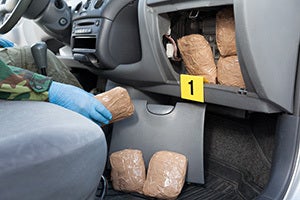
Over 1.5 million arrests occur annually for drug law violations—more than three times the total number of arrests for all violent crimes combined.
Over 80% of these arrests are for simple drug possession, with a substantial portion involving marijuana and low-level controlled substances.
While public opinion, public health organizations, and scientific consensus increasingly favor rehabilitation over criminalization, federal and state law enforcement agencies continue to prosecute simple drug offenses aggressively.
Legal Definition: Simple Possession vs. Possession for Sale
In criminal jurisprudence, "simple possession" refers to the unlawful exercise of control, or the right to control, a usable quantity of a controlled substance without the intent to sell, manufacture, or distribute it. Under statutory provisions such as California Health and Safety Code Section 11350 HS, simple possession is distinct from "possession with intent to sell" (HS 11351) or "drug trafficking" (HS 11352), which carry significantly harsher statutory penalties and mandatory incarceration.
Drug Arrests & Enforcement Reality
|
Metric / Aspect |
National / California Enforcement Reality |
Legal & Defense Implication |
| Arrest Frequency | Approximately 1 arrest every 25 seconds nationwide. | High volume leads to hasty police procedures and Fourth Amendment violations. |
| Charge Classification | Over 80% simple possession; under 20% sale/manufacturing. | Many charges qualify for statutory diversion programs (e.g., PC 1000, Prop 36). |
| Violent vs. Drug Crime | Drug arrests outnumber violent crime arrests by more than 3 to 1. | Courts and prosecutors are flooded with non-violent cases, increasing willingness to negotiate. |
| Public Health Position | UN, WHO, and APHA advocate decriminalization and treatment. | Defense counsel can leverage treatment compliance to negotiate charge reductions or dismissals. |
The Criminal Justice Impact of Drug Enforcement Statistics
The persistence of high drug arrest rates creates profound consequences for individuals, communities, and the legal system:
-
Mass Criminalization: Millions of individuals carry lifelong criminal records for simple possession, which restricts employment, housing, public benefits, and educational opportunities.
-
Economic Costs: Local, state, and federal governments spend tens of billions of dollars annually maintaining drug enforcement infrastructure, court cases, and incarceration facilities.
-
Health Disincentives: Criminalization forces individuals suffering from substance use disorders away from medical care and harm-reduction services due to fear of arrest.
-
Pretextual Law Enforcement: High drug enforcement quotas often lead officers to conduct pretextual traffic stops, unlawful stop-and-frisks, and unconstitutional searches.
Statutory Penalties for Drug Possession & Related Offenses
In California, penalties for drug violations depend on the substance classification, amount, and alleged intent:
-
Simple Misdemeanor Possession (Health & Safety Code 11350 HS): Possessing controlled substances like cocaine, heroin, or prescription opioids without a valid prescription carries up to 1 year in county jail and fines up to $1,000.
-
Possession for Sale (Health & Safety Code 11351 HS): Possessing controlled substances with intent to sell is a felony carrying 2, 3, or 4 years in state prison and fines up to $20,000.
-
Transportation or Sale (Health & Safety Code 11352 HS): Transporting, importing, selling, or furnishing controlled substances is a felony carrying 3, 4, or 5 years in state prison (or longer if crossing county lines).
-
Methamphetamine & Specific Stimulants (Health & Safety Code 11377 HS): Simple possession of methamphetamine, ecstasy, or PCP is typically a misdemeanor carrying up to 1 year in county jail.
Real-World Examples of Drug Possession Cases
-
First-Time Simple Possession: An individual stopped for a broken taillight is found with a small amount of cocaine in their center console and charged under HS 11350. Result: Defense counsel files for PC 1000 Pretrial Diversion; upon completing a 6-month outpatient treatment program, the charges are completely dismissed.
-
Illegal Vehicle Search: Police search a parked vehicle without consent, a warrant, or reasonable suspicion, discovering prescription pills not in the driver's name. Result: Defense counsel files a Motion to Suppress Evidence under PC 1538.5 for Fourth Amendment violations, forcing the prosecution to dismiss all charges.
-
Charge Reduction from Sale to Possession: A defendant carrying multiple individually wrapped baggies of methamphetamine is charged with felony possession for sale under HS 11351. Result: Defense demonstrates the quantity was consistent with personal use and addiction rather than commercial sale, resulting in a reduction to HS 11377 and qualification for diversion.
Related Laws, Diversion Statutes, and Constitutional Defenses
Defending against drug charges requires leveraging state diversion statutes and federal constitutional protections:
-
Penal Code Section 1000 PC (Deferred Entry of Judgment / Pretrial Diversion): Allows first-time, non-violent drug possession offenders to complete court-approved treatment programs in exchange for a full case dismissal.
-
Proposition 36 (Penal Code 1210.1 PC): Mandates probation and substance abuse treatment instead of jail time for qualifying non-violent drug possession convictions.
-
Fourth Amendment to the U.S. Constitution: Guarantees protection against unreasonable searches and seizures. Evidence seized without probable cause, a valid warrant, or lawful consent must be suppressed.
-
Penal Code Section 1538.5 PC (Motion to Suppress): The statutory procedure used by defense attorneys to challenge illegally obtained drug evidence and request its exclusion from trial.
Why Related Laws Matter
Because national drug enforcement disproportionately targets simple possession, statutory alternatives like PC 1000 and constitutional challenges under PC 1538.5 offer critical relief. An experienced criminal defense attorney analyzes the initial police stop for Fourth Amendment violations.
If police overstepped their authority, a Motion to Suppress can destroy the prosecution's case. Even when a search is lawful, connecting clients to statutory diversion programs can help them avoid criminal convictions, jail time, and permanent records.
Frequently Asked Questions (FAQs)
How often do drug arrests occur in the United States?
According to national crime reporting data, a drug arrest occurs approximately every 25 seconds in the United States, totaling over 1.5 million arrests per year.
Are most drug arrests for drug dealing or simple possession?
Over 80% of all drug arrests in the United States are for simple possession rather than manufacturing, sale, or distribution.
Can I avoid jail time if I am arrested for simple drug possession in California?
Yes. First-time or non-violent drug possession offenders in California frequently qualify for court-ordered treatment programs under Penal Code 1000 PC or Proposition 36, which allow defendants to avoid jail time.
What is California Penal Code 1000 PC Pretrial Diversion?
PC 1000 is a drug diversion program that allows eligible defendants charged with simple possession to enter a treatment program. Upon successful completion, the criminal charges are dismissed, and the record is cleared.
Can police search my vehicle for drugs without a warrant?
Police can only search your vehicle without a warrant if they have your consent, valid probable cause (such as visible contraband), or if the search is incidental to a lawful arrest or impound inventory. You can challenge unlawful searches in court.
What is the difference between simple possession and possession for sale?
Simple possession (HS 11350) means holding drugs for personal use, which is usually a misdemeanor. Possession for sale (HS 11351) is a felony that involves carrying larger quantities, scales, baggies, or large amounts of cash indicating commercial intent.
Will a drug arrest show up on my background check?
Yes, an arrest will appear on background checks unless the charges are dismissed and the arrest record is formally sealed under California Penal Code 851.87 or you successfully complete a diversion program.
What should I do if I am pulled over and police suspect I have drugs?
Exercise your constitutional right to remain silent, politely refuse consent to any vehicle or personal search, and request to speak with a criminal defense attorney immediately.
Protect Your Record & Future: Contact Esfandi Law Group
If you or a loved one is facing state or federal drug charges, proactive legal representation is essential to protect your rights and explore all dismissal options.
The defense team at Esfandi Law Group brings over 20 years of experience fighting drug charges in Los Angeles and throughout Southern California. Call us today or fill out our online contact form to schedule your complimentary, confidential consultation.
