
Los Angeles Marijuana DUI Attorney: California Vehicle Code 23152(f) VC
While the recreational and medical use of cannabis is legal under California law, operating a motor vehicle while under its influence remains a serious criminal offense.
Under Vehicle Code Section 23152(f) VC, it is unlawful to drive a vehicle while under the influence of any drug, including marijuana.
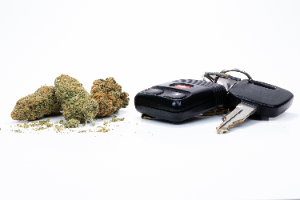
Unlike alcohol-related DUIs, marijuana DUI prosecutions are highly subjective. California has no statutory "per se" legal limit for tetrahydrocannabinol (THC) concentration in a driver's system.
Because there is no scientific consensus or standardized number that establishes automatic impairment, the prosecution's case relies almost entirely on flawed blood tests, police opinions, and speculative roadside evaluations.
Critical Notice: Just like an alcohol arrest, a cannabis-related DUI arrest triggers a strict 10-day window to request an administrative hearing with the California DMV to prevent the automatic suspension of your driving privileges. Contact Esfandi Law Group today at (310) 274-6529 for immediate expert defense representation.
Quick Reference Summary: Marijuana DUI Laws & Metrics
|
Statutory Code Section |
Legal Focus |
Primary Elements of Proof |
Common Sentencing Exposure (Misdemeanor) |
| VC 23152(f) VC | Driving Under the Influence of Drugs (DUID) | The prosecution must prove your physical or mental abilities were impaired to the point that you could no longer drive like a sober person. | Up to 6 months in jail, up to $1,000 in base fines, a 3- to 9-month DUI school, and driver's license suspension. |
| VC 23222(b) VC | Open Container of Cannabis in a Vehicle | Operating a vehicle while possessing an open, unsealed container of loose cannabis or marijuana products within reach of the driver. | Infraction charge carrying financial fines (unless properly sealed or stored securely in the trunk). |
Why Marijuana DUI Cases Are Highly Defensible
Marijuana metabolized in the human body does not behave like alcohol. This fundamental biological difference gives your defense attorney powerful leverage to challenge the state's case:
-
The Presumed Impairment Fallacy: Alcohol leaves the system at a predictable rate. THC, however, is fat-soluble. It attaches to lipid cells and can remain detectable in a person's bloodstream or urine for days, weeks, or even up to a month after their last active consumption. The presence of THC in your blood sample does not establish that you were actively impaired at the exact time you were driving.
-
The Subjectivity of DRE Officers: Because breathalyzers cannot detect cannabis, law enforcement often deploys a Drug Recognition Expert (DRE). These officers conduct an inherently subjective 12-step physiological evaluation (assessing pupil size, pulse rate, and balance). A skilled defense lawyer can cross-examine these assertions by showing that anxiety, sleep deprivation, or natural physical traits mimic the signs of drug impairment.
-
Flawed Field Sobriety Tests: Standardized Field Sobriety Tests (SFSTs)—such as the walk-and-turn and one-leg stand—were scientifically validated exclusively by the National Highway Traffic Safety Administration (NHTSA) to detect a blood alcohol concentration of 0.08% or higher. They have never been scientifically validated as accurate metrics for measuring cannabis impairment.
Real-World Case Example: Active Impairment vs. Inactive Metabolites
Scenario: The Friday Night Conundrum
The Incident: Alex is pulled over in Los Angeles on a Tuesday morning for a lit brake light. The officer claims to detect a faint odor of burnt marijuana and notes that Alex has red, watery eyes. Alex admits that he legally consumes cannabis on weekends to help him sleep. He is arrested, and a subsequent blood draw reveals a measurable concentration of active Delta-9-THC in his system.
The Defense Analysis: The prosecution attempts to secure a conviction under VC 23152(f) based on the blood test data. Alex's DUI defense attorney highlights that Alex performed perfectly in the dashcam footage, stayed within his lane, and that his bloodshot eyes were caused by documented seasonal allergies. Furthermore, an independent toxicologist confirms that the low level of THC in his system was an inactive metabolite from consumption three days prior.
The Outcome: Because the prosecutor cannot prove that THC's presence directly caused active, physical impairment on Tuesday morning, the defense secures a complete dismissal of the DUI charges in exchange for a non-alcohol/non-drug traffic infraction.
Statutory Penalties for a Misdemeanor Marijuana DUI
Under California law, a marijuana DUI is penalized just as severely as an alcohol-related DUI.
Because California has no statutory distinction between impairment by a beverage and impairment by a drug, a conviction under VC 23152(f) carries mandatory fines, driver's license sanctions, and potential jail time that increase drastically with your prior record.
The baseline penalties for a misdemeanor marijuana DUI depend primarily on the number of prior DUI or "wet reckless" convictions on your record within a 10-year look-back window:
First-Time Offense (Misdemeanor)
-
Incarceration Exposure: Up to 6 months in county jail (jail time is frequently waived or replaced with alternative options for first-time offenders).
-
Court-Imposed Fines: $390 to $1,000 base fines, which swell to $2,000 to $2,500 after adding mandatory California penalty assessments and court fees.
-
Driver's License Status: A 6-month administrative suspension by the California DMV.
-
Mandatory DUI School: Enrollment and completion of a state-licensed 3-month or 9-month drug/alcohol education program.
-
Probation Terms: 3 to 5 years of summary (informal) probation.
Second Offense (Within 10 Years — VC 23540)
-
Incarceration Exposure: A mandatory minimum of 96 hours up to 1 year in county jail.
-
Court-Imposed Fines: $390 to $1,000 base fines (up to $ 3,000 after total assessments).
-
Driver's License Status: A mandatory 2-year driver's license suspension (with restricted options available via strict compliance protocols).
-
Mandatory DUI School: Completion of an intensive 18-month or 30-month multiple-offender education and rehabilitation program.
-
Probation Terms: 3 to 5 years of probation, often requiring mandatory community labor (such as Caltrans roadside work).
Third Offense (Within 10 Years — VC 23546)
-
Incarceration Exposure: A mandatory minimum of 120 days up to 1 year in county jail.
-
Court-Imposed Fines: $390 to $1,000 base fines (up to $ 4,000 after total assessments).
-
Driver's License Status: A 3-year driver's license revocation.
-
Mandatory DUI School: Mandatory enrollment in a 30-month formal multi-offender treatment track.
-
Habitual Traffic Offender: An automatic 3-year designation as a Habitual Traffic Offender (HTO), making any subsequent driving on a suspended license an automatic jail offense.
When a Marijuana DUI Escalates to a Felony
A marijuana DUI shifts from a misdemeanor to a severe felony under three specific statutory conditions:
-
DUI Causing Injury (VC 23153): If your driving under the influence of cannabis causes an accident that results in bodily injury to any person other than yourself, the case can be filed as a felony. It carries a penalty of 16 months to 3 years in California State Prison, plus an additional consecutive 3 to 6 years if the injury is classified as Great Bodily Injury (GBI).
-
Prior Felony DUI Conviction: If you have even one prior felony DUI conviction on your record (within the last 10 years or more), any subsequent marijuana DUI arrest is automatically prosecuted as a felony, with state prison exposure.
3. -
Fourth DUI Within 10 Years (VC 23550): If the current arrest is your fourth driving under the influence incident within a rolling 10-year period, it may be filed as a felony, carrying up to 3 years in state prison.
Sentence Enhancements (Aggravating Factors)
The presence of specific aggravating factors during your arrest will compel prosecutors to seek enhanced penalties, which judges stack directly onto your base sentence:
-
Minor Passenger in the Vehicle (VC 23572): If you are driving under the influence of marijuana with a child under the age of 14 inside the vehicle, the court must add mandatory, consecutive jail time (4 days for a first offense, 10 days for a second, and 30 days for a third). This enhancement runs completely separate from any concurrent Child Endangerment (PC 273a) charges.
-
Chemical Test Refusal (VC 23612): Refusing to provide a mandatory post-arrest blood sample when drug impairment is reasonably suspected triggers a mandatory 1-year hard license suspension with zero restricted options, alongside an additional mandatory 48 hours to 18 days of consecutive jail time.
-
Accidents and Property Damage: While not causing physical injuries, a traffic collision while under the influence of cannabis will prompt judges to mandate full financial restitution to the victims, higher court fines, and extended community labor terms.
Related California Statutes & Sentence Enhancements
-
Vehicle Code 23153 VC (DUI Causing Injury): Elevates a marijuana DUI from a misdemeanor to a felony if your driving caused an accident resulting in bodily injury to a third party.
-
Vehicle Code 22651 VC (Vehicle Impoundment): Outlines the strict legal conditions under which law enforcement officers may tow, seize, and impound your vehicle after a lawful DUI arrest.
-
Penal Code 187 PC (Watson Murder): If you cause a fatal accident while driving under the influence of cannabis and have a prior DUI conviction, prosecutors can bypass vehicular manslaughter and charge you with second-degree murder.
-
Penal Code 1203.4 PC (DUI Expungement): Allows you to petition the court to expunge a misdemeanor cannabis DUI conviction from your criminal record after you have successfully completed your probation requirements.
Strategic Legal Defenses Against Cannabis DUI Charges
-
Challenging the Initial Traffic Stop: If law enforcement pulled you over without clear, reasonable suspicion of an actual traffic violation, a judge can rule the stop unconstitutional, making all subsequent observations, physical tests, and blood samples inadmissible.
-
Separating Presence from Impairment: Demonstrating, through expert toxicological testimony, that your THC blood levels indicate only past use within the look-back window rather than psychoactive impairment at the time of driving.
-
Alternative Explanations for Physical Symptoms: Attributing bloodshot eyes, elevated heart rate, or nervousness during a high-stress police stop to benign causes, such as fatigue, eye strain, allergies, or other medical conditions.
-
Improper Chain of Custody or Blood Storage: If blood samples are left unrefrigerated, lack proper chemical preservatives, or show logging errors in the laboratory chain of custody, the scientific validity of the test may be compromised.
Frequently Asked Questions (FAQs)
What is the legal limit for marijuana while driving in California?
California has no legal limit or specific THC concentration for driving. Under VC 23152(f), the state must prove that your driving ability was actively impaired by the drug, regardless of the numerical amount detected in your blood.
Can I refuse a police officer's request for a blood test for a marijuana DUI?
Under California's implied consent law (VC 23612), if you are lawfully arrested for a DUI, you must submit to a post-arrest chemical test.
Refusing a blood test triggers an automatic 1-year license suspension and mandatory jail time enhancements if convicted. However, you can refuse the voluntary pre-arrest roadside breath or physical tests without penalty.
How long does THC stay in your blood for a DUI test?
Active THC can be detected in blood samples for several hours to days after use. Inactive metabolites can remain detectable in your system for weeks, making blood results highly unreliable as an indicator of current impairment.
Can I legally drive if I have a valid medical marijuana prescription?
No. Under California law, a valid medical marijuana recommendation does not provide immunity from DUI laws. It remains illegal to operate a vehicle if a prescription drug impairs your ability to drive safely.
Can I get a marijuana DUI charge reduced to a "Wet Reckless"?
Yes. If your attorney identifies weaknesses in the prosecution's evidence—such as a low THC level or a flawed DRE evaluation—they can negotiate to reduce the charge to a "Wet Reckless" (VC 23103.5) or a dry reckless, which carries lighter penalties.
Can a marijuana DUI affect my professional license?
Yes. A conviction under VC 23152(f) can trigger mandatory reporting obligations and disciplinary reviews by state licensing boards, potentially jeopardizing careers in healthcare, law, real estate, or education.
What is an open container violation for cannabis under VC 23222(b)?
It is an infraction to drive with open, unsealed, or unenclosed cannabis or marijuana products within reach of the driver. To comply with the law, open packages must be stored securely in the vehicle's trunk.
Can a marijuana DUI impact my immigration status?
Yes. For non-citizens, any cannabis-related offense can complicate visa renewals, green card applications, or naturalization processes because federal immigration laws classify cannabis as a controlled substance. Early strategic defense is essential.
Will a marijuana DUI conviction result in a mandatory alternative sentence?
Alternative sentences—such as electronic monitoring, community service, or outpatient treatment instead of jail time—are not automatic. They must be formally negotiated by your defense attorney and approved by the sentencing judge.
How can a defense lawyer challenge a Drug Recognition Expert's (DRE) testimony?
A defense lawyer can challenge a DRE by demonstrating that the officer failed to strictly follow the standardized 12-step evaluation protocol, showed bias in their interpretation, or presented medical records that offer alternative explanations for the recorded physical signs.
Protect Your Rights: Contact a Los Angeles Marijuana DUI Expert
Confronting a cannabis-related DUI charge under Vehicle Code 23152(f) VC requires a defense strategy grounded in forensic science and a thorough understanding of California traffic laws.
Do not let subjective police opinions or unreliable biological tests jeopardize your freedom, license, and career.
The legal team at Esfandi Law Group has more than two decades of local experience successfully defending clients against drug-related DUI charges in Los Angeles County courts.
We dismantle the state's assumptions, challenge faulty test methods, and fight to preserve your future.
Take immediate action to protect your future. Call Esfandi Law Group today at (310) 274-6529 or fill out our secure online contact form to schedule your immediate, free case evaluation.