
California Penal Code 29800 PC: Felon in Possession of a Firearm
Under Penal Code § 29800 PC, it is a serious felony for individuals with prior felony convictions, specific disqualifying misdemeanor convictions, or narcotics addictions to own, purchase, receive, or possess any firearm.
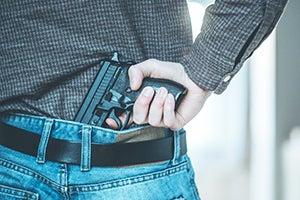
Commonly referred to as "felon in possession of a firearm," this offense is aggressively prosecuted across California and carries mandatory state prison or county jail exposure, substantial fines, and severe collateral consequences.
Because PC 29800 focuses heavily on access and control rather than outright ownership, many individuals find themselves facing felony charges simply for being near a firearm that belonged to someone else.
Under California law, a prohibited person is strictly barred from having any form of direct or indirect control over a firearm.
Penal Code § 29800(a)(1) PC Legal Definition
“Any person who has been convicted of a felony under the laws of the United States, the State of California, or any other state, government, or country, or of an offense enumerated in subdivision (a), (b), or (c) of Section 23515, or who is addicted to the use of any narcotic drug, and who owns, purchases, receives, or has in his or her possession or under his or her custody or control any firearm is guilty of a felony.”
Who Is Classified as a Prohibited Person?
California firearm prohibitions apply broadly across several categories:
-
Convicted Felons: Anyone convicted of any felony offense in California, another state, or federal court.
-
Qualifying Misdemeanors: Individuals convicted of specified misdemeanor offenses—including domestic violence (PC 273.5 / PC 243(e)(1)), assault, battery, or brandishing a weapon (PC 417)—face 10-year or lifetime state firearm bans.
-
Narcotics Addicts: Anyone classified under California law as addicted to the use of any narcotic drug.
-
Juvenile Offender Status: Individuals adjudged wards of the juvenile court for specified violent or weapon-related offenses (until age 30 or lifetime depending on the statute).
What Counts as "Possession" Under California Law?
You do not need to be holding, carrying, or actively using a firearm to be convicted under PC 29800 PC. California courts recognize three distinct legal theories of possession:
-
Actual Possession: The firearm is physically on your person or within your immediate reach (e.g., in your pocket, waistband, or backpack).
-
Constructive Possession: You do not physically hold the weapon, but you maintain access to or control over the place where it is located (e.g., inside your glove box, bedroom drawer, or personal storage unit).
-
Joint Possession: Two or more people share joint access to and control over the same firearm (e.g., a weapon located in a shared apartment or common vehicle area).
Key Elements Prosecutors Must Prove
To obtain a conviction under Penal Code 29800 PC, the District Attorney must prove every one of the following elements beyond a reasonable doubt:
-
Prohibited Status: You were previously convicted of a qualifying felony or misdemeanor, or were otherwise legally prohibited from possessing a firearm.
-
Possession or Control: You owned, purchased, received, possessed, or exercised custody or control over a firearm.
-
Knowledge: You knew of the presence and nature of the firearm.
Statutory Penalties for Penal Code 29800 PC
Penal Code 29800 PC is a straight felony in California. Sentence severity increases significantly if you have prior "strike" convictions, if the offense involves gang activity, or if charged alongside additional firearm violations.
|
Charge Level / Statute |
Offense Circumstances |
Custody and Fine |
| Base Felony (PC 29800(a)(1)) | Standard possession by a prohibited person | 16 months, 2 years, or 3 years in county jail. Fine up to $10,000 |
| Felon with Prior Strike (PC 667 / 1170.12) | Prior serious/violent felony ("Strike") | Sentence doubled (up to 6 years). Fine up to $10,000 |
| PC 29800 + Concealed / Loaded Charges | Simultaneous violation of PC 25400 or PC 25850 | Additional consecutive jail time. Fine up to $10,000 |
| PC 29800 + Gang Enhancement (PC 186.22) | Possession committed for the benefit of a gang | Additional 2, 3, or 4+ years state prison. Fine up to $10,000 |
| PC 29800 + Gun Use Enhancement (PC 12022.53) | Firearm used during commission of underlying felony | Additional 10, 20, or 25-to-life in state prison. Fine up to $10,000 |
Common Legal Defenses Against PC 29800 Charges
A charge under PC 29800 can be effectively fought using proven legal strategies tailored to the facts of your arrest:
-
Lack of Knowledge: You cannot be convicted of constructive possession if you were genuinely unaware that a firearm was present (e.g., borrowing a relative's vehicle without knowing a gun was inside the glove box).
-
Lack of Possession or Control: Simply being in proximity to a weapon owned or controlled by someone else in a shared space does not equal legal possession.
-
Unlawful Search and Seizure (PC 1538.5 Motion): If law enforcement located the firearm through an unconstitutional traffic stop, illegal frisk, or warrantless home entry, your attorney can move to suppress the evidence, forcing a case dismissal.
-
Momentary / Transitory Possession: Brief, temporary holding of a firearm solely for the purpose of disposing of it or turning it over to law enforcement is a recognized affirmative defense under California law.
-
Invalid Underlying Prohibiting Conviction: If your prior conviction was expunged, reduced to a non-disqualifying misdemeanor under PC 17(b), or set aside prior to the incident, the statutory prohibition may not apply.
Hypothetical Examples
-
Borrowed Vehicle: A driver with a prior felony record borrows a friend's truck and gets pulled over for a broken taillight. Police search the vehicle and find a handgun locked inside the glove box belonging to the friend. Because the driver had no knowledge of the gun's presence, defense counsel secures a dismissal based on lack of knowledge and control.
-
Shared Apartment Search: Police conduct a probation search at a residence shared by three roommates, finding an unregistered firearm inside a common living room cabinet. Because multiple people had access and prosecutors cannot establish individual control or ownership beyond a reasonable doubt, the charge of constructive joint possession fails.
-
Unlawful Traffic Stop: Officers stop a pedestrian without reasonable suspicion, conduct an illegal pat-down search, and recover a concealed pistol from his jacket. The defense files a Penal Code 1538.5 Motion to Suppress Evidence for Fourth Amendment violations; the court suppresses the firearm, leaving the state with no evidence to prosecute.
Related California Penal Code Sections
In California firearm cases, prosecutors frequently file overlapping charges alongside PC 29800 to maximize sentencing exposure. Understanding related crimes highlights your worst-case exposure and opens avenues for plea negotiations and charge reductions.
-
Penal Code § 30305 PC – Ammunition Possession by a Prohibited Person: Prohibits individuals barred from owning firearms from owning, possessing, or purchasing any ammunition or reloaded ammunition.
-
Penal Code § 25400 PC – Carrying a Concealed Firearm: Makes it an offense to carry a concealed firearm on your person or within a motor vehicle without a valid Concealed Carry Weapon (CCW) permit.
-
Penal Code § 25850 PC – Carrying a Loaded Firearm in Public: Penalizes carrying a loaded firearm on your person or inside a vehicle while in any public place or on a public street.
-
Penal Code § 417 PC – Brandishing a Weapon: Prohibits drawing, exhibiting, or displaying a firearm or deadly weapon in a rude, angry, or threatening manner during a confrontation.
-
Penal Code § 26350 PC – Open Carry Violations: Prohibits carrying an exposed, unloaded handgun upon your person or inside a vehicle in a public place.
-
Penal Code § 186.22 PC – Criminal Street Gang Enhancement: Adds mandatory state prison time if the possession or firearm crime was committed for the benefit of, or in association with, a criminal street gang.
-
Penal Code § 12022.53 PC – Personal Use of a Firearm Enhancement: Adds consecutive 10, 20, or 25-year-to-life prison terms when a firearm is personally used or discharged during the commission of specified serious felonies.
Frequently Asked Questions (FAQs)
Can I be charged under PC 29800 if the firearm was not registered to me?
Yes. California Penal Code 29800 does not require legal ownership. Prosecutors only need to prove that you had physical possession or constructive control over the firearm and knew it was present.
Does a firearm have to be loaded or operational for a PC 29800 charge?
No. The firearm does not need to be loaded, operational, or assembled at the time of discovery. The law applies to any device designed to expel a projectile by combustion, even if inoperable or disassembled.
Is Penal Code 29800 PC always charged as a felony in California?
Yes. PC 29800 is a "straight felony" under California law and cannot be reduced to a misdemeanor under Penal Code 17(b).
Can I be charged with PC 29800 if the firearm was in a locked safe that belonged to someone else?
If you do not have the combination, key, or access code to the safe, your defense attorney can argue you lacked constructive possession because you had no physical ability to exercise control over the weapon.
What is the penalty for possessing ammunition as a felon in California?
Under PC 30305(a)(1), possessing ammunition as a prohibited person is a wobbler offense, punishable by up to 1 year in county jail as a misdemeanor, or 16 months, 2 years, or 3 years in county jail as a felony.
Will a conviction for PC 29800 impact my immigration status?
Yes. Firearm convictions are classified as aggravated felonies and deportable offenses under federal immigration law, subjecting non-citizens to mandatory deportation, inadmissibility, and denial of naturalization.
Can an out-of-state felony conviction trigger California's PC 29800 firearm ban?
Yes. PC 29800 explicitly applies to felony convictions sustained under federal law, California state law, or the laws of any other U.S. state or foreign country.
How can an attorney get a PC 29800 charge dismissed before trial?
An experienced defense attorney can challenge the legality of the police stop or search via a PC 1538.5 motion, demonstrate a total lack of knowledge or control, or prove that the underlying prior conviction does not legally trigger a prohibition under California law.
Consult With a Defense Lawyer Today
A charge under California Penal Code 29800 PC can immediately threaten your liberty, your future, and your criminal record. Fighting these allegations requires a defense attorney who understands complex search-and-seizure laws and firearm possession defense strategies.
The legal team at Esfandi Law Group is ready to protect your constitutional rights and build a strong defense. Call our office today to schedule your free, confidential case consultation.